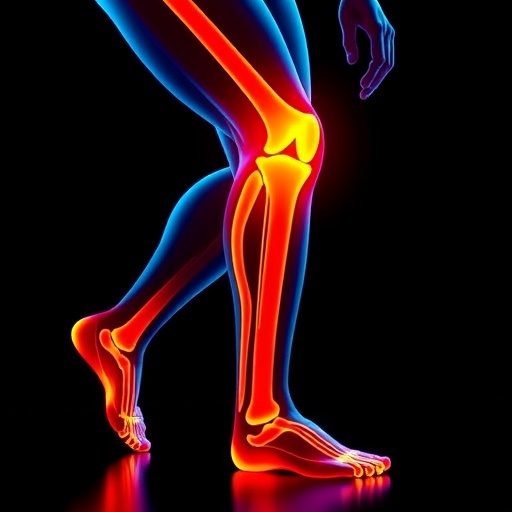
Recent investigations in the field of biomechanics have shed light on the pivotal role of knee adduction moment lever arm components in the context of medial knee osteoarthritis (OA). Researchers have highlighted that understanding these lever arms offers crucial insights into the pathomechanics of OA, which could eventually pave the way for more targeted rehabilitation strategies. The significant implications of this research extend to numerous clinical outcomes, impacting not only the progression of the disease but also the overall quality of life for individuals afflicted with knee osteoarthritis.
The study titled “Severity-Dependent Contributions of Knee Adduction Moment Lever Arm Components and Associated Gait Variables in Medial Knee Osteoarthritis” played a fundamental role in unraveling these connections. The authors, Nakazato, Taniguchi, and Yagi, identified specific variables that relate to gait patterns and the health of the knee joint. The researchers meticulously examined the relationship between various lever arm components and the corresponding gait dynamics in patients with differing severities of knee osteoarthritis. This nuanced understanding challenges previous models that failed to consider the complexity and variability inherent in human biomechanics.
In their study, the researchers employed advanced motion analysis techniques to explore how the knee adduction moment is affected by the angle and position of the knee joint during walking. By utilizing a three-dimensional gait analysis, they captured the intricate interplay between anatomical structures, joint loading, and muscle activity. High-definition cameras and motion capture technology allowed a comprehensive examination of the biomechanics at play, providing robust datasets essential for rigorous statistical analyses.
Moreover, the leverage associated with the knee adduction moment can be crucial in illuminating how debilitating the effects of knee osteoarthritis might be compared to individuals with healthy joints. The severity of the condition, as it pertains to pain and mobility limitations, is intrinsically linked to these lever arms. Understanding this relationship allows for targeted interventions that can mitigate symptoms and potentially slow the advancement of osteoarthritis.
The researchers also discovered that specific gait variables, such as stride length and cadence, exhibited significant variations based on the severity of knee OA. Patients with more advanced stages of the disease tended to present altered gait patterns characterized by a decreased range of motion in their knee joints. This not only provides a clear indication of the physical challenges faced by these individuals but also indicates an adaptive response by the body to avoid pain, which consequently contributes to further joint degeneration.
Furthermore, the severity-dependent outcomes observed in this study emphasize the importance of tailored rehabilitation programs. Rehabilitation approaches that consider an individual’s specific biomechanical profile and the stage of their osteoarthritis could lead to more effective management strategies. Clinicians must remain vigilant in assessing the adduction moment leverage during gait evaluations, as this could significantly refine their clinical decision-making processes.
The study employs robust statistical modeling to articulate the nuances of how these lever arms change with severity and age, representing a transformative perspective in osteoarthritis research. The authors argue for a shift towards personalized medicine, where treatment plans are adjusted based on biomechanical assessments that highlight these lever components. Such an approach has the potential to improve patient outcomes by focusing rehabilitation efforts where they are most needed.
Addressing the clinical ramifications of these findings invites further research to delineate the mechanisms by which altered gait patterns contribute to the progression of knee osteoarthritis. Longitudinal studies assessing the impact of therapeutic interventions on knee adduction moment components could provide insights essential for developing optimized treatment regimens. This area of research harbors great potential not only to illuminate the pathophysiology of knee OA but also to spark innovations in preventive care and surgical interventions.
In the pursuit of establishing effective treatments and rehabilitation strategies, collaboration amongst clinicians, biomechanists, and researchers will be key. Workshops and ongoing training that incorporate biomechanical insights into clinical practice will foster an environment conducive to the development of evidence-based recommendations for patients with knee osteoarthritis. The study demonstrates that integrating biomechanical analysis within clinical settings can enhance the understanding of patient-specific needs.
Furthermore, highlighting the patient experience remains vital in this dialogue. As healthcare providers strive to accommodate the unique presentations of knee OA, understanding how altered biomechanics influence a patient’s daily life becomes paramount. Surveys and qualitative assessments can complement biomechanical data to provide a holistic view of the challenges faced by those living with knee osteoarthritis.
The transformative potential of this research underlines the necessity for future studies to explore the efficacy of interventions such as gait retraining, physical therapy, and possibly even pharmacological options targeting joint mechanics. The knee adduction moment lever arm provides a measurable parameter that can be manipulated through targeted therapies, making it a focal point for both clinical and academic communities.
Moreover, this captivating study acts as an invitation for scientists to dive deeper into the connection between biomechanics and osteoarthritis, fostering future investigations that may lead to groundbreaking discoveries. With a multidisciplinary approach, it is conceivable that the collective efforts of biologists, engineers, and clinicians could lead to a new paradigm in how we approach knee health and osteoarthritis management.
In summary, the rich insights garnered from this investigation empower both researchers and clinicians to rethink traditional models of care for knee osteoarthritis. By understanding the severity-dependent contributions of knee adduction moment lever arms and associated gait variables, the future of osteoarthritis treatment may very well evolve towards a more integrative and personalized approach, ultimately enhancing the lives of millions afflicted by this common condition.
Subject of Research: Knee adduction moment lever arm components and gait variables in medial knee osteoarthritis.
Article Title: Severity-Dependent Contributions of Knee Adduction Moment Lever Arm Components and Associated Gait Variables in Medial Knee Osteoarthritis.
Article References: Nakazato, K., Taniguchi, M., Yagi, M. et al. Severity-Dependent Contributions of Knee Adduction Moment Lever Arm Components and Associated Gait Variables in Medial Knee Osteoarthritis. Ann Biomed Eng (2026). https://doi.org/10.1007/s10439-025-03962-1
Image Credits: AI Generated
DOI: https://doi.org/10.1007/s10439-025-03962-1
Keywords: knee osteoarthritis, biomechanics, knee adduction moment, gait analysis, personalized medicine
Tags: advanced motion analysis techniquesbiomechanics of gaitclinical outcomes of knee OAgait dynamics in osteoarthritisknee adduction momentknee joint healthlever arm componentsmedial knee osteoarthritispathomechanics of osteoarthritisquality of life in osteoarthritis patientsseverity-dependent contributionstargeted rehabilitation strategies