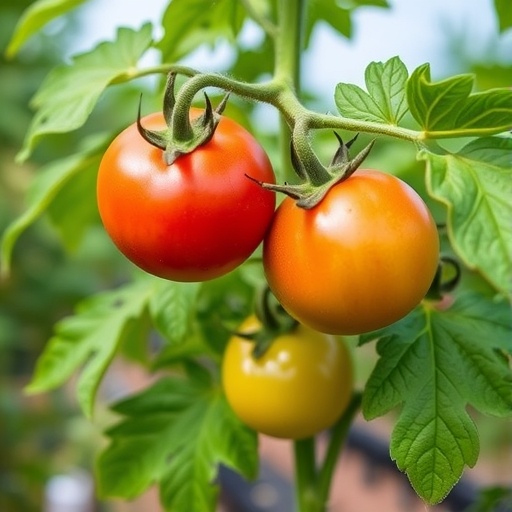
The physiological and growth responses of tomato plants to heat stress are gaining significant attention in the scientific community due to the increasing global temperatures and their anticipated impact on agriculture. Heat stress can profoundly affect plant physiology, leading to reduced yields and compromised quality of produce. Recent studies emphasize the critical need for understanding these responses, particularly in staple crops like tomatoes, which are essential for food security worldwide. This investigation sheds light on how plants adapt at the physiological level to cope with elevated temperatures and provides insights into potential agricultural strategies to mitigate the adverse effects.
Tomato plants (Solanum lycopersicum) are sensitive to environmental stressors, and rising temperatures can lead to physiological disruptions. Researchers observed that high ambient temperatures can detrimentally affect photosynthesis rates, leading to reduced biomass accumulation. The study reveals that under heat stress conditions, tomatoes struggle to efficiently convert sunlight into energy due to impaired chlorophyll synthesis and function, which is crucial for photosynthesis. This limitation not only diminishes growth but leads to other cascading effects within the plant’s metabolic pathways.
Moreover, the study dives into the respiration rates of heat-stressed tomato plants, showing that they experience an increase in respiration, even when photosynthesis is compromised. Elevated respiration can lead to energy depletion because the plants utilize more energy to sustain metabolic functions than they can charge during photosynthesis. This imbalance can further exacerbate growth limitations, creating a challenging scenario for the plants to thrive in unprecedented heat conditions.
Interestingly, the researchers also analyzed how heat stress affects the hormonal balance within tomato plants. Variations in the levels of crucial hormones such as abscisic acid (ABA) and auxins were identified, indicating that heat stress triggers complex signaling pathways. These hormonal shifts play a pivotal role in mediating stress responses, influencing not only growth patterns but also development processes such as flowering and fruit set. Understanding these hormonal responses allows for potential intervention strategies to enhance plant resilience through agricultural practices or genetic modifications.
In addition to hormonal changes, the response of tomato plants to heat stress also involves alterations at the molecular level. The expression of heat shock proteins (HSPs), which function as molecular chaperones, was found to be significantly upregulated under high-temperature conditions. These proteins help in protecting cellular structures and maintaining protein integrity, providing an essential mechanism for plant survival during extreme heat. The synthesis of HSPs represents a critical adaptive response, allowing tomatoes to endure transient spikes in temperature.
The study underscores the importance of maintaining optimal soil moisture levels during periods of heat stress. The interaction between water supply and heat significantly influences the physiological response of tomato plants. Dehydration exacerbates the detrimental effects of heat, whereas adequate watering can help maintain turgor pressure and support the overall physiological functions of the plant, from nutrient uptake to gas exchange. Irrigation practices, therefore, emerge as a key component in managing heat stress effects on tomatoes.
Moreover, genetic diversity within tomato varieties can also play a crucial role in their responses to heat stress. The research highlights the potential for breeding programs to select for heat-resistant traits. Evaluating and cultivating varieties that exhibit greater tolerance to elevated temperatures can lead to sustainable solutions for maximizing yields in an era of climate change. This genetic approach not only addresses the immediate concerns but also provides a long-term strategy for adaptation.
The findings from this research are particularly pertinent as they pave the way for innovative agricultural practices. Practitioners and researchers are encouraged to adopt strategies such as mulching, which can help mitigate soil temperatures, thereby creating a more favorable microenvironment for tomato plants. Similarly, shade cloths or strategic planting arrangements can significantly reduce the direct exposure to high heat, ultimately aiding growth and yield.
Furthermore, emphasizing proper nutrient management during heat stress conditions was shown to be vital. Nutrients play an essential role in plant resilience, and maintaining an adequate supply through soil amendments can enhance the physiological robustness of tomato plants. The interplay between nutrition and heat stress paints a complex picture of how to optimize tomato cultivation in warming climates.
Ultimately, the implications of this research extend beyond academic curiosity; they have far-reaching consequences for agricultural practices, food security, and climate change mitigation efforts. By understanding how tomato plants physiologically and growth-wise respond to heat stress, farmers and agricultural professionals can develop proactive measures to ensure the sustainability and productivity of one of the world’s most important crops. This endeavor is crucial for meeting the future food demands of an ever-growing global population.
In summary, the research findings impart valuable insights into not just the challenges faced by tomato plants under heat stress, but also the potential avenues for ensuring their survival in our rapidly changing world. Harnessing this knowledge can lead to transformative practices that bolster agricultural resilience in the face of climate change, ultimately safeguarding food resources for generations to come.
Subject of Research: Physiological and growth responses of tomato plants to heat stress
Article Title: Physiological and growth responses of tomato plants to heat stress
Article References:
Sellami, D., Kooli, S. Physiological and growth responses of tomato plants to heat stress. Discov. Plants 3, 5 (2026). https://doi.org/10.1007/s44372-025-00462-3
Image Credits: AI Generated
DOI: https://doi.org/10.1007/s44372-025-00462-3
Keywords: Tomato plants, heat stress, physiological responses, growth responses, agricultural practices, sustainability, climate change, food security.
Tags: agricultural strategies for heat adaptationchlorophyll synthesis in heat-stressed plantsenvironmental stressors affecting tomatoesfood security and tomato cultivationheat stress effects on tomato plantsimpact of global warming on agriculturemetabolism of tomato plants under stressphotosynthesis impairment in tomatoesphysiological responses of tomato plantsSolanum lycopersicum heat sensitivitytomato crop yield reductiontomato plant growth under heat conditions