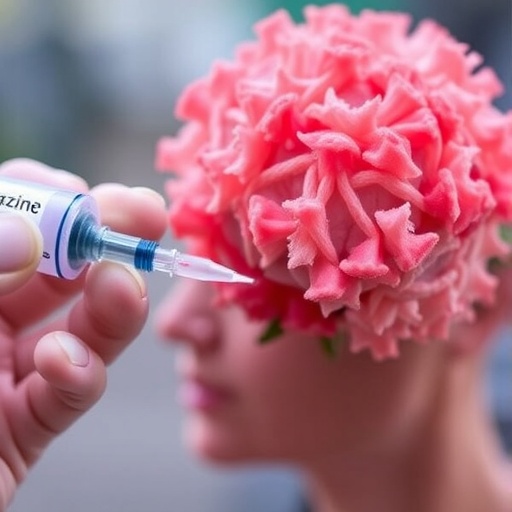
A Revolutionary Link Between Shingles Vaccination and Dementia Risk Reduction Emerges
In a groundbreaking study published recently in Nature Communications, researchers have uncovered a compelling association between the recombinant zoster vaccine (RZV) and a significant reduction in the risk of developing dementia. This revelation sheds new light on the intricate interplay between viral infections, immune response, and neurodegenerative diseases, opening promising avenues for prevention strategies that transcend traditional boundaries. The study, conducted by Rayens, Sy, Qian, and colleagues, delves deeply into the epidemiological data and immunological mechanisms connecting the shingles vaccine to cognitive health outcomes, suggesting that vaccination may offer benefits beyond its immediate target of preventing herpes zoster.
Herpes zoster, commonly known as shingles, is caused by the reactivation of the varicella-zoster virus (VZV), which remains dormant in sensory nerve ganglia after an initial chickenpox infection. While shingles primarily manifests as a painful dermatomal rash, the virus’s neurotropic nature means that it’s capable of affecting the nervous system more broadly, sometimes leading to herpes zoster ophthalmicus or postherpetic neuralgia. Prior research has hinted that VZV reactivation could contribute to chronic neuroinflammation, a recognized factor in the pathogenesis of various dementias, including Alzheimer’s disease and other forms of cognitive decline. This study presents the first large-scale, population-based evidence supporting the hypothesis that preventing VZV reactivation via vaccination might also help protect the brain.
The researchers employed comprehensive healthcare databases encompassing millions of individuals over extended follow-up periods. By meticulously controlling for confounding variables such as age, sex, comorbidities, and socioeconomic status, they demonstrated that recipients of the recombinant zoster vaccine showed a consistently lower incidence of all-cause dementia compared to unvaccinated controls. Importantly, this analysis was stratified to assess the vaccine’s impact across different age groups and dementia subtypes, revealing the most pronounced protective effect among older adults—a population notoriously vulnerable to both shingles and cognitive decline.
Immunologically, the recombinant zoster vaccine consists of a glycoprotein E antigen combined with the AS01B adjuvant, which elicits robust humoral and cell-mediated immune responses against VZV. The heightened immune vigilance induced by RZV not only curtails VZV reactivation but may also modulate systemic and neuroinflammation, pivotal processes implicated in neurodegeneration. The study hypothesizes that this immunomodulatory effect extends beyond viral suppression, potentially mitigating chronic inflammatory signaling pathways that accelerate neuronal damage and plaque formation characteristic of dementias.
Neuroinflammation’s role in cognitive decline has been extensively documented, where activated microglia and astrocytes produce pro-inflammatory cytokines such as IL-1β, TNF-α, and IL-6. These mediators can disrupt synaptic function, impair neuroplasticity, and facilitate amyloid-beta aggregation—a hallmark of Alzheimer’s pathology. The recombinant zoster vaccine’s capacity to prevent herpes zoster-associated neuroinflammation may thus indirectly preserve neuronal integrity and cognitive functions. Moreover, the vaccine’s adjuvant may prime the immune system to maintain better immunosurveillance, crucial for clearing aberrant proteins and preventing neurodegenerative cascades.
Beyond the biological underpinnings, this research holds tremendous public health significance. Dementia poses a growing global burden as populations age, with limited effective treatments currently available. Prevention strategies have primarily centered on lifestyle interventions and management of cardiovascular risk factors. The potential for a widely available vaccine, initially designed to prevent a viral illness, to serve as a neuroprotective agent is a paradigm shift that could transform dementia prevention. If corroborated in future clinical trials, vaccination policies could integrate cognitive health benefits, motivating broader uptake among older adults.
The study also addresses longstanding questions regarding the interconnectedness of infections and neurodegeneration. Various infectious agents—including herpes simplex virus type 1 (HSV-1), human herpesvirus 6 (HHV-6), and cytomegalovirus (CMV)—have been implicated in cognitive decline through mechanisms of latent infection and recurrent neuroinflammation. This research reinforces the concept that targeting specific pathogens with vaccination can modulate these neuropathogenic processes, emphasizing a novel preventive approach that complements pharmacological efforts targeting amyloid and tau proteins.
Methodologically, the researchers utilized advanced biostatistical modeling and machine learning algorithms to parse vast datasets, enabling nuanced detection of subtle associations and temporal trends. Propensity score matching and inverse probability weighting were instrumental in reducing bias arising from differential vaccine uptake and healthcare-seeking behaviors. Furthermore, sensitivity analyses confirmed the robustness of findings across various diagnostic coding schemes and dementia classifications, enhancing confidence in the reliability and generalizability of the conclusions.
Despite these promising findings, the authors caution that the study is observational and cannot definitively establish causality. Randomized controlled trials or mechanistic studies examining central nervous system biomarkers post-vaccination are essential next steps. Additionally, questions remain about the duration of protection against dementia conferred by RZV and whether booster doses could enhance such effects. Understanding the temporal relationship between vaccination, VZV reactivation episodes, and cognitive decline onset will also be critical to refining clinical recommendations.
Experts in neurology and vaccinology have hailed these results as a major advance in dementia research. Dr. Helen Ramirez, a neurologist specializing in neuroinfectious diseases, notes, “This study compellingly bridges infectious disease prevention and neurodegeneration, two fields often studied in isolation. It’s an exciting demonstration that vaccines may have far-reaching benefits for brain health beyond their traditional roles.” Public health officials similarly emphasize the importance of continued vaccination efforts, especially in aging populations at heightened risk for both herpes zoster and cognitive impairment.
The implications extend globally, as the recombinant zoster vaccine is already recommended and widely accessible in many countries. Enhanced awareness of its cognitive protective potential could foster greater acceptance, particularly among hesitant individuals. Health education campaigns might pivot to emphasize the vaccine’s dual role in preventing painful shingles and preserving mental acuity. Such holistic messaging could drive vaccine uptake, ultimately reducing the individual, societal, and economic toll of dementia.
Scientific curiosity now pivots to elucidating the precise immunological pathways by which RZV mediates neuroprotection. Collaborative efforts between immunologists, neurologists, and geriatricians will be crucial. Investigations involving cerebrospinal fluid analysis, neuroimaging, and longitudinal cognitive assessments in vaccinated cohorts will deepen mechanistic insights and identify biomarkers predictive of vaccine responsiveness. Furthermore, exploration into whether similar effects exist with other vaccines targeting neurotropic viruses or with broader immunomodulatory agents could broaden dementia prevention strategies.
The study’s revelations also touch upon the concept of “inflammaging,” the chronic low-grade inflammation associated with aging that contributes to multiple age-related disorders, including dementia. By dampening pathogen-induced inflammatory reactions, immunization strategies like RZV administration might attenuate inflammaging, extending benefits to cognitive resilience. This intersection of virology, immunology, and gerontology heralds a new era of multidisciplinary approaches to healthy brain aging.
While the recombinant zoster vaccine’s association with reduced dementia risk is an exhilarating discovery, it invites cautious optimism. Ongoing surveillance and post-marketing studies will be vital to monitor long-term cognitive outcomes in vaccinated populations. Meanwhile, clinicians should continue encouraging vaccination per current guidelines to prevent shingles and consider emerging evidence as part of comprehensive patient counseling.
In summary, this pioneering research highlights a transformative link between recombinant zoster vaccination and lower dementia incidence, offering hope for innovative preventive paradigms. It underscores the integral role of the immune system in brain health and challenges traditional views that separate infectious disease control from neurodegenerative prevention. As science advances, vaccines may not only protect against acute infections but also serve as powerful tools to safeguard cognition and improve quality of life in aging populations worldwide.
Subject of Research: Viral vaccination (recombinant zoster vaccine) and its impact on dementia risk reduction.
Article Title: Recombinant zoster vaccine is associated with a reduced risk of dementia.
Article References:
Rayens, E., Sy, L.S., Qian, L. et al. Recombinant zoster vaccine is associated with a reduced risk of dementia. Nat Commun (2026). https://doi.org/10.1038/s41467-026-69289-0
Image Credits: AI Generated
Tags: Alzheimer’s disease preventionchronic neuroinflammation and dementiadementia risk reduction strategiesepidemiological study on dementia riskherpes zoster and cognitive healthimmunological mechanisms in dementianeurodegenerative disease preventionrecombinant zoster vaccine benefitsshingles impact on nervous systemshingles vaccination and dementia riskvaricella-zoster virus reactivationviral infections and immune response