As coastal regions around the globe grapple with the escalating consequences of climate change, the Gulf of America stands out as a critical zone witnessing accelerated sea-level rise. This rapid rise is driven by a nuanced combination of ocean dynamics, steric effects—changes in ocean water density—and vertical land motion. The unique interplay of these factors creates a complex environment where traditional forecasting methods fall short. In this context, Florida Atlantic University’s Harbor Branch Oceanographic Institute (HBOI) has secured a significant $900,000, four-year grant from the Gulf Research Program (GRP) of the National Academies of Sciences, Engineering, and Medicine to pioneer advanced, high-resolution modeling and machine learning tools explicitly tailored for this region.
The Gulf Research Program, established as an independent, science-driven entity after the Deepwater Horizon disaster in 2010, aims to leverage cutting-edge science to promote environmental safety, offshore energy safety, and improve community resilience throughout the Gulf region. This grant awarded to FAU’s Harbor Branch is a testament to the institute’s scientific excellence and its commitment to bridging the gap between advanced research and real-world applications. The funding will enable researchers to employ sophisticated simulation models and AI-powered forecasting capable of parsing the interplay between oceanographic and atmospheric variables that influence sea-level fluctuations on both global and localized scales.
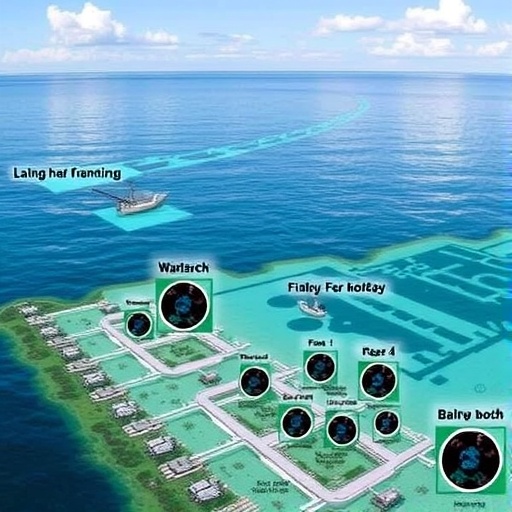
Central to this project is the integration of powerful Earth system models with localized hydrodynamic models. Specifically, the Community Earth System Model (CESM), known for its high-resolution climate scenario executions, will feed broad climate data into a nested Semi-implicit Cross-scale Hydroscience Integrated System Model (SCHISM) and Finite-Volume Community Ocean Model (FVCOM) framework. These sophisticated nested models will refine projections to the scale of individual coastal communities, providing granular, data-driven insights on sea-level trajectories that incorporate atmospheric forcing and ocean circulation peculiarities of the Gulf.
One of the distinguishing features of this research lies in incorporating vertical land motion data into sea-level projections. Vertical land motion, which includes subsidence and uplift caused by tectonic shifts, sediment compaction, and anthropogenic activities, dramatically influences local sea level and flood risk. By integrating geodetic and GPS-based land motion datasets, the project aims to generate calibrated, location-specific sea-level forecasts that far surpass the resolution and accuracy of traditional models. This granular forecasting is vital for coastal adaptation strategies which require precise knowledge of relative sea level rather than mere global averages.
The project also represents a significant leap in methodology by fusing physics-based oceanographic and atmospheric models with next-generation machine learning techniques. A novel graph-based probabilistic machine learning framework will be deployed to analyze and synthesize multivariate predictors, such as ocean heat content, dynamic sea-level trends, and atmospheric indices like the North Atlantic Oscillation. This framework can handle ‘deep uncertainty,’ a state where incomplete knowledge about future conditions hampers reliable projections. The system’s ability to probabilistically forecast extreme sea-level events will be invaluable for disaster preparedness and infrastructure resilience planning.
Laurent Chérubin, Ph.D., the principal investigator and a research professor at FAU Harbor Branch, emphasizes the transformative potential of this multidimensional approach. His team is dedicated to advancing not only the scientific understanding of regional sea-level rise but also translating these data-intensive insights into actionable tools for coastal communities. Collaboration with co-investigators and partner institutions is central to this effort, seeking to establish a synergetic relationship between theoretical models, machine learning interpretation, and practical application tailored for diverse Gulf Coast populations.
Confronting sea-level rise in rural and under-resourced areas along the Gulf Coast constitutes a primary focus due to systemic inequities in infrastructure, data availability, and technical expertise. To address these challenges, the project partners with Florida Sea Grant in outreach efforts encompassing four Gulf Coast communities. These initiatives will enhance community-level understanding of sea-level dynamics and facilitate scenario-based decision-making. Deploying advanced water level sensors at the community scale further enriches locally relevant datasets, enabling real-time monitoring and adaptive management.
Moreover, a user-friendly, artificial intelligence-driven platform is under development to democratize access to the project’s forecasting capabilities. Tailored to meet the specific needs of local governments, planners, and non-specialist stakeholders, this platform will synthesize complex modeling outputs into digestible, actionable guidance. The incorporation of AI not only accelerates data processing but fosters continuous learning from new inputs and stakeholder feedback, ensuring the tool’s evolutionary adaptation to emerging challenges and data streams.
James Sullivan, Ph.D., executive director of FAU Harbor Branch, articulates the broader societal impact of this research. He underscores how this project exemplifies the integration of rigorous scientific inquiry with community-centered resilience efforts. By delivering precise, scenario-based sea-level forecasts enhanced by cutting-edge modeling and artificial intelligence, the initiative stands to substantially mitigate the risks of coastal flooding. Beyond safeguarding property and ecosystems, it empowers local populations to make informed, proactive decisions in the face of an uncertain climate future.
The team assembled for this project leverages multidisciplinary expertise, including contributions from co-investigators such as Xingquan “Hill” Zhu, Ph.D., who brings advanced electrical engineering and computer science techniques vital for machine learning model development; Robert Burgman, Ph.D., a social scientist focused on community engagement and adaptive capacity; and Anna Braswell, Ph.D., whose ecological and geomatics expertise aids landscape-level environmental interpretation. This cross-sectoral collaboration enriches the project’s depth and applicability.
The National Academies of Sciences, Engineering, and Medicine, which oversees the Gulf Research Program, plays a pivotal role in ensuring the scientific rigor and policy relevance of this initiative. With a mandate dating back to 1863, the National Academies represent a cornerstone of independent analysis in the U.S., supporting evidence-based decision-making on complex matters at the intersection of science, technology, and society. This affiliation lends additional credibility and resource support, reinforcing the project’s potential for long-lasting, impactful contributions to coastal resilience.
Founded in 1971, the Harbor Branch Oceanographic Institute at Florida Atlantic University embodies a vibrant research community dedicated to oceanographic innovation. Its scientific portfolio spans ocean engineering, marine biotechnology, coastal ecosystem studies, and marine mammal conservation. With this latest grant, Harbor Branch further cements its role at the forefront of addressing emergent environmental crises through scientific creativity and community partnership, reinforcing its mission of “Ocean Science for a Better World.”
Florida Atlantic University itself is recognized nationally and internationally for its research productivity and commitment to social mobility. Serving over 32,000 students across multiple campuses, FAU has earned prestigious Carnegie Foundation designations that reflect its research intensity and community engagement. This project aligns perfectly with FAU’s broader institutional goals, showcasing how academic excellence can directly advance societal resilience and environmental stewardship at regional and global scales.
In summary, this innovative project undertaken by FAU’s Harbor Branch Oceanographic Institute represents a groundbreaking fusion of high-resolution climate simulation, physics-based ocean modeling, and artificial intelligence to combat the escalating challenges of sea-level rise in the Gulf of America. Through sophisticated modeling, community-driven applications, and impactful technology deployment, this initiative stands poised to transform resilience planning and adaptation strategies for vulnerable coastal populations, representing a beacon of scientific innovation with tangible, life-saving consequences.
Subject of Research: Regional sea-level rise dynamics and forecasting in the Gulf of America integrating oceanographic models, vertical land motion, and machine learning.
Article Title: FAU Harbor Branch Oceanographic Institute Secures $900,000 Grant to Advance Sea-Level Rise Forecasting in the Gulf of America
News Publication Date: (Not specified in the provided content)
Web References:
Florida Atlantic University: https://www.fau.edu/
Harbor Branch Oceanographic Institute: https://www.fau.edu/hboi/
Gulf Research Program, National Academies: https://www.nationalacademies.org/units/GULF-GULFEO-15-04
Image Credits: Florida Atlantic University
Keywords
Floods, Sea level, Sea level rise, Climate change, Climate change effects, Climate change mitigation, Natural disasters, Oceanography, Coastal zones, Ocean physics, Ocean temperature, Ocean waves, Ocean circulation, Sensors, Technology
Tags: $900000 research grantadvanced oceanographic modelingcoastal climate change researchDeepwater Horizon disaster science initiativesFlorida Atlantic University Harbor BranchGulf region environmental resilienceGulf Research Program fundinghigh-resolution sea-level forecastingmachine learning in ocean sciencesea-level rise in Gulf of Americasteric effects on sea levelvertical land motion impact