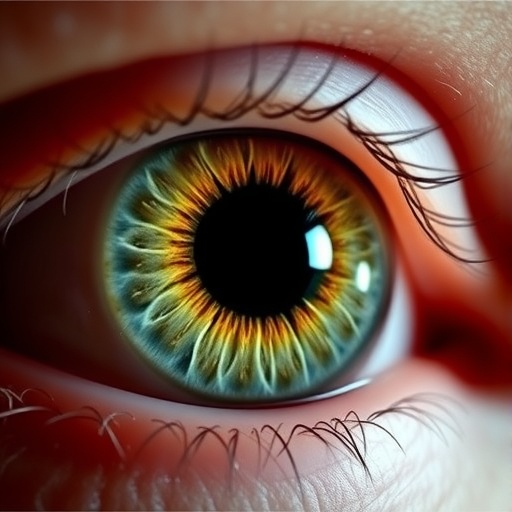
Congenital aniridia, a rare genetic disorder primarily stemming from mutations in the PAX6 gene, continues to reveal complexities beyond its hallmark symptom—the complete or partial absence of the iris. While the defective formation of this essential ocular structure has long marked the diagnosis, emerging evidence now highlights profound alterations at the neurophysiological level of the cornea, intricately linking genetic mutations to progressive sensory degeneration. A recent clinical investigation spearheaded by the Ocular Neurobiology Group at the Institute for Neurosciences (IN)—a collaborative hub of Miguel Hernández University of Elche (UMH) and the Spanish National Research Council (CSIC)—sheds unprecedented light on how aniridia disrupts corneal nerve function, potentially compromising ocular defense mechanisms and vision over time.
Although previous histological analyses have established a reduction in corneal nerve density among adults afflicted with aniridia, the functional integrity of the residual innervation remained elusive. Addressing this, Professor Mª Carmen Acosta and her multidisciplinary team conducted comprehensive neurophysiological assessments across a carefully curated cohort comprising pediatric and adult aniridia patients juxtaposed with unaffected controls. This methodical differentiation across age groups was vital to elucidate the developmental trajectory of corneal sensory function in the context of PAX6 mutations, overcoming the inherent challenges imposed by aniridia’s rarity and clinical heterogeneity.
Facilitating this intricate study was the collaboration with renowned ophthalmologist Nora Szentmáry from Semmelweis University in Hungary, whose expertise and patient access ensured robust sample acquisition and consistent clinical evaluation critical for longitudinal analysis. Central to the investigation was the use of highly sensitive assays measuring corneal sensitivity to mild mechanical stimuli administered via controlled air pulses complemented by cold stimulus detection—parameters reflecting diverse sensory modalities mediated by corneal nerves.
The findings are compelling. Pediatric patients displayed corneal sensitivity metrics akin to non-affected individuals, indicating that early developmental stages preserve nerve functionality despite the genotypic disruption synonymous with aniridia. However, this neurophysiological competence deteriorated markedly with age, as adult patients exhibited significant blunting of corneal sensory perception. This manifested as elevated thresholds for stimulus detection and impaired discrimination of stimulus intensity, signifying a progressive sensory neuropathy secondary to the underlying genetic anomaly.
Moreover, the study ventured beyond sensory perception to evaluate reflexive lacrimal responses, a critical component of ocular surface homeostasis and defense. Using the innovative i-Onion device—engineered by the investigative group leveraging proprietary patents—the team quantified tear production at rest and in response to lacrimal reflex activation induced via CO₂ microstimulation. Here, although basal tear secretion remained ostensibly normal, patients demonstrated a distinctly attenuated reflexive tear augmentation. This deficit in dynamic tear response signals a breakdown in corneal sensory feedback loops pivotal for maintaining the ocular surface against environmental insults.
At the cellular and molecular layers, these perturbations carry profound implications. Corneal sensory nerves do not merely transduce tactile or thermal signals; they exert trophic influences critical for tissue maintenance and regenerative capacity. The observed deterioration implies that progressive degeneration of corneal innervation undermines the cornea’s intrinsic reparative mechanisms, precipitating microlesions, compromised transparency, and chronic discomfort. This nexus between sensory nerve dysfunction and corneal pathology underscores why aniridia patients frequently confront compounded visual impairment and diminished life quality.
The broader research context involves parallel investigations using murine models genetically engineered to harbor PAX6 mutations, emulating human aniridia’s molecular pathology. These animal models provide an indispensable platform to dissect cellular pathways and molecular mediators orchestrating the progressive decline in corneal nerve integrity. Through such translational approaches, researchers aim to unravel targets for therapeutic intervention designed to halt or reverse sensory deterioration.
Understanding these neurobiological underpinnings at a mechanistic level is paramount, not only for conceptual clarity but for guiding future therapeutics. The progressive nature of corneal sensory loss documented here mandates urgent development of strategies to preserve nerve function, thereby safeguarding corneal health and patient vision over the lifespan. Approaches may encompass neurotrophic factor supplementation, gene therapy targeting residual PAX6 activity, or device-based sensory stimulation.
This investigation exemplifies the power of integrative, multidisciplinary science, combining clinical ophthalmology, neurophysiology, genetics, and bioengineering. The study was generously supported by national and international entities including the Spanish State Research Agency, the European Regional Development Fund, the Generalitat Valenciana, and foundations linked to Hungary’s scientific community. Such funding underscores the global recognition of aniridia’s clinical burden and the imperative to translate research into tangible patient benefit.
As the scientific community strides forward, this landmark research establishes a new paradigm in our understanding of congenital aniridia. No longer solely an anatomical anomaly, aniridia emerges as a dynamic neurodegenerative disorder affecting corneal sensory nerves, with cascading effects on ocular surface defense and regeneration. The elucidation of age-dependent sensory decline paves the way for early interventions, perhaps during childhood when nerve function remains near normal, aiming to forestall long-term complications.
The integration of technological innovation, such as the i-Onion device for reflex tearing assessment, highlights the potential for novel diagnostic and monitoring tools in rare ocular pathologies. Continual refinement of such technologies promises to augment clinical precision, enabling tailored management strategies that consider sensory nerve status alongside anatomical considerations.
In sum, this research illuminates the intricate interplay between genetic perturbations, neurophysiological dysfunction, and ocular health in aniridia. It challenges clinicians and researchers alike to reconceptualize therapeutic frameworks, advocating for comprehensive approaches addressing both structural and functional deficits. Ultimately, these insights herald hope for improved outcomes and quality of life for individuals grappling with this rare yet impactful disorder.
Subject of Research: People
Article Title: Age Impairs Corneal Sensitivity and Reflex Tearing in Congenital Aniridia
News Publication Date: 6-Feb-2026
Web References:
https://doi.org/10.1097/ico.0000000000004117
References:
Csorba et al., Current Eye Research, 2024.
Image Credits:
Csorba et al., Current Eye Research, 2024.
Keywords:
Cornea, Eye, Sense organs, Vision disorders, Eye diseases, Diseases and disorders, Neuroscience, Neurophysiology, Innervation, Neurotransmission, Sensory systems
Tags: congenital aniridia genetic disordercorneal nerve density reductioncorneal nerve function assessmentimpact of aniridia on visionmultidisciplinary clinical study aniridianeurophysiological changes in corneaocular defense mechanisms impairmentocular neurobiology researchPAX6 gene mutations eye diseasepediatric and adult aniridia patientsprogressive corneal sensitivity losssensory degeneration in aniridia