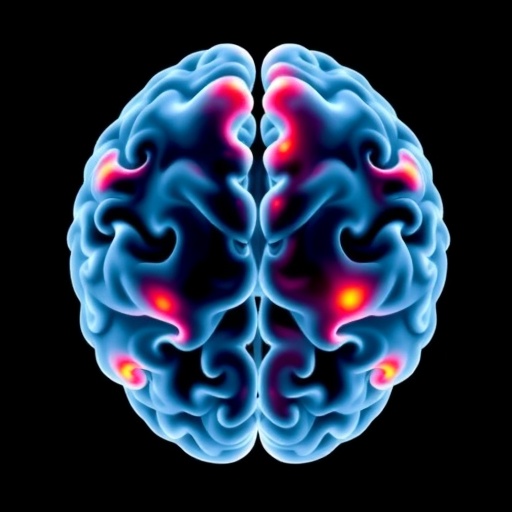
In the rapidly evolving landscape of medical imaging, artificial intelligence (AI) is poised to revolutionize the diagnostic process, particularly in the field of neuroimaging. Magnetic resonance imaging (MRI) has long been a cornerstone for clinicians seeking to unravel the complexities of neurological disorders. However, the unprecedented surge in demand for MRI studies worldwide has brought formidable challenges, including increased strain on health systems, elongated reporting turnaround times, and a concerning rise in physician burnout. These difficulties are especially pronounced in low-resource and rural settings, where access to expert radiological interpretation is limited. Addressing this pressing need, a team of researchers has introduced Prima, an AI foundation model trained at health system scale, capable of interpreting neuroimaging data with remarkable accuracy and clinical utility.
At the heart of Prima’s innovation lies its training on an expansive dataset comprising over 220,000 MRI studies sourced from a large academic health system. This unprecedented scale of data amalgamation and its hierarchical vision architecture enable the model to extract rich, generalizable features from brain MRIs, facilitating a broad spectrum of diagnostic insights. Unlike conventional AI models often limited to narrow diagnostic categories or research settings, Prima is designed to function robustly in real-world clinical environments, interpreting routine MRI scans and supporting a wide array of neurological diagnoses.
The researchers put Prima through a rigorous evaluative process over a one-year period within the health system, encompassing 29,431 MRI studies. The results were striking. Across 52 distinct radiologic diagnoses spanning major neurologic disorders, Prima achieved an average area under the curve (AUC) of 92.0%—a statistical measure indicative of excellent diagnostic performance. This diagnostic prowess surpasses that of existing state-of-the-art AI systems, both general-purpose and those specifically developed for medical imaging, reflecting Prima’s exceptional potential to enhance clinical workflows and diagnostic accuracy.
What sets Prima apart is not only its predictive accuracy but also its integration with clinical decision-making processes. The system provides explainable outputs that support differential diagnosis, allowing radiologists to understand the model’s reasoning and increase their confidence in AI-assisted interpretations. Additionally, Prima prioritizes the imaging worklist, enabling radiologists to focus on high-priority cases swiftly, streamlining hospital operations. It can further recommend clinical referrals, thereby guiding timely specialist evaluations and interventions, which is critical in neurology where timely diagnosis can dramatically affect patient outcomes.
In the current climate, healthcare AI must also grapple with concerns about algorithmic fairness and the equitable treatment of diverse patient populations. Prima addresses these ethical imperatives by demonstrating consistent performance across sensitive demographic groups, mitigating the risk of biases that could exacerbate health disparities. This fairness in algorithmic predictions supports equitable care delivery and fosters trust among clinicians and patients alike.
The technological foundation of Prima leverages a hierarchical vision-based architecture, an approach inspired by recent advances in computer vision and machine learning. This architecture processes MRI inputs through multiple layers of abstraction, capturing both global and localized brain features that are vital for accurate detection of pathologies ranging from tumors to neurodegenerative conditions and cerebrovascular diseases. The flexible and transferable nature of its learned features positions Prima as a foundational model that can be further adapted to emerging clinical needs.
From a systems perspective, implementing Prima within a comprehensive health system infrastructure addresses one of the most pressing bottlenecks in neuroimaging: workload saturation. Radiology departments, often overwhelmed by the volume and complexity of cases, stand to benefit substantially from AI tools that can automate aspects of image interpretation while still allowing expert radiologists to retain oversight. By alleviating routine tasks and optimizing case prioritization, Prima not only enhances efficiency but may also contribute to reducing physician burnout—a growing concern within the medical community.
Beyond operational enhancements, Prima’s potential to transform patient care pathways is profound. By integrating AI into the diagnostic loop, clinicians can receive rapid, consistent, and accurate interpretations, potentially decreasing misdiagnoses. This, in turn, facilitates earlier therapeutic interventions and may improve long-term neurological outcomes. Particularly in underserved regions, where access to specialist radiologists is scarce, AI-driven models like Prima can democratize high-quality diagnostic services, bridging systemic gaps in healthcare delivery.
The broader implications of training AI models on health system-scale data cannot be overstated. Such large-scale datasets encapsulate the diversity and complexity of real-world clinical cases, enabling algorithms to learn from truly representative patient populations. This approach contrasts sharply with many prior efforts that relied on limited or curated datasets, often restricting their generalizability and real-world applicability. Prima exemplifies the power of big data combined with advanced machine learning to forge next-generation clinical AI tools.
While Prima marks a significant leap forward, it also paves the way for future innovations. Its architecture can potentially be extended to other imaging modalities and disease domains, fostering a more integrated AI ecosystem within medicine. The model’s explainability framework offers a template for developing trustable AI systems, essential for widespread clinical adoption. Importantly, ongoing assessment of model performance, fairness, and clinical impact will be crucial to validate and refine Prima’s role in routine practice.
Moreover, the success of Prima underscores the importance of collaborative interdisciplinary efforts, involving radiologists, data scientists, software engineers, and clinicians, to tailor AI technologies that align with clinical workflows and priorities. The model’s deployment within a large academic health system embodies such collaboration, setting a precedent for other institutions seeking to harness AI to tackle complex healthcare challenges.
In summary, Prima embodies a transformative example of how AI foundation models, trained on comprehensive health system datasets, can redefine neuroimaging diagnostics. Its demonstrated excellence in accuracy, fairness, and clinical integration heralds a new era where AI not only augments radiological expertise but also enhances patient care and operational efficiency. As healthcare systems continue to embrace digital transformations, models like Prima will be instrumental in navigating the increasing complexity and volume of medical imaging studies.
As neurological diseases remain among the most challenging conditions to diagnose and treat, innovations such as Prima offer a beacon of hope. They promise to enrich diagnostic precision, reduce disparities in care, and empower clinicians to make more informed decisions swiftly. The journey toward AI-driven healthcare is complex, but Prima’s success story illustrates that with the right combination of data, architecture, and clinical alignment, the vision of AI-enhanced medicine is well within reach.
The deployment of Prima throughout an entire health system over the course of a year truly showcases the operational feasibility of such advanced AI tools beyond controlled research settings. This real-world validation is critical for allaying skepticism and demonstrating value to stakeholders across the medical landscape. Ultimately, Prima sets a high standard for future AI models aimed at improving medical imaging outcomes, making it a landmark achievement in biomedicine and AI research.
Subject of Research: Development and clinical validation of an AI foundation model for neuroimaging leveraging large-scale health system MRI data.
Article Title: Learning neuroimaging models from health system-scale data.
Article References:
Lyu, Y., Harake, S., Chowdury, A. et al. Learning neuroimaging models from health system-scale data. Nat. Biomed. Eng (2026). https://doi.org/10.1038/s41551-025-01608-0
Image Credits: AI Generated
DOI: https://doi.org/10.1038/s41551-025-01608-0
Tags: addressing radiologist burnout with AIAI applications in low-resource healthcareAI in medical imaging diagnosticsAI-driven diagnostic insights from MRIbrain MRI interpretation AIclinical utility of AI in neurologyhealth system MRI data traininghierarchical vision architecture in neuroimagingimproving MRI reporting turnaround timeslarge-scale MRI dataset utilizationneuroimaging artificial intelligence modelsreal-world neuroimaging AI implementation