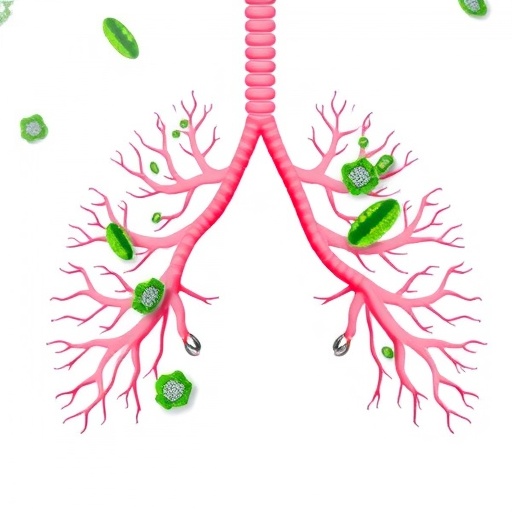
In a groundbreaking study poised to reshape our understanding and treatment of pulmonary fibrosis, researchers have unveiled the pivotal role of conditional BCL-2 expression in fibroblasts, revealing not only its contribution to the persistence of the disease but also its potential for reversal through targeted therapeutic intervention. Pulmonary fibrosis, a progressive lung disorder characterized by excessive scarring and impaired respiratory function, has long baffled clinicians due to its chronic nature and limited treatment options. The new research, published in Nature Communications (2026), offers a compelling mechanistic insight that could revolutionize therapeutic strategies aimed at halting and even reversing the fibrotic progression.
Pulmonary fibrosis involves the aberrant activation and proliferation of fibroblasts—cells responsible for producing the extracellular matrix that constitutes scar tissue. This fibrotic tissue compromises normal lung architecture, leading to a decline in oxygen exchange and ultimately respiratory failure. One of the central challenges in treating the disease is its persistent nature, where activated fibroblasts evade programmed cell death (apoptosis), allowing scar tissue to accumulate unabated. The novel study centers on B-cell lymphoma 2 (BCL-2), a well-known anti-apoptotic protein whose regulated expression may underlie this pathological persistence.
The research team employed a sophisticated genetic approach to conditionally modulate BCL-2 expression specifically within fibroblast populations. By utilizing a genetically engineered mouse model with inducible BCL-2 expression in these cells, they were able to mimic the pathological activation observed in human pulmonary fibrosis. The consequences of this selective BCL-2 upregulation were striking: fibroblasts exhibited marked resistance to apoptosis, leading to sustained fibrotic matrix deposition and enduring lung tissue remodeling. This model faithfully recapitulated the chronic progression seen in human patients, thus providing a powerful platform for mechanistic and therapeutic exploration.
Crucially, the study did not stop at characterizing the deleterious role of BCL-2 but took the imperative step of testing the potential for its pharmacological inhibition to reverse fibrosis. By administering a novel BCL-2-specific inhibitor, the researchers demonstrated a profound therapeutic effect. Treatment not only halted the progression of fibrosis but actively promoted the resolution of established scar tissue, as apoptotic pathways were reactivated within the stubborn fibroblast populations. This represents a seismic shift, as conventional therapies largely aim to slow disease progression rather than reverse existing damage.
To achieve these insights, the team combined extensive histopathological analyses with cutting-edge molecular assays, confirming that BCL-2 inhibition reinstated mitochondrial apoptotic signaling, culminating in cell death of pathological fibroblasts. Furthermore, RNA sequencing of lung tissue pre- and post-treatment revealed significant downregulation of fibrogenic pathways and upregulation of reparative mechanisms, reinforcing the dual role of BCL-2 not only as an apoptosis safeguard but also as a fibrotic mediator. The research meticulously delineated how BCL-2 modulates fibroblast survival in the context of lung injury, expanding our molecular understanding of fibrosis persistence.
From a translational perspective, these findings illuminate a promising therapeutic avenue for a disease desperately in need of effective interventions. Existing anti-fibrotic drugs, such as pirfenidone and nintedanib, offer modest benefit by slowing functional decline but do not meaningfully reverse established fibrosis. By contrast, selective BCL-2 inhibition targets the cellular survival mechanisms directly responsible for fibrotic plaque maintenance, opening pathways for regenerative therapy. This could significantly enhance patient outcomes, potentially restoring lung function and improving quality of life.
The study also underscores the importance of cell-type-specific targeting in complex diseases like fibrosis. The conditional expression model makes it clear that indiscriminate inhibition of BCL-2 could be deleterious, given its roles in various tissues and cell types. Future clinical translation will thus require precision drug delivery strategies or novel molecules tailored to fibroblast-specific BCL-2 dynamics, maximizing efficacy while minimizing off-target effects. The integration of biomarker-guided patient selection could further refine treatment success, targeting those with elevated fibroblast BCL-2 expression profiles.
Beyond pulmonary fibrosis, these findings raise intriguing possibilities for other fibrotic diseases where fibroblast persistence plays a pathological role. Arising from similar cellular and molecular dysfunctions, diseases affecting liver, kidney, or cardiac tissue fibrosis might also benefit from modulation of BCL-2-mediated survival pathways. This broad applicability enhances the scientific and medical impact of the work, suggesting a new paradigm in fibrosis research—one which emphasizes reversibility through apoptosis reactivation.
The implications of this research stretch into the realm of lung regeneration science. With persistent fibrosis reversed, the lung’s intrinsic repair mechanisms can operate more effectively, facilitating restoration of healthy parenchymal cells and microvascular networks. The interplay between apoptosis induction in pathological fibroblasts and subsequent regenerative signaling remains an exciting area for future investigation, promising synergistic treatment strategies that combine anti-fibrotic and pro-regenerative modalities.
Moreover, the study’s methodology offers a blueprint for exploring other anti-apoptotic pathways implicated in chronic disease persistence. Parallel to BCL-2, related members of the BCL-2 protein family, such as BCL-XL or MCL-1, may also contribute to fibroblast survival; delineating these roles could refine therapeutic targeting further. The identification and development of highly selective inhibitors for these proteins promise to enhance clinical outcomes across diverse pathological settings characterized by aberrant cellular survival.
The researchers also detailed the safety profile of the BCL-2 inhibitor employed, with no significant adverse effects reported in their preclinical models, an encouraging indicator for future clinical trials. Despite BCL-2’s recognized role in cancer cell survival, the context-specific targeting in fibroblasts may decouple cancer risk from anti-fibrotic benefit, a critical consideration for patient safety. Still, comprehensive long-term studies will be essential to fully characterize the therapeutic window and potential immunological impacts.
Intriguingly, the research incorporated advanced imaging techniques combined with functional lung assessments, demonstrating that treatment effects translated into measurable improvements in respiratory physiology. This holistic approach, spanning molecular biology to organ function, strengthens the case for rapid clinical translation and underscores the multi-dimensional impact of BCL-2 inhibition. Patients may eventually experience not only halted progression but also meaningful symptom relief and improved gas exchange efficiency.
The versatility and specificity demonstrated by targeting fibroblast BCL-2 expression exemplifies the growing trend toward precision medicine solutions in respiratory diseases. As the field pivots from symptom management toward molecularly targeted treatments, this research stands at the forefront. The promise of reversing a disease once considered inexorably progressive has profound implications, potentially inspiring renewed hope among patients and clinicians alike.
As the research community digests these findings, it is expected that subsequent studies will explore combinations with existing anti-fibrotics, immunomodulators, or regenerative agents, aiming to develop multidimensional treatment regimens. Collaborative efforts spanning medicinal chemistry, molecular biology, and clinical pulmonology will be essential to realize the full potential of BCL-2 inhibitors within complex patient scenarios.
In conclusion, the conditional expression of BCL-2 within fibroblasts emerges as a critical driver of persistent pulmonary fibrosis, with its therapeutic inhibition heralding a new era of disease modification and potential reversal. This landmark study challenges long-held paradigms of fibrotic irreversibility, introducing a targeted, mechanism-based approach with wide-reaching clinical implications. As the field advances toward translation, patients afflicted by pulmonary fibrosis may soon benefit from these innovative therapies, transforming a devastating diagnosis into a manageable—and possibly curable—condition.
Subject of Research: The role of conditional BCL-2 expression in fibroblasts in the persistence and therapeutic reversal of pulmonary fibrosis.
Article Title: Conditional BCL-2 Expression in Fibroblasts Promotes Persistent Pulmonary Fibrosis which is Reversible by Therapeutic BCL-2 Inhibition.
Article References:
Redente, E.F., Song, T., Javkhlan, N. et al. Conditional BCL-2 Expression in Fibroblasts Promotes Persistent Pulmonary Fibrosis which is Reversible by Therapeutic BCL-2 Inhibition. Nat Commun (2026). https://doi.org/10.1038/s41467-026-69865-4
Image Credits: AI Generated
Tags: anti-apoptotic proteins in fibrosisBCL-2 in fibroblastschronic lung disease researchextracellular matrix and lung scarringfibroblast apoptosis resistancefibrosis progression and reversalgenetic modulation of BCL-2novel pulmonary fibrosis interventionspulmonary fibrosis mechanismsrespiratory function impairment in fibrosisreversible lung fibrosis treatmenttargeted fibrosis therapies