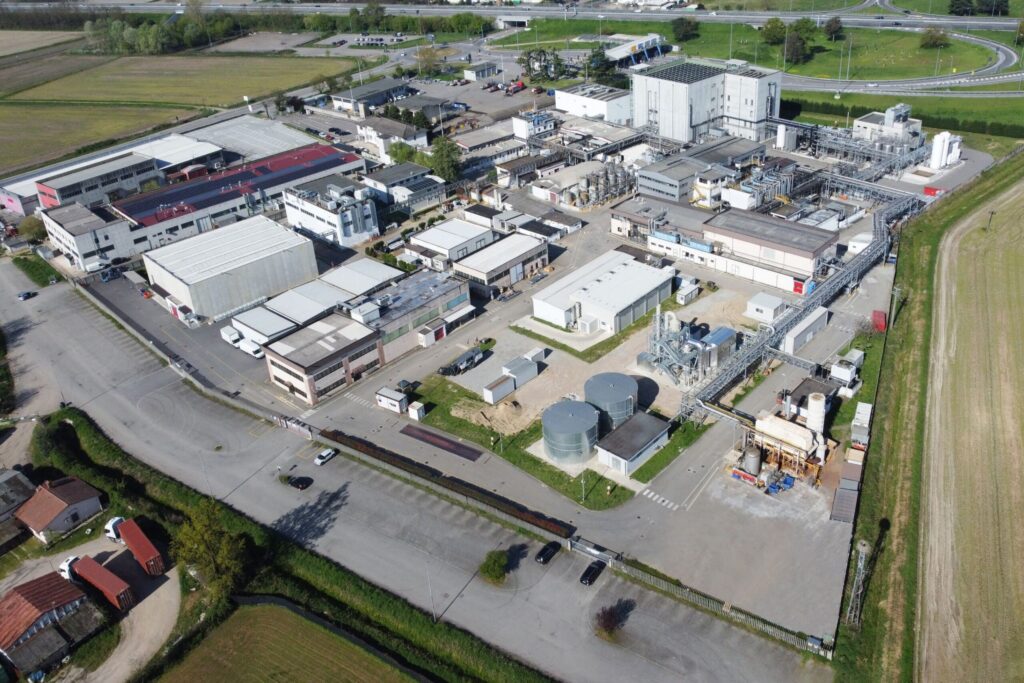
Axplora, which develops and manufactures highly potent active pharmaceutical ingredients (HPAPI), is investing $60 million to expand facilities at its Farmabios site in Gropello Cairoli, Italy, an expansion the company announced last July. The latest phase includes construction of a new 4,500 m², three-story R&D and laboratory hub, designed to accelerate development, expand execution capacity, and deliver high-potency manufacturing at scale.
Construction is underway, with completion targeted for February 2027. The underlying HPAPI manufacturing capacity supporting this growth is qualified and operational, with first projects underway, the company stated.
The investment builds on recent expansions across the Axplora network, including the multi-million-euro lyophilization expansion in Le Mans, France, which is engaged in the production of ADCs and cytotoxic drugs. Once operational, the new facility will increase development and analytical throughput, reduce technology transfer complexity, and compress timelines from early development to commercial production, according to a company official, who added that HPAPI molecules now make up over 30 % of the global drug development pipeline, with over 1,000 highly potent small molecules in development.
The new facility will house R&D laboratories, quality control and microbiology labs, and integrated support areas, connected to existing manufacturing operations. Co-locating development, analytics, and large-scale HPAPI production within a single specialized site eliminates multi-site delays, improves scale-up efficiency, and enhances overall program economics, noted the Axplora spokesperson.
Farmabios already operates a large HPAPI manufacturing workshop in Europe, built to an OEB 5 containment strategy. The site has five independent manufacturing lines and 105 m³ of installed capacity, supporting batch sizes from 0.5 to 300 kg. This platform is fully operational today, enabling immediate execution of high-volume, high-potency programs, noted Martin Meeson, CEO of Axplora.
“This investment is about enabling our customers to move more quickly at scale to and through the clinic, helping them bring their products to patients sooner. As pharma pipelines consist of molecules of higher potency and additional complexity, customers are looking to avoid delays through fragmented supply chains,” he said. “By expanding R&D, analytical and quality capabilities alongside large-scale HPAPI production, we are shortening development cycles and helping them control cost while accelerating time to market.”