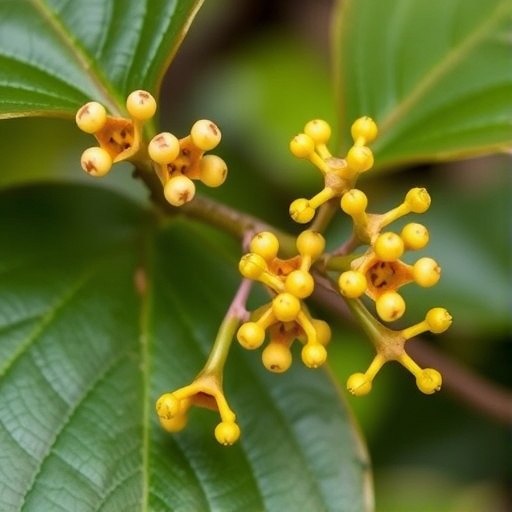
In a groundbreaking leap for natural product biosynthesis, researchers have successfully reconstructed the complete biosynthetic pathway for cinchona alkaloids in a heterologous plant host. This scientific breakthrough, published recently in Nature, uncovers the enzymatic choreography behind the formation of these historically and medicinally significant quinoline alkaloids. By leveraging the model organism Nicotiana benthamiana and an array of key biosynthetic enzymes, the team has opened new avenues for producing both natural and unnatural alkaloid analogues, marking a potential paradigm shift in how medicinal alkaloids are synthesized.
Cinchona alkaloids, best known for giving rise to the antimalarial drug quinine, possess complex biosynthetic origins that have long eluded full elucidation. This study identifies and functionally characterizes the enzymes responsible for converting central precursors into diverse cinchona alkaloid structures. The strategic supply of the monoterpene indole alkaloid precursor strictosidine to transformed N. benthamiana leaf tissues revealed efficient enzymatic conversion into downstream products, notably compounds designated as 8′ and 9′ in the pathway.
Significantly, when the methoxylated analogue of strictosidine (10-OMe strictosidine) was used, the biosynthetic machinery faithfully produced corresponding methoxylated quinoline alkaloids, namely 8a′ and 9a′. This observation highlights the substrate flexibility inherent within the discovered enzymes and provides compelling experimental validation for previously hypothesized parallel biosynthetic routes for methoxylated variants—a feature that extends the biosynthetic diversity of cinchona alkaloids.
Furthermore, the authors report that inclusion of additional upstream enzymes—strictosidine synthase (STR), tryptophan 5-hydroxylase (T5H), O-methyltransferase 1 (OMT1), and a vacuolar strictosidine transporter (STTr)—alongside the substitution of initial substrates with compounds 3 and 4, yielded a complex mixture of methoxylated and non-methoxylated keto quinolines. These product profiles closely mimic those found naturally in Cinchona species, confirming the authenticity of the reconstituted pathway and its potential for producing native-like metabolic profiles in heterologous hosts.
Notably, the endogenous reductase activity within N. benthamiana was sufficient to reduce (dihydro)corynantheal intermediates, eliminating the need to incorporate a dedicated corynantheal reductase gene into the system. This finding underscores the compatibility and functional synergy between native biochemical processes of the heterologous host and the introduced cinchona biosynthetic enzymes, streamlining the engineering process.
To complement in vivo synthesis, the researchers employed exogenous feeding strategies. Synthetic intermediate compound 11 was infiltrated into transformed N. benthamiana leaf tissues expressing methyltransferase (MAT), methylcrotonyl-CoA carboxylase (MCC), cinchonin synthase (CiS), and cinchonidine oxidase (CiO). The resultant biochemical transformations confirmed production of the quinoline alkaloids 8 and 9. Concurrent metabolomic analyses detected key pathway intermediates 11, 12, and 13, while a transient intermediate (14) was notably absent, corroborating metabolite patterns typical of Cinchona pubescens. These insights reinforce the functional accuracy and potential robustness of the biosynthetic pathway reconstitution.
Beyond replicating native product biosynthesis, this work explores the directed biosynthesis approach to generate structurally novel alkaloid derivatives. Directed biosynthesis, the deliberate feeding of unnatural substrates to biosynthetic pathways, has a longstanding precedent in natural product chemistry. Here, the team exploited the substrate promiscuity of the cinchona biosynthetic enzymes by supplying halogenated tryptamine analogues alongside natural co-substrate 4 into enzyme-expressing N. benthamiana.
Remarkably, these halogen substitutions—including 5-fluoro, 5-chloro, 6-fluoro, 6-chloro, 7-fluoro, and 7-chloro variants—were efficiently processed through the biosynthetic network, producing halogenated dihydrocinchoninone and dihydrocinchonidinone analogues confirmed via LC–MS and MS/MS fragmentation patterns. The metabolic machinery thus exhibits substantial tolerance for chemical modifications, a property with exciting implications for medicinal chemistry innovation.
Halogenation is an especially desirable feature in drug candidates, often enhancing pharmacokinetic properties and biological activity. The ability to enzymatically produce halogenated quinoline alkaloids could facilitate rapid generation of diversified bioactive compounds, circumventing challenging chemical synthesis pathways. Such enzyme-guided structural diversification holds promise for accelerating drug discovery pipelines centered on cinchona alkaloids and related therapeutics.
This milestone also underscores the versatility and utility of N. benthamiana as a heterologous expression platform for natural product biosynthesis. Its amenability to transient gene expression, coupled with intrinsic enzymatic activities that complement introduced pathways, provides an ideal experimental canvas for pathway elucidation and metabolic engineering. By integrating multiple genes from Cinchona alongside auxiliary enzymes from related species like Catharanthus roseus, the authors demonstrate a modular and scalable approach to complex alkaloid synthesis in plants.
The discovery and functionalization of strictosidine β-glucosidase (SGD) from C. roseus further bolsters the biosynthetic workflow by efficiently catalyzing key glycosidic bond cleavage steps, streamlining the pathway flux towards desired alkaloid intermediates. Such cross-species enzyme utilization exemplifies the synthetic biology ethos of combinatorial pathway assembly to maximize product yields and diversity.
While natural cinchona alkaloids have revolutionized medicine, their supply chain hinges on extraction from Cinchona bark, subject to agricultural and ecological constraints. The heterologous biosynthesis pathway established here addresses this bottleneck by enabling microbial or plant-based production of these compounds, promising more sustainable and controllable manufacturing routes aligned with modern biotechnological practices.
By elucidating detailed enzymatic steps and validating substrate scopes, this study lays the groundwork not only for producing known cinchona alkaloids but also for generating customized analogues with therapeutic potential. The demonstration that pathway enzymes accept chemically modified precursors paves the way for synthetic biology-driven drug development efforts marrying natural product scaffolds with medicinal chemistry modifications.
Collectively, these findings herald an exciting era where ancestral medicinal chemistry meets cutting-edge genetic engineering, allowing for scalable, precise, and eco-friendly production of bioactive natural products. The work presents a compelling narrative of harnessing nature’s molecular machinery within heterologous systems to tap into an immense chemical biodiversity that could transform therapeutic discovery and supply.
This elegant integration of enzyme discovery, pathway reconstitution, and metabolic engineering highlights the power of interdisciplinary science to solve longstanding challenges in natural product biosynthesis. As these methodologies mature, they promise to unlock vast potential across pharmaceuticals, agrochemicals, and beyond, setting new standards for natural product innovation.
With the biosynthesis of halogenated quinoline alkaloid analogues now within reach, future studies are poised to interrogate the biological activities of these novel compounds, potentially revealing new lead structures for diseases where cinchona alkaloids already show promise. Moreover, refining enzyme efficiencies and pathway regulation could further optimize yields, heralding practical applications in industrial biotechnology.
In sum, the successful reconstruction of the quinoline cinchona alkaloid biosynthetic pathway in N. benthamiana, alongside the facile production of both native and halogenated derivatives, represents a tour de force in plant natural product biosynthesis. This accomplishment not only sheds light on a biochemically intricate pathway but also ushers in a new toolkit for sustainable and diversified alkaloid production that could significantly impact medicine and synthetic biology alike.
Subject of Research: Biosynthesis and metabolic engineering of cinchona alkaloids in heterologous plant hosts for production of natural and halogenated derivatives.
Article Title: Biosynthesis of cinchona alkaloids
Article References:
Lombe, B.K., Zhou, T., Kang, G. et al. Biosynthesis of cinchona alkaloids. Nature (2026). https://doi.org/10.1038/s41586-026-10227-x
Image Credits: AI Generated
DOI: https://doi.org/10.1038/s41586-026-10227-x
Tags: antimalarial quinine biosynthesisbiosynthesis of unnatural alkaloidcinchona alkaloids biosynthesis pathwayenzymatic characterization of alkaloid enzymesheterologous plant host biosynthesismethoxylated strictosidine conversionmonoterpene indole alkaloid productionnatural product biosynthesis breakthroughNicotiana benthamiana metabolic engineeringquinoline alkaloid enzymatic synthesisstrictosidine precursor utilizationsynthetic biology of medicinal alkaloids