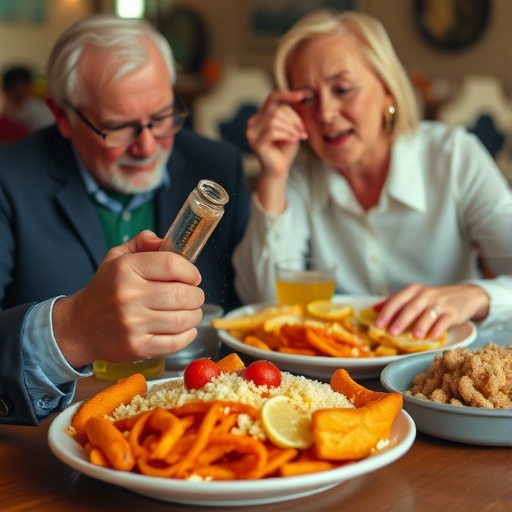
Salt, an essential mineral extensively used for seasoning and preserving food, has been a dietary staple for millennia. Despite its culinary importance, excessive salt consumption poses a significant public health challenge, contributing to a multitude of chronic diseases such as hypertension, cardiovascular disease, and kidney dysfunction. Increasingly, scientific evidence implicates overconsumption of salt as a factor accelerating cognitive decline among aging populations. Recognizing these risks, the World Health Organization (WHO) recommends that adults restrict their salt intake to no more than five grams per day, underscoring the urgent need to manage salt consumption patterns globally.
While the majority of dietary salt intake is derived from processed foods, an often overlooked source of additional consumption is the discretionary salt added at the table after meals are prepared. This extra salt accounts for an estimated 6% to 20% of overall salt intake, yet the habits driving this behavior remain insufficiently understood, especially across diverse cultural and demographic groups. To address this knowledge gap, a team of researchers in Brazil embarked upon a rigorous investigation to identify which subpopulations of older adults are most likely to add salt at the table and the socio-demographic and dietary determinants influencing this behavior.
The study, recently published in Frontiers in Public Health, harnessed extensive survey data collected between 2016 and 2017, encompassing over 8,300 Brazilian adults aged 60 years and older. Participants provided detailed recollections of their dietary choices over the preceding 24-hour period, including whether they habitually added extra salt during meals. Researchers incorporated a comprehensive array of independent variables into their analysis, ranging from sex, age brackets, educational attainment, living arrangements, household income, and urban or rural residence, to dietary patterns emphasizing the consumption of ultra-processed foods, fruits, and vegetables.
Remarkably, the data revealed that the habit of adding salt at the table persists among a significant minority of the older population, with 12.7% of men and 9.4% of women reporting this practice. However, the socio-demographic and dietary factors associated with adding salt diverged considerably between genders, elucidating complex interactions between lifestyle, environment, and nutrition in shaping salt-related behaviors.
For male participants, the spectrum of influencing factors was relatively narrow. Only two key variables correlated strongly with the practice of adding salt. Men adhering to dietary regimens aimed at controlling high blood pressure were less than half as likely to add salt compared to those without such dietary restrictions, demonstrating the impact of health-conscious interventions. Conversely, men who lived alone exhibited a 62% higher likelihood of adding extra salt than those with cohabitants, suggesting that social isolation may foster less healthy dietary habits.
In contrast, women’s salt-adding behavior presented a more intricate pattern, closely intertwined with various dietary and contextual characteristics. Women not following a diet to manage hypertension had 68% higher odds of adding salt. Living in urban environments or frequent consumption of ultra-processed foods doubled their likelihood of this habit, potentially reflecting greater exposure to modern dietary influences and lifestyle pressures. On a more positive note, women who regularly consumed fruits or vegetables demonstrated significantly lower probabilities—81% and 40% less likely, respectively—of adding salt, highlighting the protective association of healthy dietary patterns.
The investigators caution that these findings represent associative, not causal, relationships. Additionally, as salt-adding behavior was self-reported, the data may be subject to recall bias or social desirability bias. The temporal gap since data collection also raises the possibility that salt consumption habits may have evolved. Nonetheless, these insights shed valuable light on the nuanced socio-behavioral dynamics underpinning discretionary salt use among older adults.
Taste and habit jointly contribute to the proclivity for adding salt. Repeated consumption of sodium-rich foods diminishes taste receptor sensitivity, potentially driving a compensatory preference for heightened saltiness. Yet, for many, the act of sprinkling salt at the table extends beyond flavor enhancement, rooted instead in ingrained routines. Understanding this distinction is pivotal to designing effective interventions aimed at reducing salt intake.
Given the widespread role of ultra-processed and industrialized foods as primary sources of dietary sodium, comprehensive strategies targeting sodium reduction at the production level are crucial. However, individual-level behavioral modifications remain equally important. Tailored public health campaigns that account for gender-specific tendencies and lifestyle factors could amplify the effectiveness of these efforts in curbing excess salt consumption.
Alternative culinary strategies, such as incorporating herbs, natural seasonings, and acidic flavorings like citrus fruits, offer promising avenues to reduce discretionary salt use while maintaining palatability. Simple, practical approaches—like removing saltshakers from dining tables to disrupt habitual usage—could further support salt reduction endeavors and promote healthier eating patterns.
The Brazilian study significantly advances our understanding of the complex interplay between socio-demographic and dietary factors influencing salt-adding habits among older adults. By illuminating gender disparities and contextual determinants, it paves the way for more nuanced, culturally sensitive public health initiatives aimed at mitigating the risks associated with excessive salt intake and ultimately improving cardiovascular and cognitive health outcomes in aging populations.
As global populations age, recognizing and addressing the behavioral underpinnings of salt consumption will be essential for preventing the onset and progression of related non-communicable diseases. The findings from this study serve as a compelling call for integrated policies and community-based interventions that harmonize food industry regulations with personalized dietary guidance.
In conclusion, although adding extra salt at the table may seem innocuous, it constitutes a preventable contributor to the global burden of salt-related diseases. Through comprehensive research and strategic action that respects socio-demographic nuances, the journey toward healthier, low-salt diets can gain momentum, safeguarding the well-being of older adults worldwide.
Subject of Research: Not applicable
Article Title: The habit of adding salt to food at the table and its association with socio-demographic, anthropometric and dietary characteristics in Brazilian older adults
News Publication Date: 2-Apr-2026
Web References:
10.3389/fpubh.2026.1737516
Keywords:
Salt consumption, discretionary salt use, older adults, dietary behavior, socio-demographic factors, ultra-processed foods, hypertension, public health, Brazil, gender differences, sodium intake, cognitive decline
Tags: cardiovascular disease and dietary saltcultural influences on salt consumptiondiscretionary salt use at the tablegender differences in salt-adding behaviormanaging salt intake in aging populationsprocessed foods and salt contentpublic health implications of salt overconsumptionsalt and hypertension risksalt consumption habits in older adultssalt intake and cognitive declinesocio-demographic factors in salt useWHO salt intake recommendations