Epia Neuro is the latest medtech startup looking to tap the potential of brain-computer interface (BCI) technology, launching with a device that aims to turn brain signals into digital commands.
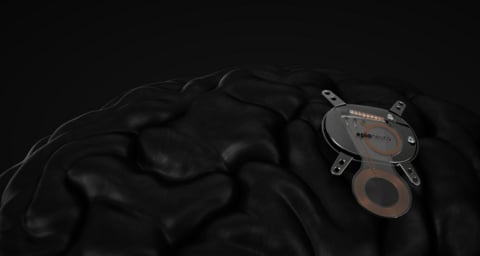
The San Francisco-based company is focusing its neural interface platform initially on stroke survivors. The platform combines a minimally invasive, long-lifetime read/write brain-computer interface (pictured above) with assistive devices and AI-driven support, aiming to help stroke survivors translate neural signals into functional movement, according to an April 2 release.
The device is implanted in the skull in a procedure that takes less than an hour and can be charged via a headset and replaced later in life if needed. It is designed to learn and interpret the user’s intended movements.
“Neural signals are fused with contextual data from external sensors to predict and drive assistive actions, including control of an upper-limb grip-assist motor prosthetic designed to be accessible, simple, and replaceable,” the company explained.
It is still early days for Epia, with first-in-human system demonstrations slated for later in 2026 at the Department of Neurosurgery at Lenox Hill Hospital in New York.
Related
Initially focused on stroke, Epia is also targeting future trials aimed at offsetting neurological decline.
“Restoring function after neurological injury requires not just decoding signals, but translating them into meaningful, real-world actions for individuals post stroke,” said David J. Lin, M.D., a critical care neurologist, neurorehabilitation specialist, and Director of Massachusetts General Hospital’s Neurorecovery Clinic, in a release.
“What is compelling about Epia Neuro’s approach is its focus on real-time interpretation of neural intent and its potential to deliver practical, day-to-day independence, starting with a focus on people with stroke where the unmet need is enormous.”
This comes just weeks after China’s medical regulator, in a world-first commercial approval, gave the green light to a BCI system from Shanghai-based Neuracle Technology aimed at restoring some hand movement in people with spinal cord injuries.
At the beginning of the year, Elon Musk’s closely-watched medtech Neuralink also said it was shifting into high gear for 2026 by “start[ing] high-volume production of brain-computer interface devices and move to a streamlined, almost entirely automated surgical procedure in 2026.”
The company’s BCI technology is designed to give paralyzed patients the ability to control digital devices using only their minds.