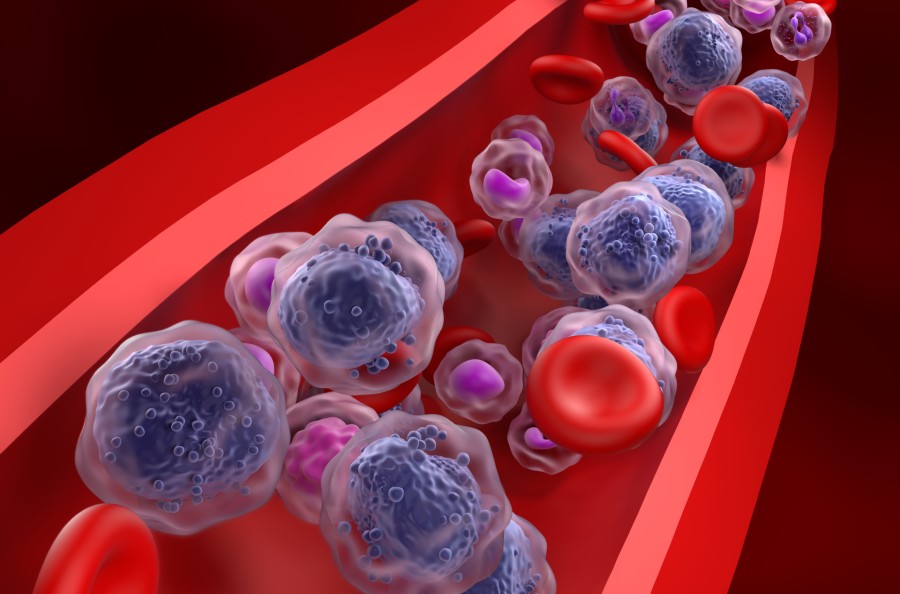
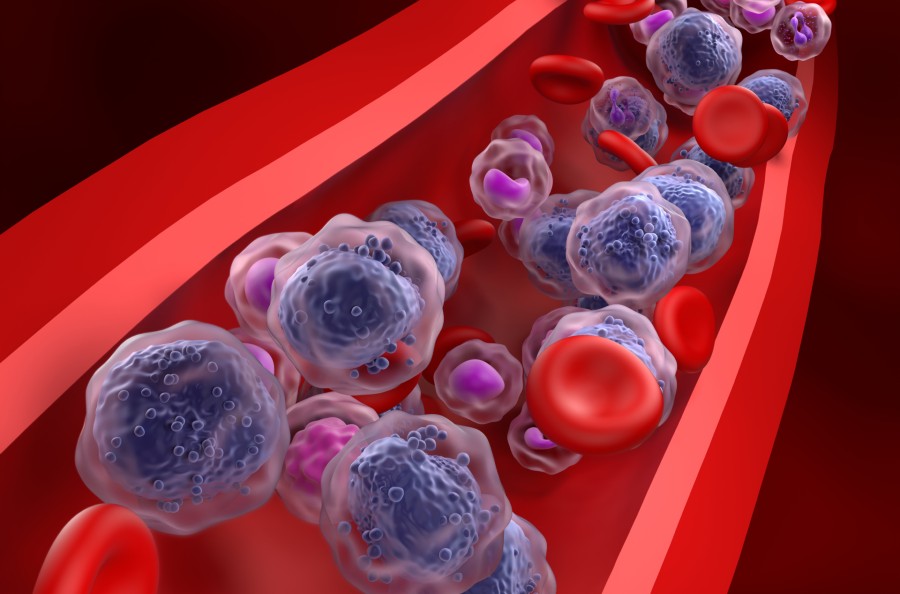
Scientists from The Jackson Laboratory (JAX) and their collaborators elsewhere have found a potential way to treat cases of acute myeloid leukemia that involves turning a key cancer fighting gene back on. Besides potentially treating AML without harsh chemotherapy regimens, their work also highlights a promising strategy for studying gene-silencing mechanisms in other diseases. Full details of the study, which was done in mice, are available in a paper published in Science Translational Medicine titled “Epigenetic reactivation of the tumor suppressor ZBTB7A by KDM4 inhibition in human acute myeloid leukemia.”
Normally, tumor suppressor genes work to prevent cells from becoming cancerous. But in cancers like AML, some of these genes are switched off epigenetically. These changes to gene activity are difficult to track because standard DNA sequencing technologies are designed to find mutated DNA. “If we can identify which genes have been silenced and understand how to turn them back on, that could open up entirely new therapeutic possibilities,” said Eric Wang, PhD, an assistant professor JAX who led the research. “Instead of only trying to kill these cells, we may be able to restore the mechanisms that normally keep them under control.”
Though scientists have made great strides in developing therapies for AML, prognosis for the disease is still relatively poor. Part of the challenge is that AML cells remain in an immature, stem cell-like state. According to the paper, Wang and his team developed a tool that combines fluorescence in situ hybridization and flow cytometry with CRISPR gene editing technology to map gene activity in cells. They used the tool, called FISHnCRISP, to identify a tumor-suppressing gene called ZBTB7A that is silenced in AML patients. By restoring ZBTB7A expression, the scientists forced the cancer cells into a state where they grew less aggressively.
Digging into the details, AML cells produce a longer version of ZBTB7A’s regulatory tail, that contains sites that attract a protein called ZFP36L2, which reduces the gene’s activity. Additionally, a family of enzymes known as KDM4 modify how DNA is packaged inside AML cells, which effectively silences ZBTB7A expression. Data from experiments in mice with AML showed that when KDM4 enzymes were blocked, ZBTB7A regained its expression, reducing leukemia burden while leaving normal blood formation largely unaffected.
Importantly, “there are drug candidates out there to inhibit KDM4, and in our study we just repurposed one of them to treat AML cells,” Wang said. “We won’t know unless we test it in clinical trials, but this approach could be better than chemotherapy, because we showed it’s not toxic at all to normal blood cells.”
Future studies will focus on refining the approach and determining whether it might be combined with existing treatments. The team plans to test an experimental drug that targets KDM4, which is currently being tested in a clinical trial for solid tumors.
“We demonstrated that downregulating ZBTB7A causes this hyperinflammatory state that promotes cancer growth” and “now, we’re proposing this epigenetic approach to force AML cells to differentiate into white blood cells that eventually undergo cell death,” Wang said. “We could potentially translate our research into an early phase clinical trial more readily than developing a whole new compound from scratch.”