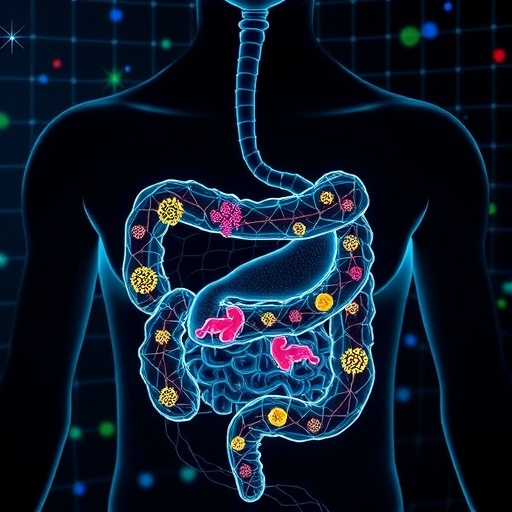
In a groundbreaking study poised to revolutionize our understanding of metabolic dysfunction-associated steatotic liver disease (MASLD), researchers have unveiled the intricate and previously underappreciated interplay between viruses, bacteria, and metabolites within the human gut. This multi-kingdom profiling study, recently published in Nature Communications, offers unprecedented insight into how gut phages—viruses that infect bacteria—interact with bacterial communities and metabolomic pathways, fundamentally altering the landscape of MASLD pathogenesis. As MASLD continues to represent a burgeoning global health crisis linked to obesity, diabetes, and cardiovascular diseases, these findings illuminate novel molecular and microbial targets that could pivot therapeutic strategies.
At the heart of this research lies the concept of multi-kingdom dynamics within the gut microbiome. Traditionally, scientific inquiry into MASLD has concentrated predominantly on bacterial dysbiosis—the imbalance of bacterial species in the gut. However, this study propels the field forward by incorporating viral entities, primarily bacteriophages, into the analytical framework. Bacteriophages, once overlooked as passive gut inhabitants, are now recognized as influential modulators of bacterial populations, capable of reshaping microbial community structure and function. Using state-of-the-art metagenomic sequencing combined with advanced metabolomics, the research team created an integrative profile linking phage abundance with shifts in bacterial taxa and metabolic outputs intimately tied to hepatic lipid dysregulation.
The methodologies employed in this study are novel in their scope and precision. High-throughput sequencing tools permitted an expansive cataloging of bacteriophage genomes concurrently with bacterial 16S rRNA analyses, enabling researchers to map phage-host networks with remarkable granularity. In parallel, untargeted metabolomic assays via mass spectrometry unveiled perturbations in key metabolites including bile acids, short-chain fatty acids, and lipid intermediates, which are known to influence liver metabolism and inflammation. By correlating viral and bacterial signatures with metabolite concentrations, the authors deciphered complex tripartite interactions driving pathophysiological changes in MASLD patients relative to healthy controls.
A striking revelation from this multi-kingdom analysis was the identification of specific phage lineages whose prevalence was markedly elevated in MASLD patients. These phages exhibited a predilection for infecting bacterial species known to be dysregulated in metabolic diseases, such as certain Firmicutes and Bacteroidetes strains. This phage-mediated modulation appears to tilt the bacterial community balance towards pro-inflammatory and lipid-accumulating phenotypes, exacerbating hepatic steatosis and insulin resistance. The findings suggest that phages may act as unseen architects of the gut microbial ecosystem, directly influencing host metabolic outcomes by orchestrating bacterial population dynamics.
Moreover, the study delved into metabolite alterations associated with these phage-bacteria shifts. Altered bile acid profiles, characterized by reduced secondary bile acids and increased primary bile acids, were strongly linked to the disturbed viral-bacterial interactions. Bile acids are vital signaling molecules in liver homeostasis, influencing pathways such as farnesoid X receptor (FXR) signaling, which regulates lipid and glucose metabolism. Disruption in bile acid metabolism thus contributes to the progression of hepatic lipid accumulation and inflammation. The metabolomic data further showed imbalances in short-chain fatty acids known for their protective anti-inflammatory roles, highlighting the cascading effects of phage-driven bacterial changes on key metabolic circuits.
The implications of this research are profound. By illustrating that gut viruses are not merely bystanders but active participants in metabolic disease pathophysiology, this multi-kingdom approach underscores the need to expand therapeutic exploration beyond bacteria alone. Phage therapy—a concept previously confined mostly to infectious disease treatment—may hold promise for modulating gut microbial communities in MASLD. Tailoring phage cocktails to selectively target detrimental bacterial strains could recalibrate microbial and metabolite networks toward healthful states, offering a new frontier in managing a complex, multifactorial disease.
From a systems biology perspective, the study exemplifies how integrating viral, bacterial, and metabolomic data can unravel the complex ecological and biochemical networks within the gut-liver axis. This holistic understanding aids in pinpointing biomolecular signatures that could serve as early biomarkers of MASLD progression or response to treatment. Such biomarkers hold significant clinical potential for personalized medicine, allowing interventions to be fine-tuned to individual microbial and metabolic profiles.
Importantly, this investigation also sheds light on the dynamic interplay between microbial ecology and host immune responses in MASLD. Phage-induced bacterial turnover can release pro-inflammatory molecules such as lipopolysaccharides (LPS) that exacerbate chronic low-grade inflammation—a hallmark of metabolic syndrome and liver disease. The enhanced inflammatory milieu further disrupts hepatic insulin signaling and fibrogenesis pathways, accelerating disease progression. Addressing this viral influence on inflammatory cascades opens new avenues for immunomodulatory therapies alongside microbiome management.
Furthermore, the study’s results call into question existing paradigms that categorize gut viruses solely as harmful or inert components. Instead, it reveals a nuanced balance where phages can exert both detrimental and protective effects depending on ecological context and host factors. The complexity of these interactions necessitates a carefully calibrated therapeutic approach, as indiscriminate phage elimination could potentially destabilize beneficial microbial networks or metabolic homeostasis.
Technological advancements were key to unlocking these discoveries. The researchers leveraged novel bioinformatic pipelines capable of integrating diverse multi-omics datasets, overcoming challenges inherent to viral genome analysis which often encounters high genetic diversity and low sequence homology. Coupling these pipelines with longitudinal patient sampling allowed for tracking temporal microbial and metabolite fluctuations, providing a dynamic view of MASLD progression influenced by viral and bacterial interplay.
Future research building on this paradigm will likely explore the mechanistic underpinnings of phage-mediated modulation at the molecular level. Elucidating phage-bacterial co-evolutionary dynamics in the gut environment could reveal new metabolic enzymes or signaling molecules relevant to liver health. In addition, expanding cohort sizes and including diverse populations will help validate these findings and uncover population-specific microbial-viral-metabolite signatures, critical for global applicability.
In summary, this seminal study illuminates the complexity and significance of gut phage-bacteria-metabolite interactions in MASLD pathogenesis. The multi-kingdom perspective it introduces provides a transformative lens through which we can understand metabolic liver disease, shifting research and clinical paradigms toward holistic microbiome-virome-metabolome integration. As metabolic diseases continue to rise worldwide, such insights are vital for developing innovative diagnostics and precision interventions that target the microbial ecosystem at multiple levels for maximum therapeutic benefit. Continued exploration at the crossroads of virology, microbiology, and metabolomics promises to unlock novel avenues for combating this pervasive and debilitating condition.
Subject of Research: Multi-kingdom gut microbiome interactions in metabolic dysfunction-associated steatotic liver disease (MASLD)
Article Title: Multi-kingdom profiling reveals altered gut phage-bacteria-metabolite interactions in MASLD
Article References:
Zhou, X., Zhou, D., Pu, Y. et al. Multi-kingdom profiling reveals altered gut phage-bacteria-metabolite interactions in MASLD. Nat Commun (2026). https://doi.org/10.1038/s41467-026-71981-0
Image Credits: AI Generated
Tags: bacteriophage modulation of gut bacteriagut microbiome and metabolomicsgut microbiome multi-omics analysisMASLD gut virome interactionsMASLD pathogenesis and gut dysbiosismetabolic dysfunction-associated steatotic liver diseasemetagenomic sequencing in liver diseasemulti-kingdom gut microbiome profilingnovel microbial targets for MASLD therapyobesity-related liver disease microbiome researchphage-bacteria-metabolite interplayviral influence on gut bacterial communities