As Sanofi counts down the days before its new leader arrives, the French pharma’s chief financial officer acknowledged there had been a “certain number of setbacks” under Paul Hudson’s tenure.
Hudson was pushed out of the company in February, weeks after admitting that 2025 had been a “bumpy ride” for the company. That ride included the anti-OX40L-ligand antibody amlitelimab flunking a phase 2 asthma trial, the oral TNF inhibitor balinatunfib missing the goal of a midstage psoriasis study and the Regeneron-partnered IL-33 candidate itepekimab failing one of a pair of phase 3 studies in chronic obstructive pulmonary disease.
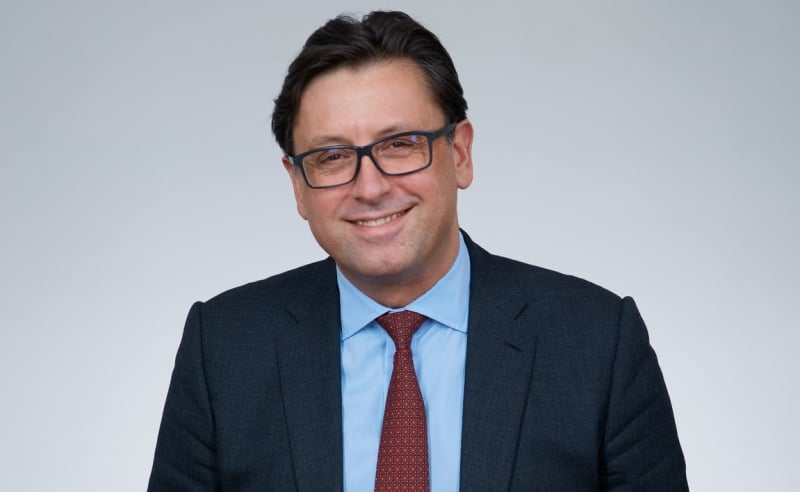
When asked by Fierce on this morning’s first-quarter 2026 earnings call whether Hudson’s tenure had ultimately been a failure in terms of R&D, CFO François Roger responded that he “would not phrase it the way you did.”
“Under his leadership I think we saw a very significant transformation of the company,” Roger continued. He pointed to an increase in revenues under Hudson’s leadership from around 36 billion euros in 2019 to 46 billion euros last year, as well as successful efforts to make the company’s industrial footprint more efficient.
“During Paul’s tenure, as well, we developed Dupixent, which will be a more than 22 billion euro drug in 2030,” he added.
When it came to R&D, Roger said that “you need to look at that in the long term.”
“It is true that last year we had a certain number of setbacks, clearly, but that happened in the industry,” he told Fierce. “So you need to look at that over time. We all know R&D inherently involves both successes and setbacks.”
The interim CEO also pointed to recent R&D achievements, such as the success of its oral, brain-penetrant glucosylceramide synthase inhibitor venglustat in a phase 3 study of type 3 Gaucher disease, as well as the TSLP and IL-13 inhibitor lunsekimig acing a pair of phase 2 respiratory studies.
However, neither of those announcements were untarnished by failure at the time. The venglustat win was disclosed along with a phase 3 fail in Fabry disease, while the lunsekimig readouts included a phase 2 failure for eczema.
The losing streak continued this morning, with Sanofi disclosing that its pentavalent meningococcal vaccine “did not achieve the predefined immunogenicity threshold in its phase 2 study.”
“Consequently, the vaccine candidate will revert to earlier stages of development for reformulation,” the pharma explained in its earnings release.
Related
The person in charge of putting Sanofi back on the right track is Belén Garijo, M.D., Ph.D. Garijo, who has been CEO of Germany-based Merck KGaA since 2021, arrives next week and has been specifically charged by Sanofi’s board with “strengthen[ing] the productivity, governance, and innovation capacity” of R&D at the pharma.
Amid speculation of how Garijo will approach this task, Roger told journalists this morning that Sanofi remains “full committed” to its four priority therapeutic areas, of which “immunology is our largest therapeutic area today.”
“Obviously, the arrival of Belén will be an occasion to revisit if we want to extend into potentially other therapeutic areas, as it happens regularly for pharmaceutical companies to revisit their portfolio,” the CFO added.