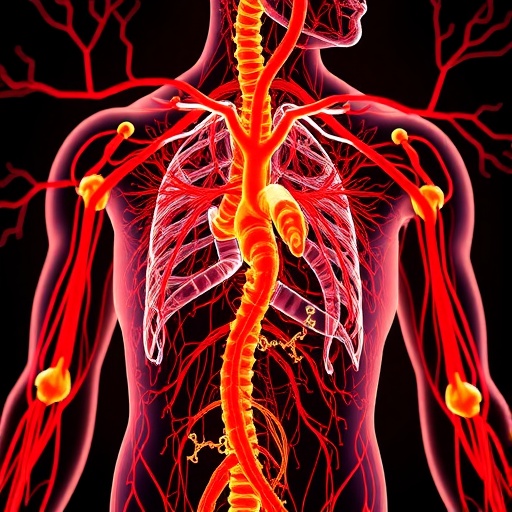
In the rapidly evolving landscape of biomedical engineering, the emergence of digital twins and advanced digital models of the human circulatory system promises to revolutionize how cardiovascular and hematological diseases are diagnosed, monitored, and treated. Unlike traditional static models, digital twins are sophisticated, dynamic virtual representations that continuously integrate real-time physiological data from their physical counterparts to simulate and predict complex biological behaviors. This groundbreaking technology holds potential to transform patient care by offering unprecedented personalization and precision in medical interventions, bridging the gap between computational simulations and clinical reality.
At the core of circulatory digital twins lies the ability to capture and replicate multi-scale dynamics of the human vascular network. From the macroscopic blood flow through arteries and veins to microscopic transport processes at the cellular and molecular level, these digital entities portray a holistic picture of hemodynamic function and systemic transport mechanisms. The marriage of high-fidelity medical-grade sensors, advanced wearable devices, and state-of-the-art microfluidic technologies facilitates continuous, noninvasive data acquisition, enabling digital twins to adjust dynamically to fluctuating physiological conditions and patient responses in real-time.
In clinical environments, however, realizing the full capabilities of digital twins remains a formidable challenge due to the multifaceted complexity of the circulatory system. Human physiology encompasses nonlinear, multi-scale interactions among myriad components, demanding sophisticated computational frameworks that can process vast datasets and dynamically update model parameters. Seamless bidirectional coupling between virtual models and physical systems requires high-performance computing resources, integration of machine learning algorithms, and robust data assimilation methodologies that maintain synchrony and fidelity.
One of the most exciting developments empowering these digital replicas is the fusion of artificial intelligence with traditional mathematical modeling. AI-driven inference leverages vast physiological datasets to identify hidden patterns and optimize model parameters, thus enhancing the predictive accuracy of digital twins. This synergy not only allows for precise patient-specific simulations but also supports mechanistic insights into disease progression, therapeutic response, and personalized risk stratification, opening new frontiers in predictive cardiology and hematology.
Implementing this digital paradigm necessitates concerted advances across several technological fronts. Medical-grade sensors must be capable of measuring a wide array of hemodynamic parameters such as blood pressure, flow velocity, oxygen saturation, and biochemical markers with high spatiotemporal resolution. The integration of wearable devices extends the capture of continuous ambulatory data into patients’ daily lives, transcending the constraints of hospital settings. Moreover, microfluidic platforms enable detailed in vitro modeling of blood components and their interactions, providing invaluable data to validate and refine digital twin architectures.
Computational modeling strategies underpinning circulatory digital twins employ a spectrum of approaches, from computational fluid dynamics that simulate blood flow and vessel wall interactions to agent-based models that represent cellular and molecular transport phenomena. These multi-scale models are calibrated and validated continuously through model-based inference techniques that reconcile simulation outputs with observed physiological data streams. Advanced data assimilation frameworks, including Kalman filters and Bayesian inference methods, are instrumental in maintaining model accuracy despite the intrinsic variability and uncertainty characteristic of biological systems.
Pathophysiological conditions form an integral aspect of these digital constructs. Cardiovascular disorders such as atherosclerosis, hypertension, arrhythmias, and heart failure can be dynamically represented within digital twin frameworks, allowing clinicians to simulate disease trajectories and evaluate potential interventions before clinical manifestation. Similarly, hematological abnormalities impacting blood cell transport and coagulation can be modeled to provide insights into complex disorders such as anemia, thrombosis, and sickle cell disease, facilitating personalized therapeutic planning.
The clinical applications of circulatory digital twins extend beyond diagnosis and risk stratification. Surgical planning benefits enormously from patient-specific simulations that predict hemodynamic outcomes post-procedure, aiding surgeons in optimizing interventions. Treatment planning, including pharmacological dosing and device implantation strategies, becomes more precise as simulations predict individual responses and side effects. Furthermore, digital twins may enable closed-loop therapeutic control systems, wherein continuous monitoring and predictive modeling inform real-time adjustments to treatment modalities, heralding an era of precision medicine.
Despite these advances, critical barriers must be overcome to translate digital twins into routine clinical practice. Data privacy and security concerns surrounding continuous physiological monitoring present significant challenges. Additionally, the heterogeneity of patient data and the necessity for standardized data protocols complicate model generalization. Regulatory frameworks must evolve to accommodate these new technologies, ensuring safety, efficacy, and ethical deployment while fostering innovation.
Looking ahead, the convergence of distributed computing, edge intelligence, and cloud-based platforms is expected to facilitate scalable implementations of circulatory digital twins. Innovations in biosensors capable of capturing emerging biomarkers, coupled with enhanced AI interpretability, will drive the next generation of models equipped to provide granular, actionable insights. Real-time monitoring combined with predictive simulation will empower clinicians and patients alike, enabling preemptive healthcare strategies and personalized interventions tailored to an individual’s evolving physiological state.
Moreover, interdisciplinary collaborations spanning bioengineering, computational biology, clinical medicine, and data science are crucial for surmounting current limitations. Developing comprehensive ontologies and interoperable model standards can foster ecosystem integration, ensuring seamless data exchange between devices, models, and healthcare systems. Continued efforts in education and training will prepare healthcare professionals to adopt and leverage digital twin technologies effectively, maximizing their impact on patient outcomes.
In the broader context of healthcare transformation, circulatory digital twins epitomize a shift toward systems-level understanding and management of human health. By embedding physiological complexity into adaptable digital frameworks, these models capture the dynamism inherent in biological systems, moving beyond reductionist approaches. As these twins evolve, they serve not only as decision support tools but also as experimental platforms for hypothesis testing, accelerating translational research and discovery in cardiovascular and hematological medicine.
The promise of digital twins extends beyond individual patients, influencing population health through aggregated insights derived from large-scale data assimilation and model sharing. Epidemiological modeling enriched by digital twin data can illuminate disease prevalence, progression patterns, and treatment efficacy across diverse demographics, informing public health policies and resource allocation. In this regard, digital twins contribute to the larger vision of precision public health—tailoring interventions at both individual and societal scales.
Ultimately, the future of circulatory digital twins is inexorably linked to advancements in computational power and algorithmic sophistication. The exponential growth in data availability, combined with increasingly powerful cloud and edge computing infrastructures, paves the way for complex, real-time simulations that can keep pace with physiological changes. As we unlock deeper mechanistic insights and harness predictive capabilities, digital twins are poised to become indispensable components of clinical workflows, ushering in a new era of medicine driven by convergence between biology and technology.
In conclusion, digital twins of the human circulatory system represent a paradigm shift that blends cutting-edge sensor technology, computational modeling, and artificial intelligence to bridge the divide between virtual simulations and physical biology. While challenges related to complexity, data integration, and regulatory oversight remain, ongoing innovations forecast a future where these digital counterparts enable proactive, personalized, and precise management of cardiovascular and hematological conditions. This transformative potential promises not just improved clinical outcomes but a fundamental reimagining of how health and disease are understood and addressed in the 21st century.
Subject of Research: Human circulatory system digital twins and digital models.
Article Title: Digital twins and digital models of the human circulatory system.
Article References:
Wu, R., Ferreira, G., Khan, N.S. et al. Digital twins and digital models of the human circulatory system. Nat Rev Bioeng (2026). https://doi.org/10.1038/s44222-026-00427-5
Image Credits: AI Generated
Tags: advanced wearable health sensorscardiovascular disease simulation technologycomputational models in clinical cardiologydigital twins in biomedical engineeringhemodynamic function simulationhuman circulatory system digital modelingmicrofluidic technology in healthcaremulti-scale vascular network dynamicsnoninvasive continuous patient monitoringpersonalized medical interventionsprecision medicine for cardiovascular carereal-time physiological data integration