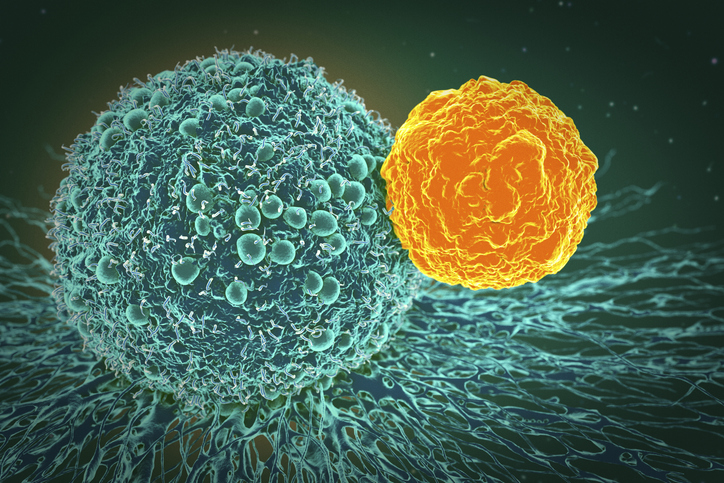

New research published by scientists at the University of California, San Diego (UCSD), describes an unexpected factor underlying T-cell exhaustion. The details of their work in mice are published in a new Cell paper titled “Proteostasis sustains T-cell differentiation potential and tumor-infiltrating lymphocyte function.”
T cells are critical members of the immune system but there are limits to their defensive capabilities. When fighting cancer cells, T cells often burn out and become dysfunctional. A major focus of current cancer immunotherapy efforts is rescuing T cells from this state and getting them back into cancer-fighting shape. The new Cell study led by scientists in the lab of Ananda Goldrath, PhD, a professor of molecular biology at UCSD, and their collaborators elsewhere, suggests that a potential solution to T-cell exhaustion might have to do with protein recycling.
Specifically, their finding has to do with proteostasis, the network of cellular processes that orchestrates the proper construction, movement, and destruction of proteins in cells. A component of this network features a type of recycling function where healthy cells continuously dismantle old and damaged proteins to preserve energy and reuse building blocks to make new proteins. According to the paper, the scientists uncovered an impaired protein recycling function as the surprise culprit in T-cell exhaustion.
“We found that exhausted T cells’ recycling programs are falling apart, leading to damaged and misfolded proteins that pile up with nowhere to go,” said Nicole Scharping, PhD, a post-doctoral fellow in the Goldrath lab and lead author on the paper. Additionally, the scientists also uncovered a way to reverse the accumulation of misfolded proteins by fixing the broken recycling function and restoring normal proteostasis. As Scharping explained, the issue can be resolved with a “tag and sort” fix. This is accomplished using E3 ligase enzymes which act as labelers at a recycling facility, tagging worn-out proteins so the cell knows to break them down.
“In exhausted T cells, many of these enzymes get switched off, and recycling grinds to a halt,” said Scharping. After examining thousands of proteins, the scientists honed in on NEURL3, RNF149 and WSB1 as the E3 ligases responsible for rescuing T cell recycling functions. “When we restored specific E3 ligases, the buildup cleared, and the T cells regained their function and worked better at clearing tumors.” While the new study was conducted in mice, the researchers indicate that similar strategies could be employed for immunotherapy treatments in human cancer.
Importantly, the findings may have implications in other diseases as impaired protein processing is not unique to exhausted T cells. “We think this loss of proteostasis resembles what occurs in neurons in other protein aggregate diseases such as Parkinson’s and Alzheimer’s,” said Goldrath. “Rescuing these cells from exhaustion could improve the ability of T cells to respond to both chronic infection as well as tumors.”