In a crucial stride towards tackling pollution at its molecular roots, scientists are refining the materials that capture the most pernicious contaminants before they jeopardize human health and the environment. At the center of this imperative quest are amine-functionalized sorbents—materials acclaimed for their efficiency in filtering out toxic gases, carbon dioxide, heavy metals, and the stubborn so-called “forever chemicals.” These compounds have become pivotal in advanced pollution control systems, heralding significant improvements in air and water quality worldwide. Yet, a shadow looms over their potential—the persistent degradation these materials suffer when exposed to heat and oxidative conditions, which dramatically diminishes their performance and lifespan.
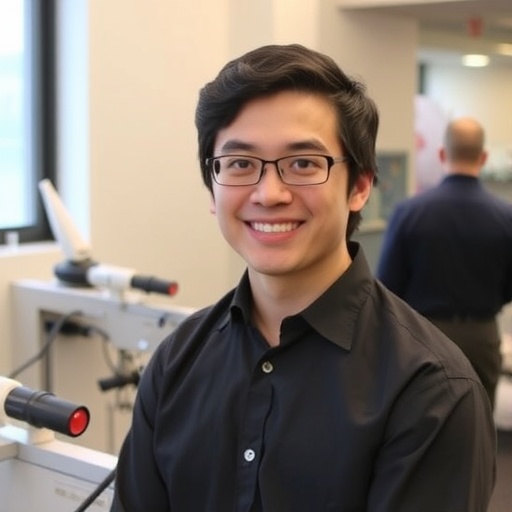
Despite their widespread deployment, the scientific community has struggled to unravel the precise oxidative mechanisms that instigate this deterioration. This knowledge gap has hindered the leap towards engineering more resilient, longer-lasting sorbents. Now, Masoud Jahandar Lashaki, Ph.D., an associate professor and innovative principal investigator at Florida Atlantic University’s Department of Civil, Environmental and Geomatics Engineering, seeks to decode these complex molecular breakdown pathways. His pioneering research has earned him one of the most prestigious accolades for emerging scholars—the National Science Foundation CAREER award—an endorsement of the transformative potential his work promises in environmental science.
Launching this five-year endeavor funded by the NSF Division of Chemical, Bioengineering, Environmental, and Transport Systems with $569,156, Dr. Lashaki aims to pierce the scientific veil clouding amine sorbent degradation. His study, aptly titled “CAREER: Elucidating the Underlying Mechanisms of the Oxidative Degradation of Amine-functionalized Sorbent Materials,” endeavors to illuminate the fundamental chemistry driving the oxidative breakdown. By charting these molecular disruptions, the research aspires to inform the design of next-generation sorbents, optimized for enhanced durability, efficiency, and accessibility—a trinity crucial for combating pollution across diverse industrial and residential settings.
At the core of this investigation is an intricate dance of chemical reactions occurring within amine-functionalized materials under oxidative stress. These materials, prized for forming strong bonds with carbon dioxide and other pollutants, gradually succumb to degradation, primarily due to interactions with reactive oxygen species and elevated temperatures. These reactions compromise the sorbents’ active sites, diminishing their adsorptive capabilities. Understanding precisely how molecular bonds disintegrate and which pathways dominate can unlock strategies to fortify these materials at the chemical level, potentially extending their operational lifespan by orders of magnitude.
The potential ripple effects of Dr. Lashaki’s work extend far beyond environmental remediation. Improved sorbent longevity will not only enhance the economic viability of pollution control technologies but also bolster sustainability across sectors reliant on air and water purification. Cleaner indoor and outdoor environments can substantially mitigate public health risks associated with air pollution, such as respiratory diseases and toxic exposure. Moreover, industries ranging from energy production to manufacturing stand to benefit from dependable, cost-effective systems that capture pollutants more effectively without frequent material replacement.
Equally significant is the educational dimension embedded within this research initiative. The project is designed to mentor burgeoning scientists and engineers, linking cutting-edge research to pragmatic applications through immersive, hands-on experiences. Targeted outreach will actively engage middle and high school students, demystifying complex environmental challenges and positing real-world scientific problem-solving as accessible and exciting. Additionally, educators will gain classroom-ready resources aimed at nurturing environmental literacy and fostering enthusiasm for STEM careers, thereby preparing a diverse future workforce equipped to tackle evolving ecological challenges.
The intersection of Dr. Lashaki’s research with broader scientific themes amplifies its relevance amid pressing global concerns. Carbon capture technology, volatile organic compound mitigation, and advancements in adsorption science form a nexus integral to contemporary environmental engineering and sustainability. His approach, rooted in industrial ecology principles, champions a cyclical conception of resource use—designing processes where waste is minimized, and outputs are repurposed, much like natural ecosystems. This paradigm not only addresses pollution but reimagines it as a pathway to innovation and systemic resilience.
Furthermore, the implications of this work resonate with national priorities beyond environmental stewardship. By refining materials that underpin carbon capture and pollution abatement, the research supports economic competitiveness and workforce preparedness in the United States, aligning with strategic goals in energy security and technological leadership. Enhanced sorbents could transform power generation practices, optimize waste-to-energy platforms, and refine hydrocarbon purification methods. There is also optimistic speculation about applications in confined environments critical to national defense and space exploration, such as maintaining air quality aboard submarines and spacecraft, where reliable pollutant filtration is vital for crew health and mission success.
Florida Atlantic University’s College of Engineering and Computer Science, where Dr. Lashaki conducts his research, is internationally recognized for its dynamic convergence of innovation and education across multiple engineering disciplines. The college fosters a research environment supported by prominent government agencies including the National Science Foundation, the Department of Defense, and the National Institutes of Health, spurring advancements in artificial intelligence, cybersecurity, biomedical engineering, and more. This award-winning research bolsters the university’s reputation as a hub of pioneering scholarship aimed at solving some of society’s most urgent problems.
University leadership enthusiastically embraces Dr. Lashaki’s achievements. Stella Batalama, Ph.D., Dean of the College, highlights the groundbreaking nature of this project, emphasizing its capacity to transform material design for environmental protection and energy systems. Such research exemplifies the university’s dedication to innovation with tangible societal impact, reinforcing its role in shaping sustainable technologies poised to benefit both current and future generations at local, national, and global scales.
Dr. Lashaki’s inquiry into amine-functionalized sorbents exemplifies a quintessential challenge in modern chemistry and materials science—balancing high-performance functionality with chemical longevity in hostile conditions. His work endeavors to bridge fundamental chemical understanding with practical engineering outcomes, aligning seamlessly with the urgent demand for cleaner air and water in the Anthropocene epoch. As climate change and industrial activity intensify environmental pressures, innovations like these are imperative, promising not just incremental improvements but paradigm shifts in how society manages and mitigates pollutants.
The implications of this NSF CAREER project rise well beyond foundational science; they symbolize a beacon of hope amid escalating environmental urgency. By delineating the molecular schematics responsible for sorbent degradation, Dr. Lashaki invites an era where pollution control materials are not disposable commodities but durable tools, engineered from the molecular level up to thrive in oxidative environments. This could redefine sustainable engineering, enabling technologies that not only capture contaminants but do so reliably over time, conserving resources and reducing waste.
In the greater scope of environmental engineering and sustainability, this research trailblazes pathways to integrate sophisticated chemistry with systemic ecological insight. It offers a compelling framework for harnessing chemical innovation to meet human and environmental health goals, entwining academic rigor, real-world problem-solving, and community engagement. As Dr. Lashaki and his team embark on this ambitious journey, the scientific community and society at large eagerly anticipate the breakthroughs that promise to accelerate the transition to cleaner, safer, and more sustainable living environments worldwide.
Subject of Research: Oxidative degradation mechanisms of amine-functionalized sorbent materials for pollution control.
Article Title: Unraveling the Molecular Mechanisms Behind Sorbent Degradation: A Path to Enhanced Pollution Control Technologies.
News Publication Date: Not specified.
Web References:
Masoud Jahandar Lashaki, Ph.D. faculty page: https://www.fau.edu/engineering/directory/faculty/lashaki/
FAU College of Engineering and Computer Science: https://eng.fau.edu
Florida Atlantic University main page: https://www.fau.edu
Image Credits: Florida Atlantic University
Keywords
Pollution control, Environmental remediation, Environmental management, Environmental chemistry, Environmental toxicology, Chemical reactions, Water chemistry, Carbon dioxide capture, Water oxidation, Materials science, Chemical properties, Amine-functionalized sorbents, Oxidative degradation.
Tags: advanced air purification technologiesamine-functionalized sorbents for pollution controlcarbon dioxide capture materialsenvironmental health and safety materialsFlorida Atlantic University environmental researchmolecular mechanisms of sorbent degradationNSF CAREER award environmental engineeringoxidative degradation of filtration materialspersistent organic pollutants filtrationremoval of heavy metals from watersorbent material lifespan enhancementwater purification innovation