
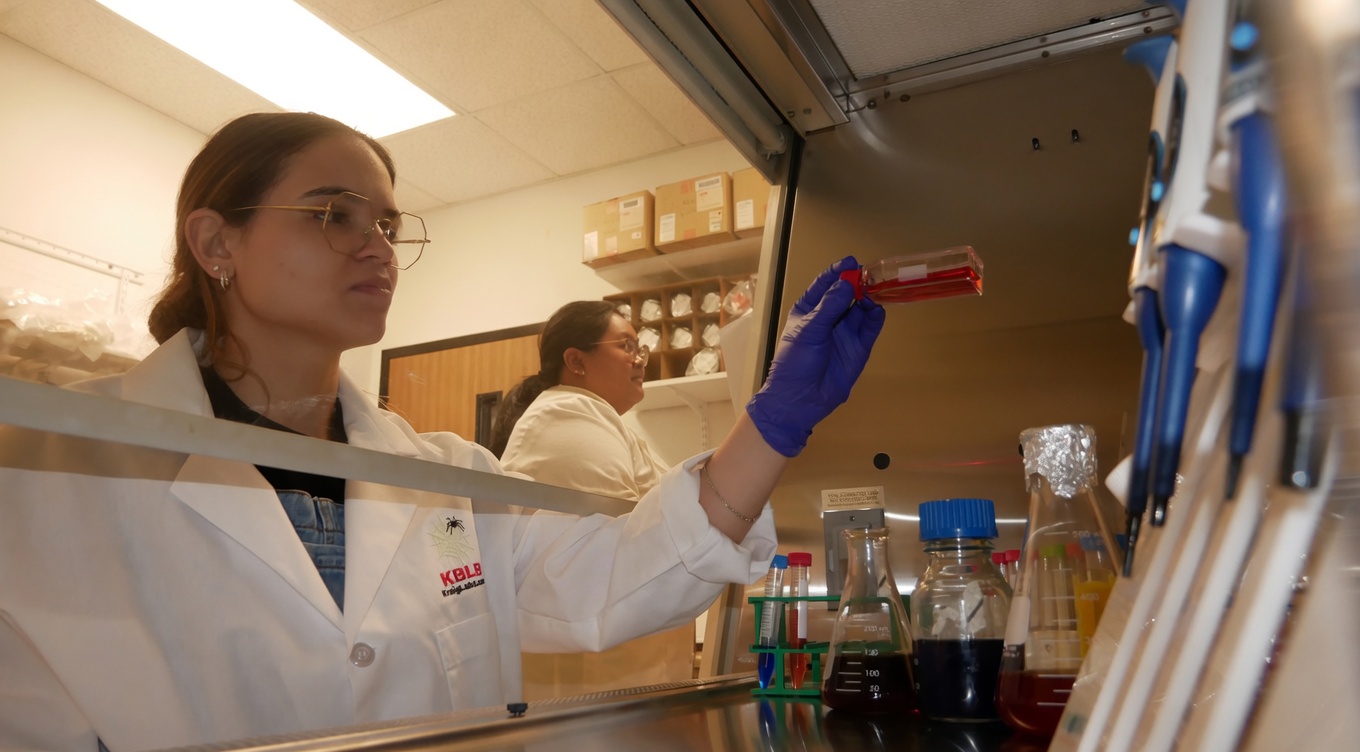
Kraig Biocraft Laboratories reports that company scientists created an immortalized silk gland cell line which Kraig officials say could form the foundation for a next-generation biotech platform with potential applications in biopharmaceutical manufacturing, therapeutic peptides, biologically active proteins, and advanced biomaterials.
This development significantly expands the potential commercial reach of the company’s core technologies beyond recombinant spider silk fibers and textiles, according to Kim Thompson, founder and CEO.
“This scientific achievement opens the potential for entirely new markets,” notes Thompson. “While our research team is expanding our portfolio and creating exciting new opportunities, management remains focused on the ongoing expansion of recombinant spider silk production and commercialization.”
The company’s research team successfully isolated and established immortalized silk gland cells that demonstrate strong proliferative capacity, stable serial passaging, and robust long-term viability in vitro, he adds. Early testing has shown exceptionally strong recombinant protein expression and production capabilities, positioning the platform as a promising candidate for scalable industrial bioprocessing and recombinant protein manufacturing, continues Thompson.
“The potential applications for this technology are extraordinarily broad,” maintains Xiaoli Zhang, PhD, Kraig Labs’ CSO. “We believe these immortalized silk gland cells could become the basis for a highly versatile biotechnology platform capable of supporting future work in therapeutics, vaccines, recombinant proteins, and next-generation biomaterials.”
The immortalized cell line has also reportedly demonstrated adaptability toward suspension culture systems, which are critical for large-scale industrial manufacturing and modern bioprocessing. This capability could allow the platform to integrate with conventional bioprocessing infrastructure and support more efficient, scalable, and cost-effective production systems, points out Zhang.