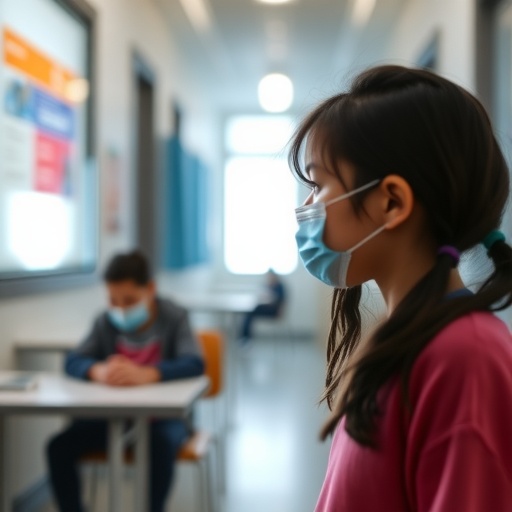
In recent years, the alarming increase in mental health emergencies among children and young people in England has not only strained healthcare services but also imposed a substantial economic burden on the National Health Service (NHS). A groundbreaking retrospective observational study published in the journal BMJ Open has meticulously analyzed the escalating costs associated with emergency hospital admissions for mental health problems among young individuals aged 5 to 18 years between 2012 and 2022. This comprehensive analysis highlights an unprecedented rise in the financial impact of such admissions, painting a stark picture of the ongoing mental health crisis in youth populations.
The study reveals that the total cost of emergency admissions for mental health conditions surged dramatically from £22.5 million in the fiscal year 2012/13 to a staggering £87.3 million in 2021/22. This nearly fourfold increase underscores the intensifying demand on acute medical wards and signals a shifting landscape in adolescent mental health care. Researchers attribute this surge not only to the increased rates of hospital admissions but also to the prolonged length of stays, emphasizing complex clinical presentations requiring extended medical attention and resources.
A parallel consideration is the broader context whereby the prevalence of probable mental disorders among children and young people aged 8 to 25 years increased notably from one in nine in 2017 to one in five by 2023, according to NHS Digital data. This rising prevalence aligns with the uptick in hospital admissions, reflecting systemic challenges in addressing early-stage mental health difficulties before they escalate to crisis points requiring emergency intervention.
Delving into the methodology, the researchers utilized Hospital Episode Statistics, an exhaustive dataset encompassing all emergency admissions across England’s acute care sector for the defined age group over a decade-long span. By stratifying admissions according to diagnoses, clinical interventions, and length of stay, they produced a granular cost analysis. This stratification enables a nuanced understanding of which conditions contribute most heavily to resource utilization, and thus to economic pressures on the healthcare system.
Notably, while the total costs for all pediatric emergency admissions—irrespective of diagnosis—doubled over the study period, mental health-related emergency admissions exhibited a much steeper cost increase, approaching 300%. This discrepancy indicates a disproportionately rising burden posed by psychiatric emergencies compared to general pediatric acute health crises. Such findings emphasize the urgency for targeted mental health interventions and resource allocation.
A temporal analysis detailed a particular inflection point after the 2019/20 period, coinciding with the onset of the COVID-19 pandemic. Despite an initial spike in mental health admission costs, the subsequent pandemic-related lockdowns and restrictions appeared to stabilize admission numbers, although overall expenses remained persistently high. This persistence is largely attributed to an increase in long-stay admissions, suggesting that while fewer young people were admitted during the pandemic, those who required hospitalization needed more intensive and prolonged care.
Examining demographic factors, the study found that females constituted over 80% of the total mental health-related costs in 2021/22, and the majority of these expenditures were concentrated in the 11 to 15 age cohort. This gender and age disparity signals specific vulnerabilities and potentially distinct clinical pathways in adolescent mental health disorders, warranting further investigation and tailored health service responses.
The analysis further identified eating disorders and self-harm as the top contributors to the economic burden in 2021/22. Intriguingly, although eating disorders accounted for a relatively small fraction of overall admissions, they drove substantial costs due to the intensive and prolonged nature of the required inpatient care. This underlines how certain psychiatric conditions can disproportionately affect healthcare expenditure, not merely through prevalence but due to the complexity and duration of treatment.
Socioeconomic factors also play a critical role, with admissions from more deprived areas correlating with longer hospital stays and higher per-admission costs. This highlights systemic inequalities and suggests that social determinants of health profoundly influence both the occurrence and severity of mental health crises, as well as the resource intensity needed for effective treatment.
While the scope and scale of the dataset used are commendable, the researchers acknowledge several limitations. Conditions contributing indirectly or secondarily to the hospital admission may be underreported, potentially skewing the understanding of patient complexity. Additionally, inconsistency in clinical coding and cost reporting across different NHS trusts may introduce variability in reported costs. Importantly, the study does not extend to consider long-term costs post-discharge, such as increased primary care use or community support, which may represent significant but unquantified economic burdens.
The research team urges policymakers to recognize that despite increased investment in child and adolescent mental health services (CAMHS), spending has not kept pace with growing demand. This mismatch has driven more young people to present in crisis at emergency departments, often resulting in hospital admissions to acute medical wards that are ill-equipped to provide specialized psychiatric care. Such trends not only strain existing acute care resources but may also hinder optimal mental health outcomes.
In light of these findings, the authors advocate for urgent, targeted interventions focusing on early identification and management of mental health issues in children and young people. They emphasize the necessity to reduce regional and socioeconomic disparities in access to mental health care, ensuring equitable distribution of resources and specialized services where they are most critically warranted.
Strategic investments in prevention, community-based support, and integrated mental health services are paramount to alleviate the pressure on acute care facilities. A dedicated focus on gender-specific and age-appropriate interventions could address the disproportionate burden observed among adolescent females. Furthermore, developing and scaling up specialized services for eating disorders and self-harm management may mitigate high-cost admissions through early, effective treatment pathways.
Overall, this study represents a crucial contribution to understanding the complex interplay between mental health morbidity, healthcare utilization, and economic impact. As the mental health crisis among young people in England escalates, clear evidence-based policymaking and resource allocation guided by such comprehensive analyses will be essential to safeguard the future wellbeing of this vulnerable population.
Subject of Research: People
Article Title: Cost of emergency hospital admissions to acute general wards for mental health problems among children and young people in England, 2012-2022: a retrospective observational study
News Publication Date: 19-May-2026
Web References: http://dx.doi.org/10.1136/bmjopen-2025-107143
Keywords: Emergency medicine, Mental health, Pediatric admissions, Child and adolescent mental health, NHS costs, Eating disorders, Self-harm, Health disparities
Tags: adolescent mental health crisis Englandemergency hospital admission costs youth mental healthfinancial impact hospital admissions mental illnesshealthcare costs mental health emergencies UKincreasing demand acute medical wards mental healthmental health disorders children and adolescentsmental health services strain NHSNHS economic burden mental health admissionsprolonged hospital stays youth mental healthretrospective observational study youth mental healthrising mental health emergencies children Englandtrends in youth mental health hospitalizations