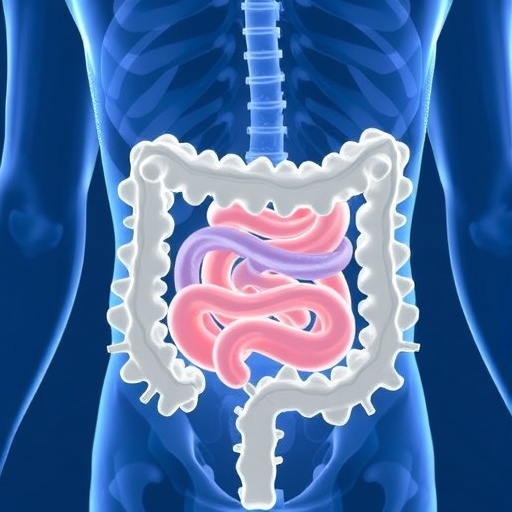
In a groundbreaking advance for regenerative medicine, a team of scientists has unveiled a novel method to engineer large-scale, innervated human gut tissues poised for transplantation. Published recently in Nature Biomedical Engineering, this innovative approach hinges on a technique termed transient spheroid confinement, which permits the robust generation of functional, physiologically relevant gut tissues complete with neural networks. This discovery marks a pivotal step toward addressing the worldwide shortage of viable organs and offers a promising platform for studying gastrointestinal diseases and drug responses in a human tissue context.
The human gastrointestinal tract is an extraordinarily complex system that performs critical roles in digestion, nutrient absorption, and immunological defense. Recreating this complexity in vitro has been a formidable challenge due to the intricate architecture of the gut wall and the essential interplay between epithelial cells and the enteric nervous system. Traditional organoid cultures, while invaluable, have largely remained limited in size and lacked the sophisticated innervation necessary to accurately mimic native gut physiology. The newly developed technique leverages transient confinement of cellular spheroids to overcome these limitations, yielding large-scale three-dimensional gut constructs with integrated neural networks.
At the core of this technology is the strategic use of transient spheroid confinement, wherein clusters of human intestinal progenitor cells are temporarily held in a mechanical scaffold that encourages aggregation and alignment before being released into a supportive matrix. This process induces cellular self-organization and maturation, driving the formation of continuous tissue structures that recapitulate both the morphology and function of native gut tissue. Importantly, co-culturing these intestinal cells with neural crest-derived progenitors results in spontaneous innervation, producing functional neural networks capable of regulating peristalsis-like contractions.
The engineered tissues demonstrate remarkable physiological functionality, exhibiting coordinated rhythmic contractions driven by intrinsic neural activity reminiscent of the enteric nervous system. Electrophysiological assays reveal that the neurons within the tissue respond to neurotransmitters and stimuli with action potentials, confirming the presence of a viable neural milieu. This innervation is a key advancement over previous models, which lacked the neuronal components essential for gut motility and proper digestive function. The production of these innervated gut tissues at a clinically relevant scale opens new opportunities for transplantation and disease modeling.
One of the most striking features of the approach is its scalability. By fine-tuning the biophysical parameters of transient confinement, the researchers successfully generated gut tissues exceeding several millimeters in size, a scale substantially larger than conventional intestinal organoids. This expansion enables the creation of tissue grafts suitable for surgical implantation, moving beyond experimental dish models toward therapeutic applications. The ability to cultivate functional tissues of this magnitude with integrated innervation addresses one of the crucial hurdles in tissue engineering—recreating the structural and functional complexity of human organs on a transplantable scale.
Beyond transplantation, the platform holds considerable promise for drug discovery and personalized medicine. Gastrointestinal disorders such as inflammatory bowel disease, irritable bowel syndrome, and motility disorders are complex and heterogeneous in nature, making effective modeling imperative. These large-scale, innervated gut tissues provide a near-physiological context for screening pharmaceuticals, understanding disease mechanisms, and testing patient-specific therapeutic regimens. The inclusion of neural components allows researchers to observe neurogastroenterological interactions, providing insights impossible to capture with non-innervated organoids or animal models.
The potential impact of this technology extends to the transplantation field, where donor organs are scarce and immunological rejection remains a significant challenge. Bioengineered gut tissues derived from a patient’s own cells could circumvent immune incompatibility, reduce transplant rejection rates, and improve outcomes. Moreover, the technique’s modularity suggests that it could be adapted to produce other hollow organs or tissues requiring complex innervation, broadening its clinical utility. The team’s innovative use of transient spheroid confinement may thus represent a paradigm shift in how we approach the fabrication of transplantable human tissues.
The methodology employed by the researchers integrates cutting-edge stem cell biology, biomaterials engineering, and neurobiology. By harnessing the self-organizing properties of pluripotent stem cell–derived intestinal and neural progenitors, they recreate the developmental crosstalk critical for gut morphogenesis. The transient mechanical confinement acts as a decisive cue, promoting cellular alignment and polarization, which are essential for tissue maturation. Subsequent liberation into a hydrogel mimics the extracellular matrix environment, facilitating structural integrity and nutrient diffusion, which are indispensable for sustained tissue viability.
In vitro, the tissues not only exhibit spontaneous contractile activity but also respond dynamically to pharmacological agents targeting neuronal and smooth muscle function. Such responsiveness highlights the sophisticated functional integration of multiple cell types within the engineered grafts. These results underscore the tissue’s utility as a preclinical model to evaluate the efficacy and side effects of gut-related drugs before clinical deployment, minimizing risks and accelerating drug development pipelines. The platform’s reproducibility and scalability are critical parameters positioning this technology for widespread adoption.
Adding to the significance of these findings, the team demonstrated successful transplantation of the engineered gut tissues into animal models, where the grafts integrated with host vasculature and maintained their contractile and neural activities over time. This in vivo validation substantiates the feasibility of translating this technology into clinical therapies. The grafts exhibited normal epithelial barrier functions and preserved neural control mechanisms, crucial for the maintenance of intestinal homeostasis post-transplantation. Despite the early stage of these translational studies, the groundwork has been firmly established.
The breakthrough was made possible by the interdisciplinary collaboration of experts in stem cell biology, bioengineering, and neurogastroenterology. Each discipline contributed unique insights into the cellular and molecular mechanisms guiding tissue development and function. Bioengineers refined the biophysical scaffold design for transient confinement, while stem cell biologists optimized differentiation protocols for robust neuronal and epithelial lineage specification. Meanwhile, neurogastroenterologists validated the functional neural connectivity and motility, ensuring physiological relevance. Such collaborative efforts exemplify the future of tissue engineering research, where integration of diverse expertise drives innovation.
While promising, the technology also faces challenges that will require continued research. For instance, perfecting vascularization within the grafts remains a priority to ensure long-term viability and nutrient supply post-implantation. Investigating immune compatibility and developing immunomodulatory strategies is also critical to prevent adverse host reactions. Additionally, engineering gut tissues with the full complexity of microbial interactions and immune cell components represents a frontier that must be addressed for comprehensive disease modeling. However, this work lays a vital foundation on which these future enhancements can build.
Looking ahead, the ability to create innervated, large-scale gut tissues ushers in a new era not only for transplantation science but also for understanding the human gut-brain axis, a burgeoning field linking gastrointestinal health with neurological disorders. The engineered tissues could serve as a platform to investigate how neural signals affect gut function and vice versa, shedding light on conditions like Parkinson’s disease and autism spectrum disorders that present with gastrointestinal symptoms. By providing unprecedented control and accessibility, this innovation opens exciting possibilities for exploratory research that were previously unattainable.
In summary, the advent of transient spheroid confinement for engineering functional, innervated human gut tissue represents a transformative leap in regenerative medicine. This approach allows for the scalable production of physiologically sophisticated intestinal tissues that replicate native structure and neural function. With demonstrated potential in transplantation, disease modeling, and drug discovery, the technology sets the stage for a future where engineered organs are no longer science fiction but practical therapeutic realities. As research continues to refine and expand upon this technique, the prospects for patients with debilitating gastrointestinal conditions grow ever brighter. This milestone heralds a new dawn for engineered organ systems.
Subject of Research: Engineering large-scale, innervated functional human gut tissues for transplantation.
Article Title: Large-scale and innervated functional human gut tissues for transplantation via transient spheroid confinement.
Article References:
Poling, H.M., Noël, T., Singh, A. et al. Large-scale and innervated functional human gut tissues for transplantation via transient spheroid confinement. Nat. Biomed. Eng (2026). https://doi.org/10.1038/s41551-026-01688-6
Image Credits: AI Generated
DOI: https://doi.org/10.1038/s41551-026-01688-6
Tags: 3D gut tissue constructsdrug response testing on human gut tissuesenteric nervous system integrationfunctional human gut tissue transplantationgastrointestinal disease modeling in vitroinnervated human gut organoidslarge-scale human gut tissue engineeringorganoid size and complexity enhancementovercoming organ shortage with bioengineered tissuesphysiologically relevant gut modelsregenerative medicine for gastrointestinal tracttransient spheroid confinement technique