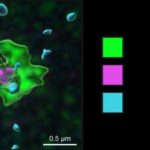

A new molecular recording strategy is giving researchers a way to capture DNA–protein interactions in single cells, including the weak and transient contacts that shape gene regulation but often slip past existing assays. The method, called D&D‑seq (docking and deamination followed by sequencing), layers a base‑editing enzyme onto an antibody‑binding nanobody, turning fleeting interactions into durable sequence marks.
The paper is titled “Single-cell mapping of regulatory DNA-protein interactions,” and was published recently in Cell.
“D&D-seq couples an antibody-binding nanobody to a cytosine base editor, a combination that enables detection of weak or transient factor binding through targeted cytosine-to-uracil [C→U] editing at protein-bound genomic sites,” the authors wrote. Those edits become a molecular breadcrumb trail, revealing where regulatory proteins have interacted with the genome.
This approach directly addresses a long‑standing gap in the field. Traditional methods for mapping transcription factor binding, such as ChIP‑seq or CUT&RUN, “cannot be easily incorporated into high-throughput single-cell workflows, limiting applications to bulk analysis or to single-cell profiling of only the strongest interacting chromatin factors. Single-cell profiling of TF binding in primary samples has been mainly restricted to inferential approaches based on expression levels of downstream TF target genes or through motif analysis of assay for transposase-accessible chromatin using sequencing (ATAC-seq) peaks, but identification of specific TF-binding sites requires more direct methods,” according to the authors.
The team demonstrated that D&D‑seq can map binding sites for transcription factors and other regulatory proteins, like chromatin remodeling proteins, across multiple cell types and conditions. One application involved profiling CTCF binding in primary T cells carrying an IDH2 mutation commonly found in leukemia. Because D&D‑seq operates at single‑cell resolution, it exposes heterogeneity in regulatory wiring that is often masked in population‑level assays.
Crucially, the method is platform‑agnostic. The authors showed that D&D‑seq can be integrated into standard single‑cell multiomics workflows, including ATAC‑seq, scATAC‑seq, and whole‑genome sequencing. That compatibility allows researchers to pair DNA–protein interaction maps with chromatin accessibility, gene expression, and genomic variation—all within the same cell.
As transcription factors and other regulatory proteins increasingly emerge as therapeutic targets, tools that reveal how these factors behave in patient‑derived cells will be essential. D&D‑seq offers a way to monitor how mutations, drugs, or engineered perturbations reshape regulatory landscapes at single‑cell resolution.
“We’re entering an era of medicine in which transcription factors and other gene-activity regulators will increasingly be therapeutic targets,” said Dan Landau, MD, PhD, the Bibliowicz Family professor of medicine and a member of the Sandra and Edward Meyer Cancer Center and the Englander Institute for Precision Medicine at Weill Cornell, who is also an oncologist at NewYork-Presbyterian/Weill Cornell Medical Center. “This kind of technology should have an important role in developing and evaluating such therapies.”
Although the method is still evolving, its conceptual elegance and technical flexibility have already sparked broad interest. By turning DNA into a recording surface for protein activity, D&D‑seq opens a new window into the “regulome”—one that captures the subtle, transient interactions that drive cellular identity and disease.