In a groundbreaking advance that holds promise for the future of brain cancer treatment, a team of researchers has unveiled compelling evidence demonstrating the effectiveness of combining MRI-guided focused ultrasound with radiation therapy to combat central nervous system (CNS) tumors. Published recently in the British Journal of Cancer, this pioneering study ushers in a new era of precision oncology by harnessing the synergistic potential of cutting-edge imaging and therapeutic modalities to improve patient outcomes in what has traditionally been a grim clinical landscape.
At the heart of this innovative research lies the concept of MRI-guided focused ultrasound (FUS), a non-invasive technique that precisely directs high-frequency sound waves deep into brain tissue, with the ability to modulate the tumor microenvironment and enhance the permeability of the blood-brain barrier. This method stands out because it allows real-time visualization and targeting of brain tumors without subjecting patients to the risks associated with open surgery. The coupling of this modality with conventional radiation therapy could, therefore, serve to amplify damage to malignant cells while sparing healthy brain tissue, potentially transforming the therapeutic index of CNS tumor treatments.
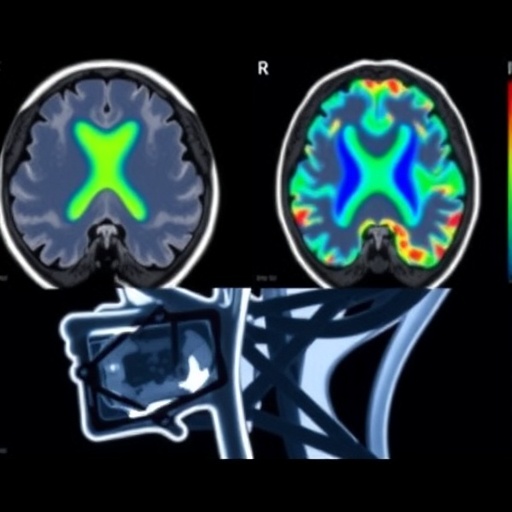
The investigative team conducted an extensive evaluation using CNS xenograft models, wherein human brain tumor cells were implanted into murine subjects to simulate the complexity and heterogeneity of human brain cancers. This approach is crucial, as it permits rigorous preclinical examination of tumor response within a living organism, maintaining the tumor’s microenvironment and vascular interactions. By employing advanced MRI imaging protocols alongside focused ultrasound, researchers were able to monitor changes in tumor size, vascular perfusion, and cellular viability over time — metrics that are vital in assessing therapeutic efficacy.
Throughout the study, the integration of FUS was revealed to significantly enhance the distribution and penetration of radiation, facilitating improved tumor cell eradication. The focused ultrasound generated transient openings in the blood-brain barrier, a feat that had once been considered nearly impossible without invasive procedures. This temporary permeability enabled a more uniform dose of radiation to reach malignant cells embedded deep within the brain parenchyma, addressing one of the major limitations of conventional radiotherapy: inadequate drug and therapeutic energy delivery.
Moreover, the MRI-guided system endowed clinicians and researchers alike with real-time feedback, allowing on-the-fly adjustments to ultrasound parameters and radiation dosages tailored to the tumor’s biological response. This real-time adaptability marks a leap forward in personalized cancer therapy, reducing off-target effects and potentially mitigating long-term cognitive deficits often associated with radiation-induced brain injury. The synergy between imaging and treatment helps establish a novel therapeutic paradigm where precision and efficacy are intimately linked.
Importantly, the research illuminated not only the immediate effects on tumor burden but also the post-treatment biological landscape. Focused ultrasound, combined with radiation, orchestrated a complex cascade of molecular responses — including DNA damage, apoptotic pathways activation, and immune microenvironment modulation. This multifaceted impact suggests that the combination therapy may exert a durable inhibitory effect on tumor regrowth, a critical factor in improving progression-free survival rates among patients with aggressive brain cancers such as glioblastoma.
In terms of safety and tolerability, the study’s comprehensive evaluation found that MRI-guided FUS did not introduce additional adverse effects when paired with radiation therapy. The non-invasive nature of focused ultrasound translated into minimal systemic toxicity while leveraging the precision of MRI guidance to avoid collateral injury to eloquent brain regions. This finding could revolutionize the way clinicians approach recurrent or inoperable brain tumors, offering a treatment method that is not only effective but also patient-friendly.
Furthermore, advances in the technology underpinning MRI-guided focused ultrasound allowed researchers to operate at frequencies and intensities optimized for maximum therapeutic impact without compromising safety. Sophisticated control systems ensured that the ultrasound energy was confined exclusively to tumor tissue, thereby preserving the architecture and function of surrounding healthy brain parenchyma. This level of sophistication in technological control is essential for clinical translation and sets a new benchmark for future interventions.
Beyond the biological and technological breakthroughs, the study underscores the importance of multidisciplinary collaboration. Neuroscientists, radiologists, oncologists, and biomedical engineers worked in concert to refine the protocols, interpret the complex data, and push the boundaries of what is feasible in tackling CNS malignancies. This collaborative ethos, bridging diverse expertise and methodologies, exemplifies the future of cancer research where integrative approaches yield innovations that single-discipline efforts could not achieve alone.
The potential implications of these findings extend beyond brain tumors alone. With continued refinement and clinical validation, the principles demonstrated here may be adaptable to a variety of CNS pathologies that are currently challenging to treat due to the sanctity of the blood-brain barrier. Disorders ranging from neurodegenerative diseases to metastatic brain lesions might benefit from targeted delivery methods inspired by this research, opening new therapeutic avenues.
Currently, the field is poised for early-phase clinical trials to translate these preclinical results into human applications. The promise of MRI-guided focused ultrasound combined with radiation therapy offers hope not only for extending survival but also for enhancing the quality of life for patients with devastating brain tumors. As the oncology community eagerly awaits these results, this study sets a powerful precedent and provides a roadmap for future investigations.
Intriguingly, the researchers also point toward optimization strategies such as combining FUS and radiation with immunotherapies, hypothesizing that the modulation of the immune microenvironment could be harnessed to elicit systemic antitumor immunity. This prospect, although speculative at this stage, hints at an exciting frontier that weaves together physical and biological modalities in the fight against cancer.
In conclusion, the study by Sharma et al. marks a seminal moment in CNS oncology, illustrating that the convergence of advanced imaging and therapeutic technologies can surmount long-standing barriers to effective treatment. With meticulous experimental design and a clear vision for clinical applicability, the research team has illuminated a pathway that could soon reshape how brain tumors are approached, combining precision, efficacy, and safety in one revolutionary therapeutic strategy.
As researchers continue to dissect the complex interplay between focused ultrasound, radiation, and tumor biology, the hope is that the once-daunting challenge of treating aggressive brain cancers will become much more manageable. This could ultimately translate into extended survival, reduced morbidity, and improved patient experiences, changing the narrative of brain cancer care forever.
The era of MRI-guided focused ultrasound combined with radiation therapy is dawning, promising a future where brain tumors can be treated with unparalleled precision and success, offering renewed hope to patients and clinicians alike.
Subject of Research: Evaluation of CNS xenograft brain tumor response to MRI-guided focused ultrasound combined with radiation therapy
Article Title: Evaluation of CNS xenograft brain tumour response to MRI-guided focused ultrasound in combination with radiation therapy
Article References:
Sharma, D., McNabb, E., Geraghty, B. et al. Evaluation of CNS xenograft brain tumour response to MRI-guided focused ultrasound in combination with radiation therapy. Br J Cancer (2026). https://doi.org/10.1038/s41416-026-03479-x
Image Credits: AI Generated
DOI: 15 June 2026
Tags: advanced imaging in brain tumor therapyCNS xenograft models in cancer researchcombination therapy for CNS tumorsenhancing blood-brain barrier permeabilityfocused ultrasound tumor microenvironment modulationimproving CNS tumor therapeutic outcomesinnovative brain cancer treatment techniquesMRI-guided focused ultrasound for brain tumorsMRI-guided ultrasound and radiation synergynon-invasive brain cancer treatmentnon-surgical CNS tumor interventionsprecision oncology in CNS tumors