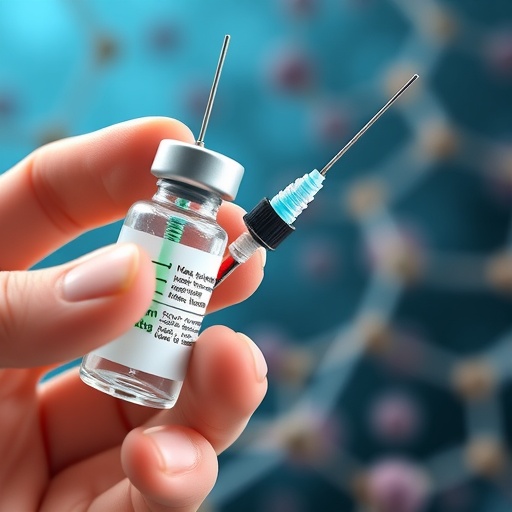
A comprehensive new review that assessed billions of doses of currently approved mRNA vaccines affirms that these vaccines provide protection against COVID-19, including severe COVID-19, across diverse populations, including children, pregnant women, and immunocompromised people. Booster doses extended and strengthened protection for existing SARS-CoV-2 subvariants through May 2023.
The review reinforces existing evidence that mRNA vaccines are safe; serious adverse events are rare and substantially outweighed by protection against severe disease, hospitalisation, and death.
The review also highlights that mRNA technologies have potential future uses for vaccines against influenza, RSV, and other infectious diseases, as well as for personalised cancer vaccines and RNA-based therapeutics.
The authors emphasise the importance of equitable access, strengthened and expanded manufacturing to low- and middle-income countries, and advanced storage and distribution for mRNA vaccines.
The authors also call for continued clear communication about mRNA vaccine safety and effectiveness to sustain public trust, improve vaccine uptake worldwide, and address ongoing misinformation about mRNA vaccines.
A comprehensive new review published in The Lancet affirms that currently approved mRNA vaccines are safe and highly effective at preventing infectious diseases, including COVID-19. The new review also suggests that mRNA vaccine technologies have potential as new options for treating and preventing other health conditions and diseases, including influenza, RSV, cancer, and autoimmune conditions.
Through detailed analysis of published data from laboratory research, clinical trials, and real-world surveillance of billions of mRNA vaccine doses, the authors assessed the science behind mRNA vaccines and their public health impact.
The review concludes that serious adverse side effects from mRNA vaccines remain exceedingly rare. For example, in real world surveillance, incidents of myocarditis and pericarditis (heart-related inflammation) following vaccination were higher among second-dose recipients, with rates of roughly 12.6 cases per million for Pfizer BioNTech’s BNT162b2 vaccine and about 35.6 cases per million for Moderna’s mRNA-1273. Importantly, the increased risk of myocarditis and pericarditis from mRNA COVID-19 vaccines, particularly in males aged 12-19, was significantly lower than the risk of developing myocarditis or pericarditis from a SARS-CoV-2 infection. Other serious adverse events were also very rare. For example, the risk of anaphylaxis was 4.7 cases per million doses (Pfizer), and Guilain Barre Syndrome was 38 cases per million doses (AstraZeneca) [see table]. Most other side effects, such as sore arms, fatigue, or fever, were mild to moderate and subsided after a few days.
The analysis found that across various clinical trials and real-world data, mRNA vaccines are about 87% effective against any documented SARS‑CoV‑2 infection, 93% effective against hospitalisation, and 94% effective against mortality within 14–42 days after vaccination. Effectiveness waned over time and, in some analyses, was reduced by age and against the Omicron lineage (67% against infection and 72% against hospitalisation), but booster doses helped restore protection. Ongoing surveillance and real‑world monitoring continue to support the vaccines’ tolerability and effectiveness as new variants emerge, and booster programs are implemented to maintain protection.
“Our comprehensive review provides compelling evidence confirming that approved mRNA vaccines are safe and highly effective. Throughout the COVID-19 pandemic, mRNA vaccines demonstrated what rapid, science-driven collaboration can achieve by delivering safe, effective protection at an unprecedented scale. The key lessons from mRNA vaccine use during the COVID-19 pandemic are not only about manufacturing speed, but about the importance of sharing safety data, conducting ongoing rigorous real-world surveillance, and providing clear information about how new types of vaccines work and why they protect communities,” said lead study author Dr Anna Blakney of the University of British Columbia (Canada).
mRNA platforms for future disease prevention and treatment
mRNA vaccines deliver genetic instructions to human cells to manufacture harmless viral proteins that train the immune system to recognise and fight the real virus. This process is temporary and ends once the body has learned to defend itself; it does not change a person’s DNA. The first FDA-approved mRNA vaccines were introduced during the COVID-19 pandemic [1], building upon decades of research to quickly scale up approval, production, and distribution.
Beyond COVID-19, the authors emphasise the versatility of the mRNA platform. Efforts are underway to develop vaccines against influenza, RSV, and other infectious diseases, as well as personalised cancer vaccines and RNA-based therapeutics (see figure 2 for trials underway). This breadth of potential applications signals a future in which mRNA technology could be tailored to individual patients and specific disease threats, offering rapid, flexible, and effective tools for public health.
“As the world continues to confront evolving infectious threats, our review underscores the need for sustained innovation, robust surveillance, and true global collaboration to maximise the life-saving benefits of this groundbreaking technology. mRNA vaccines have already transformed how we respond to emerging diseases, and with ongoing innovation and rigorous safety monitoring, they can drive progress in preventive medicine and cancer treatment for years to come,” said co-author Dr Manish Sadarangani of the University of British Columbia and BC Children’s Hospital Research Institute (Canada).
Expanding global access and equity
The authors also highlight that improvements in mRNA vaccine formulation and distribution enhance access and equity, as higher-temperature storage extends shelf life and lowers costs, broadening distribution.
Because mRNA vaccines are based on a common platform and can be adjusted to new targets much faster than other vaccine platforms, the manufacturing process is scalable and tightly controlled to keep the RNA pure and effective. Across the supply chain, vaccines are kept in specialised freezers and temperature-controlled settings, and newer storage options, such as higher-temperature storage and freeze-drying, are helping more vaccines reach remote places quickly and reduce waste. This combination helped speed up COVID-19 vaccine development and distribution.
“Expanding manufacturing capacity and ensuring equitable access in low- and middle-income countries is essential if mRNA vaccines are to fulfill their promise as a global public good. By investing in technology transfer, local production, and robust regulatory systems, we can shorten supply chains, reduce costs, and ensure that people everywhere benefit from safe, effective vaccines beyond pandemics,” said co-author Dr Robin Shattock of Imperial College London (UK).
The authors note the importance of ongoing post-licensure safety monitoring and long-term follow-up to study post-marketing real-world performance of existing licensed mRNA vaccines. They also emphasise the importance of documenting all instances of side effects, no matter how rare, as some signals might be missed or misinterpreted in real-world observational studies. Additional study limitations include that the review’s findings come from many different countries and programs, so results may vary by population, vaccine product, and how safety data are collected. Finally, the ongoing evolution of viruses means that effectiveness might change with new variants.
IF YOU WISH TO PROVIDE A LINK FOR YOUR READERS, PLEASE USE THE FOLLOWING, WHICH WILL GO LIVE AT THE TIME THE EMBARGO LIFTS:
Journal
The Lancet
DOI
10.1016/S0140-6736(26)00512-X
Method of Research
Literature review
Subject of Research
People
Article Title
Safety and efficacy of mRNA vaccines: a mechanistic and public health perspective
Article Publication Date
30-Jun-2026
COI Statement
AKB serves on the scientific advisory board for Replicate Bioscience,
Genvax Technologies, and Pasture Biosciences; has been an investigator
on projects funded by Pfizer, Replicate Biosciences, and Rocket Science
Health; and has served as an expert witness for a disciplinary hearing.
BJC has consulted for AstraZeneca, Fosun Pharma, GSK, Moderna,
Novavax, Pfizer, Roche, and Sanofi Pasteur. HJL received grants from
GSK, Moderna, and the Gates Foundation unrelated to this manuscript;
received payment for honoraria for lectures at Rice University
(TX, USA), UNC (NC, USA), and Rockefeller University (NT, USA);
received support for attending the Asia Pacific Immunization Summit
and the Examining Board for Helsinki and Oslo PhD candidates; serves
on the board of directors of PATH; and consults for the Gates Medical
Research Institute. KAT received grants from the Canadian Institutes of
Health Research , the Public Health Agency of Canada, and Coalition for
Epidemic Preparedness Innovations unrelated to this Review; and has
served as a Voting Member of the National Advisory Committee on
Immunization. MS received grants from GSK, Merck, Moderna, Pfizer,
and Sanofi–Pasteur unrelated to this work; and served as Chair and
Deputy Chair of two data and safety monitoring boards for COVID-19
vaccine trials. RJS has consulted for Sanofi–Pasteur
Media Contact
The Lancet Press Office
The Lancet
Office: +44 (0) 207 424 4249
Cell: +44 (0) 207 424 4249
Journal
The Lancet
DOI
10.1016/S0140-6736(26)00512-X
Journal
The Lancet
DOI
10.1016/S0140-6736(26)00512-X
Method of Research
Literature review
Subject of Research
People
Article Title
Safety and efficacy of mRNA vaccines: a mechanistic and public health perspective
Article Publication Date
30-Jun-2026
COI Statement
AKB serves on the scientific advisory board for Replicate Bioscience,
Genvax Technologies, and Pasture Biosciences; has been an investigator
on projects funded by Pfizer, Replicate Biosciences, and Rocket Science
Health; and has served as an expert witness for a disciplinary hearing.
BJC has consulted for AstraZeneca, Fosun Pharma, GSK, Moderna,
Novavax, Pfizer, Roche, and Sanofi Pasteur. HJL received grants from
GSK, Moderna, and the Gates Foundation unrelated to this manuscript;
received payment for honoraria for lectures at Rice University
(TX, USA), UNC (NC, USA), and Rockefeller University (NT, USA);
received support for attending the Asia Pacific Immunization Summit
and the Examining Board for Helsinki and Oslo PhD candidates; serves
on the board of directors of PATH; and consults for the Gates Medical
Research Institute. KAT received grants from the Canadian Institutes of
Health Research , the Public Health Agency of Canada, and Coalition for
Epidemic Preparedness Innovations unrelated to this Review; and has
served as a Voting Member of the National Advisory Committee on
Immunization. MS received grants from GSK, Merck, Moderna, Pfizer,
and Sanofi–Pasteur unrelated to this work; and served as Chair and
Deputy Chair of two data and safety monitoring boards for COVID-19
vaccine trials. RJS has consulted for Sanofi–Pasteur
Tags
/Health and medicine
/Health and medicine/Clinical medicine/Preventive medicine/Vaccination/mRNA vaccines
bu içeriği en az 2000 kelime olacak şekilde ve alt başlıklar ve madde içermiyecek şekilde ünlü bir science magazine için İngilizce olarak yeniden yaz. Teknik açıklamalar içersin ve viral olacak şekilde İngilizce yaz. Haber dışında başka bir şey içermesin. Haber içerisinde en az 12 paragraf ve her bir paragrafta da en az 50 kelime olsun. Cevapta sadece haber olsun. Ayrıca haberi yazdıktan sonra içerikten yararlanarak aşağıdaki başlıkların bilgisi var ise haberin altında doldur. Eğer yoksa bilgisi ilgili kısmı yazma.:
Subject of Research:
Article Title:
News Publication Date:
Web References:
References:
Image Credits:
Keywords