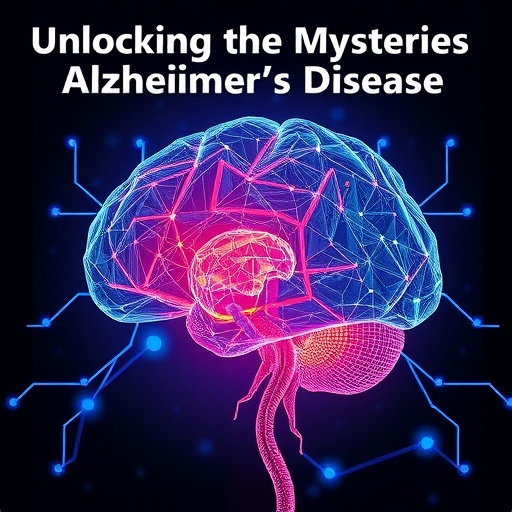
An interdisciplinary team of researchers at the University of Southern California’s Center for Personalized Brain Health (CPBH) has embarked on a groundbreaking investigation targeting enzymatic pathways implicated in the neuroinflammatory processes associated with Alzheimer’s disease. Their primary focus is a family of enzymes known to exacerbate brain inflammation, particularly in individuals carrying the APOE4 gene variant — the most significant genetic risk factor for late-onset Alzheimer’s. By manipulating these enzymes’ activity, either through activation or inhibition, the scientists aim to intercept and counteract the inflammatory cascade that precedes the neurodegeneration characteristic of Alzheimer’s.
The team is spearheaded by Hussein Yassine, MD, director of CPBH, whose research centers on the molecular underpinnings of neurodegenerative disorders. This initiative represents a significant step forward in understanding the mechanistic role of calcium-dependent phospholipase A2 (cPLA2), an enzyme whose elevated activity has been correlated with increased risk of dementia in APOE4 carriers. Their work has unveiled promising pathways to modulate cPLA2, potentially halting the deleterious inflammatory processes before irreversible neuronal damage occurs.
Bolstering these efforts, the Norman and Mary Pattiz Foundation has contributed a generous $3 million endowment to the Keck School of Medicine at USC. This philanthropic gift establishes the Norman and Mary Pattiz Alzheimer’s Research Fund, a resource dedicated to accelerating cutting-edge research efforts with an emphasis on early detection, innovative drug discovery, and nuanced exploration of neuroinflammation in Alzheimer’s. The infusion of capital will enable projects employing advanced imaging modalities and artificial intelligence techniques aimed at highlighting molecular targets involved in brain inflammation.
One of the fund’s pivotal initiatives is the establishment of a comprehensive registry to identify individuals at heightened risk for neuroinflammation, with particular attention to those harboring the APOE4 genetic variant combined with cardiovascular risk factors. This registry will serve as a critical platform for early intervention strategies, which are increasingly recognized as essential for preventing the progression of Alzheimer’s pathology before cognitive decline becomes apparent.
The fund will also prioritize modernization of the USC Alzheimer’s Disease Research Center’s (ADRC) brain pathology library. By enhancing the cataloging and analytical capacity around existing brain tissue samples, researchers can detect subtle markers of inflammation and neurodegeneration with greater precision. Such efforts are foundational for correlating pathological hallmarks with clinical phenotypes, significantly informing drug development pipelines.
Helena Chang Chui, MD, director of the ADRC and Raymond and Betty McCarron Professor of Neurology, emphasized the transformative potential of this partnership. She lauded the Norman and Mary Pattiz Foundation for their visionary support, which enables the ADRC to explore “bold hypotheses” regarding neuroinflammatory mechanisms, thereby fostering progress in the field of neurodegenerative disease research.
Karen Kerrigan, president of the Pattiz Foundation Board and former business manager of Norman Pattiz, articulated the Foundation’s commitment to honoring the legacy of its founders through pioneering research endeavors. The Foundation’s Board members, many of whom have personal connections to Alzheimer’s disease, share a unified vision to propel scientific breakthroughs that might lead to viable treatment options.
Recruitment of study participants will leverage two specialized registries at USC: GeneScreen, focusing on genetic risk profiling, particularly APOE4 carriers, and CPBH’s SPARK registry, which investigates lifestyle and health factors influencing brain aging and Alzheimer’s risk. These registries provide a powerful toolset for longitudinal study design and personalized intervention strategies.
Highlighting neuropathology as a cornerstone of Alzheimer’s research, the Foundation has endowed the Norman and Mary Pattiz Foundation Endowed Associate Professorship in Neuropathology. Anne Hiniker, MD, PhD, director of the USC ADRC Neuropathology Core, is the inaugural holder of this professorship. Her role involves detailed examination of over 1,100 brain tissue samples examining the progression of protein aggregates and inflammatory markers — hallmarks of Alzheimer’s pathology.
With the endowed professorship, Dr. Hiniker can dedicate significant research time to systematically cataloguing inflammatory signposts within brain specimens, potentially unearthing early indicators of disease onset and progression. Her work is expected to accelerate identification of viable therapeutic targets and facilitate translational research bridging basic science and clinical application.
Norman Pattiz’s background as a pioneering media entrepreneur, founder of the Westwood One radio syndicate, and a National Radio Hall of Fame inductee, reflects the visionary spirit the Foundation seeks to channel into Alzheimer’s research. Mary Turner Pattiz, known as “The Burner, Mary Turner,” was a celebrated radio personality who transitioned to clinical psychology, becoming a certified substance abuse counselor and influential leader in addiction recovery organizations.
The Foundation’s endowment honors Norman and Mary’s diverse legacies by investing in innovative scientific research aimed at understanding and eventually eradicating Alzheimer’s disease. As the disease continues to impact millions worldwide, such initiatives carry the promise of reshaping therapeutic approaches and redefining the future of neurodegenerative disease care.
Central to the scientific mission is the nuanced understanding that while the APOE gene, particularly its APOE4 allele, significantly elevates the risk of developing Alzheimer’s, it is not determinative. Dr. Yassine’s CPBH study demonstrated that elevated cPLA2 enzyme levels in APOE4 carriers correlate strongly with the emergence of dementia. The mechanistic insights from this work have paved the way for drug candidates capable of selectively targeting cPLA2 without compromising essential cellular functions.
The overarching goal is to identify neuroinflammatory pathways amenable to pharmacological intervention, thereby preventing or delaying the clinical onset of Alzheimer’s. The collaboration between CPBH, ADRC, and external funding sources like the Pattiz Foundation equips the scientific community with resources and multidisciplinary perspectives necessary to tackle this formidable disease from multiple angles.
“We are on the cusp of a paradigm shift,” summarizes Dr. Yassine. “The opportunity to interrogate enzyme activity, neuroinflammatory biomarkers, and gene-environment interactions in individuals at risk offers an unprecedented window for therapeutic innovation.” The commitment by the Pattiz Foundation fortifies this endeavor, underscoring the critical synergy between philanthropy and research excellence in addressing one of the most pressing health challenges of our time.
Subject of Research: Alzheimer’s Disease, Neuroinflammation, APOE4 Genetic Variant, Calcium-Dependent Phospholipase A2 (cPLA2), Early Detection and Prevention Strategies
Article Title: USC Researchers Pioneer Enzymatic Targets to Halt APOE4-Linked Neuroinflammation in Alzheimer’s Disease
News Publication Date: Not specified
Web References:
USC Scientists Identify Promising New Target for Alzheimer’s-Linked Brain Inflammation
Image Credits: Photo credit to USC
Keywords: Alzheimer disease, neurodegenerative diseases, dementia, brain, inflammation, neuroimaging, drug targets, drug discovery, genetic disorders
Tags: Alzheimer’s disease enzymatic pathwaysAPOE4 gene Alzheimer’s riskcalcium-dependent phospholipase A2 rolecPLA2 enzyme inhibitioninterdisciplinary Alzheimer’s researchmolecular mechanisms of dementianeurodegeneration prevention strategiesneuroinflammation in Alzheimer’sneuroprotective enzyme modulationpersonalized brain health researchphilanthropic funding for Alzheimer’sUSC Center for Personalized Brain Health