
At the 74th American Society for Mass Spectrometry (ASMS) Conference in San Diego, the obvious story was hardware. Vendors showcased faster acquisition, higher sensitivity, alternative fragmentation, spatial workflows, and software ecosystems. New or highlighted platforms and workflows came from Waters, Thermo Fisher Scientific, Sciex, Bruker, Biognosys, and Evosep.
But after several days of talks, posters, hallway conversations, and interviews with senior figures in mass spectrometry (MS)-based proteomics, the deeper story was not simply that instruments are getting better. The field is beginning to look past the instrument. The mass spectrometer is still central, but the question is shifting: what has to happen around it for proteomics to become clinically useful, scalable, trusted, and routine?
Beyond the instrument
Jennifer Van Eyk, PhD, professor of cardiology, biomedical sciences, pathology, and laboratory medicine, and director of the Advanced Clinical Biosystems Research Institute at Cedars-Sinai Health Science University, put it most directly: “I think mass spec is no longer the limitation. We have the sensitivity, the throughput, and the accuracy at discovery and targeted levels.”
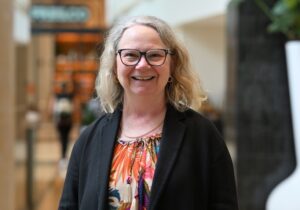
That is a remarkable statement in a field long defined by instrument performance. Van Eyk was not saying that MS innovation is finished. She pointed to continuing gains in quantitation, protein structure, conformational analysis, post-translational modifications (PTMs), top-down proteomics, and protein dynamics. But for clinical impact, she argued, the next bottlenecks are increasingly sample preparation, data analysis, standardization, harmonization, and quality control.
Joshua Coon, PhD, professor of biomolecular chemistry at the University of Wisconsin-Madison and the Pyle Chair at the Morgridge Institute for Research, saw instrument speed as the force opening new applications. Faster scanning mass analyzers are allowing deeper proteome coverage, more post-translational modification (PTM) measurements, and shorter runs. Ryan Kelly, PhD, professor of chemistry and biochemistry at Brigham Young University, framed the same shift as a throughput problem. “Now the mass spec is so fast that we need to figure out how to feed it faster,” he said. In plasma proteomics, Coon said, faster instruments, nanoparticle-based enrichment, and improved chromatography are moving the field from hundreds
toward thousands of detectable proteins in blood.
John R. Yates III, PhD, the John Lytton Young Endowed Chair in the department of integrative structural and computational biology at Scripps Research, highlighted electron activation dissociation methods and the possibility that high-throughput workflows could push MS deeper into plasma and population-level studies. He described targeted affinity platforms as powerful for “known knowns” because they measure targets defined in advance. “But with mass spectrometry,” he added, “you can look for unknown unknowns, which is where the gold lies.”

The point cuts to the heart of where the field now stands, and a recurring ASMS tension. The future of proteomics is not a choice between platforms. It is a division of labor. Targeted affinity technologies have become central to large-scale plasma proteomics and population studies. MS remains uniquely powerful for unbiased discovery, tissue proteomics, complex sample matrices, protein modifications, structural diversity, and biology that is not yet named.
From depth to trust
If the first era of modern proteomics was about seeing more, the next may be about measuring better. Devin Schweppe, PhD, assistant professor in the Department of Genome Sciences at the University of Washington, described the current moment as a “duality.” Instruments can now deliver deep coverage, and computational tools are making interpretation faster. Together, he said, they are creating “a comfort level with trusting the data.”
Trust came up repeatedly. For discovery biology, a strong signal can be enough to generate a hypothesis. For clinical practice, it is not. Van Eyk said clinical-grade assays are “way harder than people think they are.” A research study can iterate. A clinical assay has to deliver the same measurement today, in five weeks, in six months, and years later. Once a test is locked, “you can’t go, ‘Oh no, we should have had this extra protein in there,’” she said. “It’s done.”
This distinction matters across assay types. Targeted MS methods such as multiple reaction monitoring (MRM) and parallel reaction monitoring (PRM) can provide absolute quantification, but only for preselected proteins. Data-independent acquisition (DIA), meanwhile, has moved discovery proteomics closer to translation by improving reproducibility and scalability. DIA is still often used for relative quantification, but its ability to capture patterns across tens or hundreds of proteins may become important as clinical decision-making moves beyond single biomarkers and reference intervals.
The field is responding to these demands. David Kotol, PhD, R&D manager at ProteomEdge, discussed an independently validated nine-protein plasma panel designed to improve emergency department triage and imaging decisions for patients with suspected venous thromboembolism, compared with D-dimer alone.

Kotol described a shift “from relative protein measurements toward robust, multiplexed absolute quantification.” He emphasized stable isotope-labeled protein standards added early in sample preparation to monitor digestion efficiency, downstream analytical variation, and multi-peptide quantification. These standards cannot remove variation introduced during sample collection, handling, or storage. But they can make the analytical workflow more transparent and transferable.
The clinical gap
Mathieu Lavallée-Adam, PhD, associate professor in the department of biochemistry, microbiology and immunology and director of the specialization in bioinformatics at the University of Ottawa, gave the least glamorous answer to what still blocks clinical translation. “My answer is going to be boring,” he said. “It’s going to be education.”

Lavallée-Adam argued that many clinicians and biomedical researchers still do not fully understand what modern MS can do. Too often, the outside view is still: give me a list of differentially expressed proteins. But MS-based proteomics has moved beyond lists, into proteoforms, structural information, PTMs, protein dynamics, and flexible acquisition. “We’re past that now,” he said. “The main barrier is our inability to communicate the possibilities that we offer.”
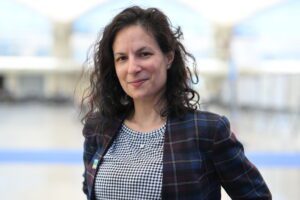
Sasha Singh, PhD, assistant professor of medicine at Harvard Medical School, associate scientist at Brigham and Women’s Hospital, and director of proteomics research at the Center for Interdisciplinary Cardiovascular Sciences (CICS), described this translation role from inside a hospital environment. “That’s actually my role at the hospital,” Singh said. “I am a liaison between the technology and the application scientist.”
The translation is becoming harder because proteomics is diversifying. End users often need to distinguish among discovery MS, which can provide broad relative quantification; targeted MS, which can provide absolute concentrations for selected proteins; and targeted affinity proteomics, which can scale well for plasma cohorts but is limited by predefined assays and available binding reagents. Singh added that different technologies may produce profiles that do not fully overlap. Rather than treating that as a failure, she suggested it reveals something real: the circulation contains many subproteomes, and different technologies enrich different views.
AI with guardrails
No 2026 conference escapes artificial intelligence (AI), and ASMS was no exception. But the mood among the researchers was cautious rather than breathless.
Lavallée-Adam said agent-based AI was dominating conversations in his part of the field. The dream is seductive: put a sample on an instrument, ask an AI agent to maximize protein identifications or optimize a method, and let it select the best protocol. But he drew a clear line between potential and reality. “Are such agents really driving change? It’s unclear at this point,” he said. “I think it’s unproven.”
Still, AI-assisted acquisition strategies are entering workflows. Lavallée-Adam’s group works on real-time MS data acquisition, where software analyzes data as it is acquired and adapts the run to the biological question. Instead of measuring the same abundant proteins repeatedly, the system can decide it has seen enough and move on to new targets. In that sense, AI becomes less a magical oracle than an instrument assistant.
Faster instruments are generating more data, and faster analysis is needed to keep up. Schweppe also argued that open-source tools remain essential because they let laboratories build on one another’s work rather than rebuild it.
More than abundance
Much of the clinical proteomics effort is focused on plasma because it is minimally invasive and suitable for screening, longitudinal sampling, and routine monitoring. But even in blood, researchers are learning that plasma is only part of the story.
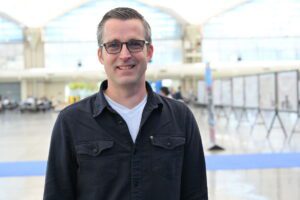
Roman Fischer, PhD, associate professor and head of the Discovery Proteomics Facility at the Target Discovery Institute, University of Oxford, pushed the conversation back toward biology. Plasma alone does not capture the full circulating system, he noted. Peripheral blood mononuclear cells, extracellular vesicles, microvesicles, and other compartments may contain disease-relevant information that conventional workflows miss. “We have to be more sophisticated in addressing the compartments of the blood,” Fischer said.
He also pointed to the proteoform problem. A single gene can give rise to many transcripts, isoforms, modified proteins, and glycosylated forms. These differences may affect activity, localization, disease pathways, and therapy response. Capturing that diversity is not possible with targeted affinity assays alone. It requires deeper characterization of the proteome, not only quantification.
Yates offered a clinical example. His group has been developing protein-footprinting approaches that can detect conformational changes in proteins in blood. In one transthyretin amyloid cardiomyopathy project, he said, abundance alone was not the answer. The important signal was how the protein folded or misfolded. That kind of assay moves proteomics beyond proteins going up or down, into structural disease biology.
Van Eyk’s work on remote sampling devices pointed to another future: patient-collected blood samples that make longitudinal cardiovascular studies easier, more inclusive, and better matched to real clinical questions.
In the background was a broader translational arc: discovery, verification, clinical validation, health economics, and access. Plasma proteomics highlights included Lekha Sleno, PhD, professor at Université du Québec à Montréal, who is combining nanoparticle enrichment with isotope-enabled targeted proteomics, and a CinderBio breakfast seminar featuring Fredrik Edfors, PhD, assistant professor at KTH Royal Institute of Technology and SciLifeLab, and Simion Kreimer, PhD, senior research project advisor in the Proteomics and Metabolomics Core at Cedars-Sinai Health Science University.
The seminar focused on accelerated plasma proteomics, rapid digestion workflows, stable isotope standards, Human Protein Atlas resources, and faster enzyme workflows that can reduce lead times. The common message was that sample preparation, quantification, and validation may become as decisive as instrument resolution.
The next bottleneck
ASMS 2026 was not short on technical spectacle. High-resolution instruments, electron-based fragmentation, narrow-window DIA, rapid acquisition, MS imaging, top-down workflows, and AI-enabled software all had their moment. But the most interesting conversations were less about spectacle than maturity.
Proteomics is no longer trying only to prove that it can see more. It is trying to prove that it can measure consistently, explain biology more deeply, support drug development, fit into clinical laboratories, and eventually improve patient decisions.
That means the next bottleneck is distributed across the ecosystem: sample preparation, standards, software, education, reimbursement, clinical menus, regulatory validation, open tools, and the ability to translate technical power into something a clinician can use.
Longer term, integrated proteomics, other omics, imaging, clinical data, and AI may support not only single biomarkers, but interpretable molecular patterns, longitudinal trajectories, and digital-twin-like models of patient biology.
The field spent decades making proteins visible. The next challenge is making proteomic measurements dependable enough to act on.