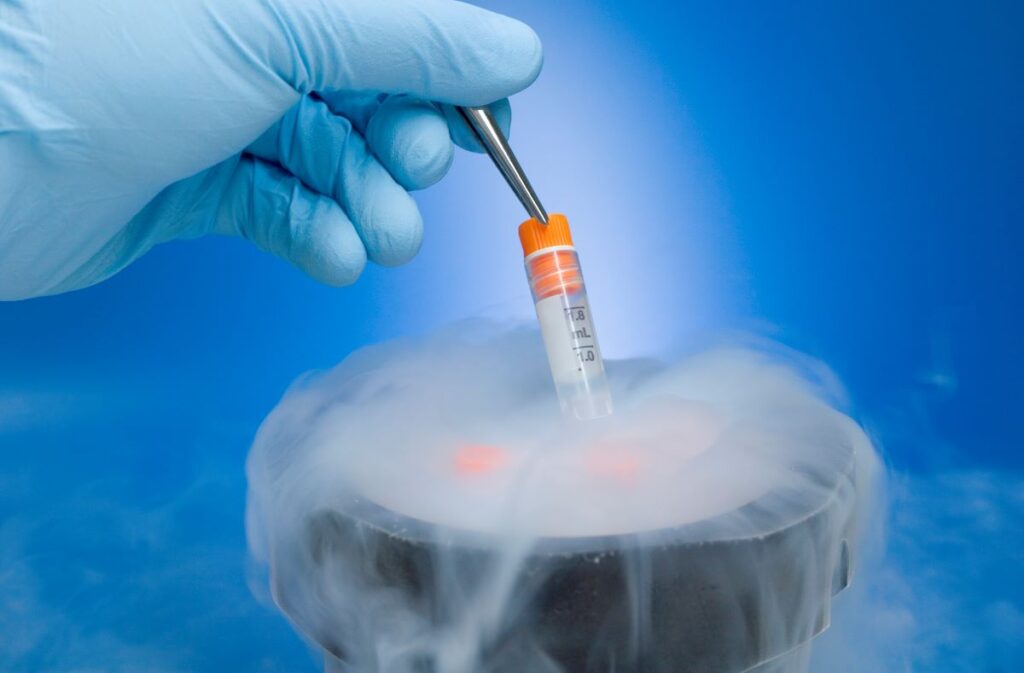
Fast, local cryopreservation is a consistent bottleneck for autologous cell therapy developers, even in major cell and gene therapy hubs. For the peripheral blood mononuclear cells (PBMCs) that form the foundation of immunotherapies, vaccine development and autologous therapies, every hour between leukapheresis collection and cryopreservation can degrade cell viability and functional integrity.
OrganaBio’s new PBMC isolation facility in San Diego removes that bottleneck for one of the three major cell and gene therapy hubs in the world. The opening of the new PBMC processing and cryopreservation laboratory at Excellos Labs (which OrganaBio acquired in May) makes it possible to isolate and cryopreserve PBMCs within three to four hours of collection, rather than losing time and quality by shipping live material across the country.
“The quality you lock in at cryopreservation is the quality the developer gets back months later,” Justin Irizarry, CEO, OrganaBio, tells GEN. “Get the first few hours right and you have protected everything downstream. Having that processing happen locally is what makes the few-hour window realistic rather than aspirational.”
The San Diego lab reports an average PBMC viability of “around 99.1% and recovery above 2.9 million cells per milliliter, with consistency from batch to batch,” Irizarry says. He credits those statistics to rapid time to cryopreservation, validated standard operating procedures “including sponsor-specific protocols,” personnel trained in each of those procedures, and a single quality system for each of OrganaBio’s sites. That combination ensures consistency across batches and sites, so “a sample processed in San Diego is indistinguishable from one processed in Miami,” he emphasizes.
In contrast, one German study comparing cells cryopreserved within six hours or 20 hours of collection notes a higher percentage of apoptotic natural killer (NK) cells associated with the longer hold time. Specifically, after 20 hours, 41% of the cells were apoptotic versus 24% for those preserved within six hours of collection. Robustness also declined with the longer hold times.
Robust local sourcing for PBMCs is a strategic advantage for San Diego’s clinical-stage biotherapeutic developers. In addition to gaining higher-quality starting materials, they can expect to benefit from tighter manufacturing timelines and less supply chain risk. Local processing reduces the inherent risk associated with cold-chain and transportation variables, while enhancing redundancy provided by OrganaBio’s West Coast sites in San Diego, Irvine, and San Francisco Bay, and its East Coast headquarters in Miami.
OrganaBio expects continued growth, “including clinical trial services, manufacturing services, and product manufacturing,” Irizarry says. The company is onboarding new customers and programs and deepening relationships with existing customers. “We also will evaluate opportunities to expand into additional markets for clinical trial services, particularly where there is strong population growth, good ethnic and racial diversity, and a lack of professionalized PBMC isolation services in the market.”