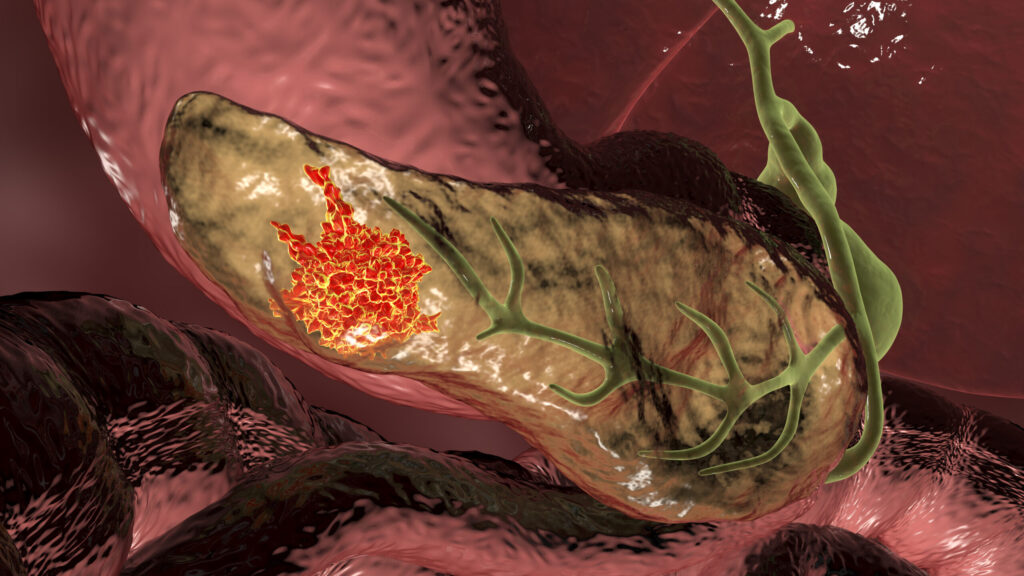
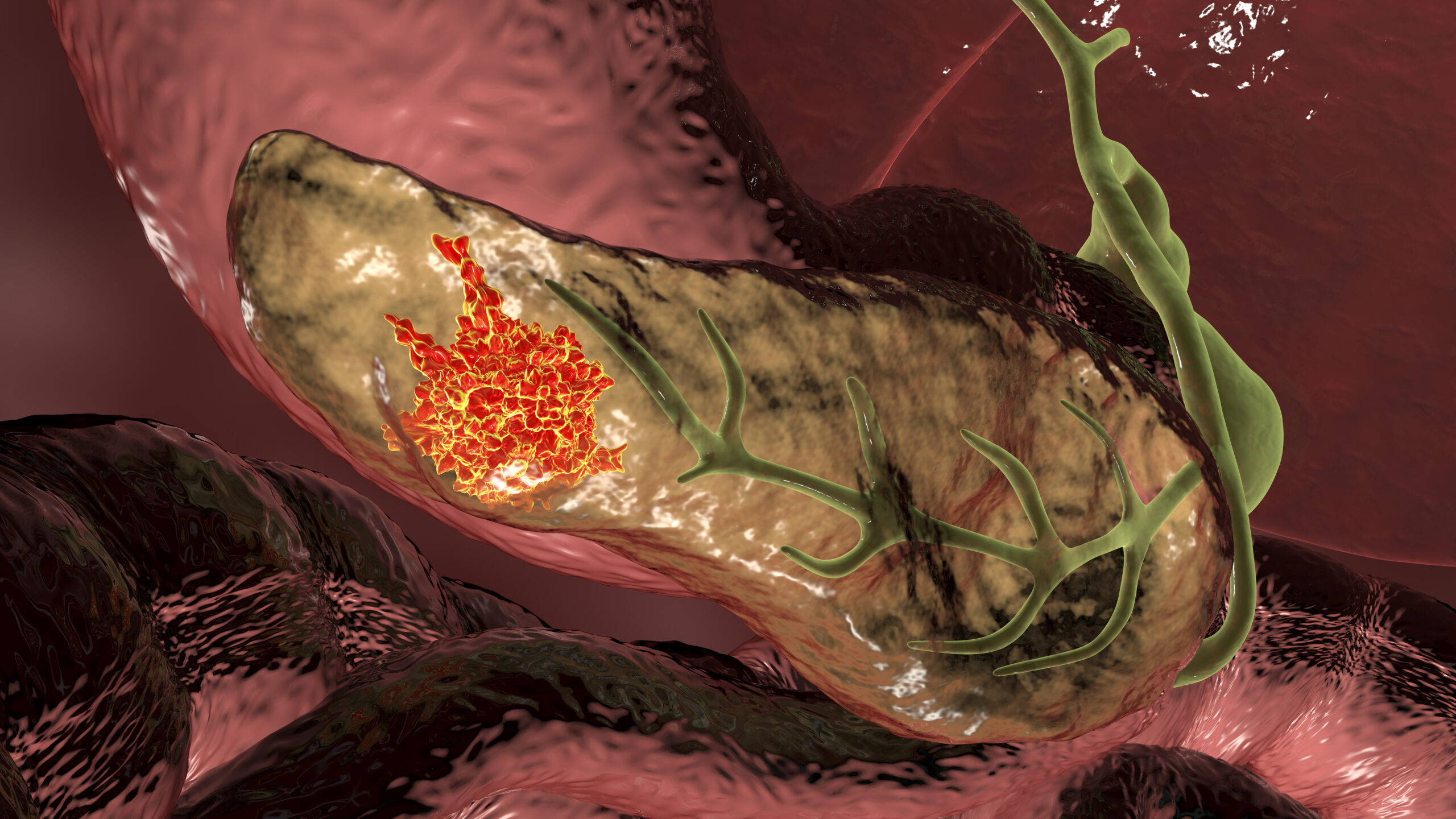
A vaccine to prevent pancreatic cancer, targeting common KRAS mutations, was found to be safe and stimulated KRAS-specific T-cell responses in 90% of study participants who were at high risk of developing pancreatic ductal adenocarcinoma (PDAC), according to Phase I clinical trial results. After a median follow-up of 16.5 months, none of the participants developed pancreatic cancer, and some of the precancerous lesions shrank or stopped growing. The study represents the first proof of concept for the use of vaccines for interception of pancreatic cancer in human patients.
The findings are published in Cancer Discovery, in the paper, “First-in-human Testing of a Mutant KRAS Vaccine for Pancreatic Cancer Interception in High-risk Cohorts.”
PDAC is an aggressive cancer that is often diagnosed at advanced stages and carries a low (five-year) survival rate. Approximately 10% of cases are associated with hereditary predisposition caused by pathogenic mutations in specific cancer susceptibility genes that are passed down from parent to child. The disease evolves over time from precursor lesions such as pancreatic intraepithelial neoplasia and intrapapillary mucinous neoplasms.
“Individuals at high risk due to hereditary predisposition or to the presence of a concerning pancreatic lesion detected on imaging usually undergo surveillance to monitor for changes over time,” said Neeha Zaidi, MD, associate professor of oncology at the Sidney Kimmel Comprehensive Cancer Center at Johns Hopkins University. “If there is a high enough concern for transformation to cancer or if early cancer is detected, the current standard of care is surgical resection. However, the chances of recurrence are up to 80%, and many precursor lesions to pancreatic cancer are microscopic and thus undetectable by imaging.”
The researchers wanted to test if intercepting cancer development through noninvasive approaches could provide an effective strategy to prevent PDAC and improve survival in high-risk individuals. “Prevention and interception save lives and reduce the morbidity associated with cancer development and progression. This is especially important for cancers whose early-onset frequency is increasing and for which we do not have effective methods for early detection,” said Elizabeth Jaffee, MD, FAACR, deputy director of the Sidney Kimmel Comprehensive Cancer Center at Johns Hopkins.
Mutations in the KRAS gene are the main oncogenic drivers in more than 90% of PDACs. The researchers previously developed mKRAS-VAX, an off-the-shelf synthetic long peptide vaccine targeting the six most common KRAS mutations found in PDAC and in most pancreatic precancer lesions.
In the new study, the team conducted a Phase I clinical trial to assess vaccination with mKRAS-VAX in 20 individuals at high risk of PDAC due to hereditary predisposition and radiographic evidence of a pancreatic lesion, typically in the form of a small cyst.
“The goal of this study was to test the safety of the vaccine and induction of durable immune responses,” said Jaffee. She added that the trial was based on preclinical data demonstrating the ability of a KRAS-targeted vaccine to prevent progression of early precancers in a genetically engineered mouse model of KRAS-driven pancreatic cancer.
Study participants received mKRAS-VAX via subcutaneous injections according to a prime-boost vaccination strategy, with priming doses on weeks one, three, and five and a boost dose on week 13. Blood was collected at different time points, and optional annual follow-up visits were offered for long-term immune monitoring.
Results showed that the vaccine stimulated mutant-KRAS-specific effector and central memory T-cell responses in 90% of participants. These responses remained detectable in the blood for up to two years after vaccination. “This long-lasting response is particularly noteworthy when assessing for possible interception of cancer, which requires long-lasting immunity,” said Zaidi. “In addition, the vaccine was safe and well tolerated, supporting its use in larger cancer interception studies.”
After a median follow-up of 16.5 months, none of the vaccinated individuals developed cancer. The researchers evaluated changes in cyst size as an exploratory clinical endpoint and found a higher rate of cyst reduction or resolution among the vaccinated individuals (37.5%) relative to an unvaccinated cohort with similar characteristics (6.8%).
“This research underscores the need for further funding to support the development of strategies that can intercept and prevent cancer development in high-risk individuals. More studies are needed to find the best vaccine approaches, the best targets, and the ideal timing for vaccination,” concluded Jaffee.
According to the authors, the study’s limitations include the small size and the fact that the trial was not designed to assess the clinical efficacy of the vaccine. “We observed evidence of stability or regression of the pancreatic cysts in association with the induction and durability of KRAS-specific T-cell responses,” said Michael G. Goggins, MD, professor of pathology, medicine, and oncology and the Sol Goldman Professor of Pancreatic Cancer Research at Johns Hopkins University School of Medicine. “However, larger studies are needed to demonstrate that this effect was in fact due to the vaccine.”