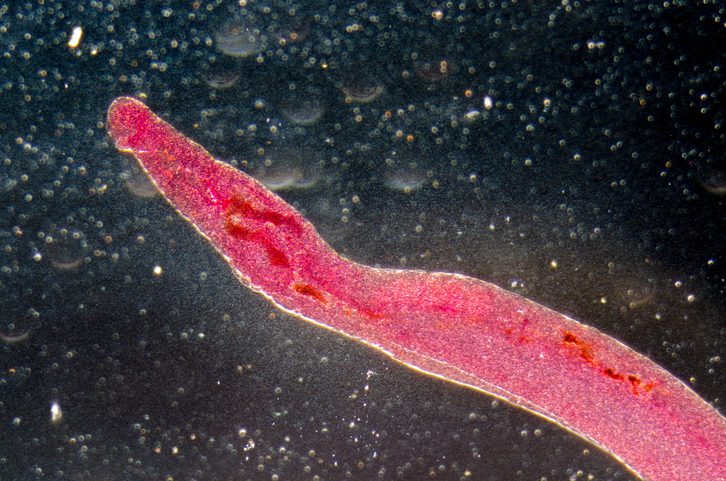
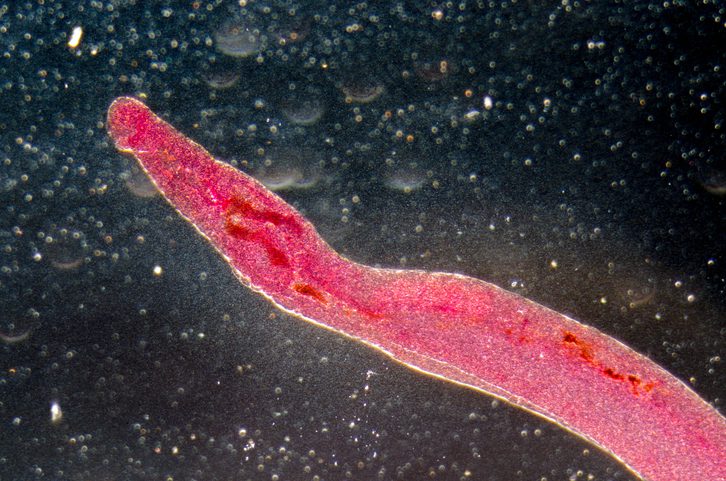
The warning signs are subtle—genetic variants scattered across a vast parasite genome—but together they sketch a picture that disease‑control and elimination programs can’t afford to ignore. A new study published in Science Advances, “Extensive parasite transmission and variation in a functional receptor associated with drug resistance in endemic Schistosoma mansoni,” reveals genomic changes in the parasite that cause schistosomiasis, which may reduce its sensitivity to praziquantel, the only drug currently available to treat the disease.
The international team, led by researchers at the Wellcome Sanger Institute, the Royal Veterinary College, and the Medical College of Wisconsin, analyzed whole‑genome sequence data from 570 Schistosoma mansoni parasites collected across Africa and the Caribbean. As the paper noted, “Mass drug administration (MDA) with praziquantel is the cornerstone of schistosomiasis control and elimination efforts.” Yet after two decades of large‑scale treatment campaigns, the parasite’s genome is beginning to show signs of drug resistance.
The study uncovered extensive long‑distance transmission of S. mansoni and a striking degree of genetic diversity across endemic regions. But the most consequential finding lies in Sm.TRPMpzQ, a transient receptor potential (TRP) melastatin ion channel recently identified as praziquantel’s molecular target. Researchers found four naturally occurring variants in this receptor with reduced praziquantel sensitivity.
In some cases, parasites persisted even after treatment. As the paper reports, “Analyses of parasite infrapopulations collected from people pre‑ and post‑praziquantel treatment further identified instances of treatment failure, supporting the potential for praziquantel resistance.”
For global health programs that rely entirely on praziquantel, these findings represent an early but important signal.
Stephen Doyle, PhD, co‑senior author and group leader and UKRI Future Leaders Fellow at the Wellcome Sanger Institute, emphasized the shift this genomic insight enables: “Whole‑genome sequencing gives us an unprecedented window into how schistosome populations are structured and evolving across Africa, and by characterizing variation in the drug’s molecular target at scale, we can move from reactive surveillance to proactive monitoring.”
Professor Joanne Webster, DPhil, of the Royal Veterinary College and director of the Global Centre for Neglected Tropical Disease Research, underscored the stakes: “While praziquantel remains largely highly effective, our findings provide a sobering warning about the reliance on a single drug for schistosomiasis control and highlight the need for comprehensive surveillance to monitor the potential emergence of drug resistance.”
Schistosomiasis affects more than 250 million people worldwide, with 90% of infections occurring in sub‑Saharan Africa. With elimination targets set for 2030, the emergence of resistance could jeopardize decades of progress.
The authors argue that genomic surveillance should become a routine part of schistosomiasis control. Their dataset, the largest genomic analysis of S. mansoni from human infections to date, provides a baseline for tracking resistance‑linked variants as MDA programs continue.