A New Open-Access Atlas Could Solve One of Drug Development’s Biggest Delivery Problems
For a promising medicine, identifying the right biological target is only the beginning. A drug may be designed to bind a protein involved in disease, but it still has to reach the correct cells in the human body, recognize them among billions of others, and, in many cases, cross the cell membrane to release its therapeutic cargo inside. Researchers have long understood that cell-surface proteins can act as molecular addresses for this process. What they lack is a comprehensive, standardized map showing which proteins are present on specific human cell types and which of those proteins can actively transport material into the cell. The Deliverome Project, a new research venture co-founded by Hertz Fellow Becca Carlson and biochemist Bobby Hollingsworth, aims to build that missing resource.
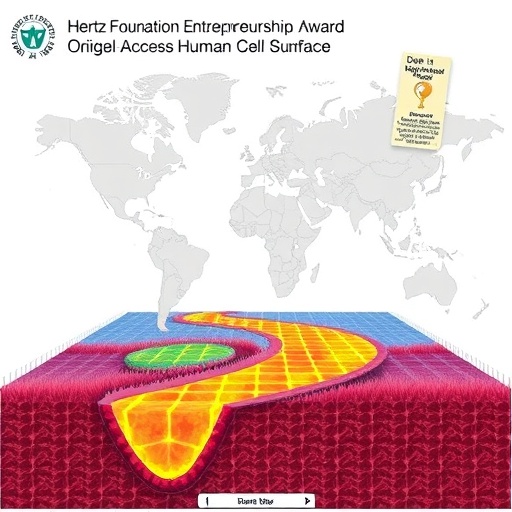
The project publicly launched on May 27 with the goal of creating the first large-scale, open-access atlas of human cell-surface proteins and their ability to mediate intracellular delivery. Its founders hope the dataset will make it easier for drug developers to design therapies that reach precise tissues, including tissues involved in rare diseases. In many rare disorders, researchers may understand the molecular cause of illness but remain unable to develop a practical treatment because a drug cannot be delivered efficiently to the affected cells. Deliverome is intended to connect target discovery with delivery engineering by showing not only which proteins decorate a cell’s exterior, but also which of them can function as gateways into the cell’s interior.
Cell-surface proteins are particularly attractive tools for drug delivery because they can provide selectivity. A therapeutic molecule circulating through the bloodstream encounters many different cell types, but a drug engineered to bind a protein enriched on kidney cells, immune cells, or another desired population may be more likely to accumulate at the correct destination. Some surface proteins remain on the membrane and transmit signals, while others are internalized through processes such as receptor-mediated endocytosis. During endocytosis, a section of the cell membrane folds inward around the bound molecule, forming a vesicle that carries the receptor and its attached cargo into the cell. If researchers can determine which receptors internalize efficiently and route cargo to useful intracellular compartments, they can potentially use them as delivery handles for drugs, nucleic acids, proteins, or other therapeutic materials.
This information is surprisingly difficult to obtain systematically. Surface proteins account for only an estimated 15 to 20 percent of all proteins in the human body, yet more than 60 percent of approved drugs target them, according to Carlson. Their importance comes from their accessibility: unlike proteins buried inside cells, membrane proteins can often be reached by antibodies, engineered proteins, nanoparticles, and other large biological medicines. However, measuring them accurately presents technical challenges. Many surface proteins are present at low abundance, vary substantially between cell types, or are rapidly internalized and recycled. Their levels can also change with disease, inflammation, developmental state, or the conditions used to grow cells in the laboratory.
Deliverome plans to combine mass spectrometry with genomics to address these challenges. Mass spectrometry can identify and quantify thousands of proteins by analyzing the mass and chemical characteristics of peptides generated from biological samples. Applied to the cell surface, specialized proteomic workflows can enrich membrane-associated proteins and estimate how abundant each one is on a particular cell type. Genomic methods can complement those measurements by determining which genes are expressed, perturbing individual genes, and testing how those perturbations affect uptake. Together, these approaches could distinguish between a protein that is merely present on a cell’s exterior and one that can actually transport a selected molecule into the cell. The team must develop much of this methodology itself because no single commercial platform currently provides the required measurements at the necessary scale.
The project’s scientific challenge is not limited to creating a catalog of names. A useful delivery atlas will need to describe the context in which a surface protein functions. The same receptor may be abundant on several cell types but internalize at different rates depending on the cell’s metabolic state or the structure of the attached cargo. Some receptors may direct material into compartments where it is degraded, while others may deliver it to the cytoplasm, nucleus, or another location where a therapeutic molecule can act. Deliverome therefore intends to measure both protein abundance and functional transport. These data could help researchers compare candidate receptors quantitatively rather than relying on years of trial and error to discover whether a chosen molecular “address label” is effective.
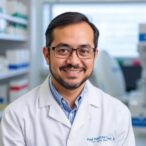
Carlson became interested in this problem after completing graduate research at the Massachusetts Institute of Technology, where she helped develop tools for studying cellular responses to individual gene disruptions. She later worked at a spatial biology startup and spent two years at Flagship Pioneering, a venture creation firm responsible for launching numerous biotechnology companies. At Flagship, she encountered the gap between the growing ability to identify disease targets and the more limited ability to deliver medicines to precisely defined cell populations. “We saw this gap between academia and industry and we wanted to fill it,” Carlson says. She hopes the resulting resource will support therapies for a broader range of diseases and patients, rather than concentrating development on conditions with the largest commercial markets.
Deliverome is structured as a Focused Research Organization, or FRO, a model designed around a defined scientific objective, a limited operating period, and a commitment to release the resulting tools and data. The approach was formalized by Hertz Fellows Sam Rodriques and Adam Marblestone, and it is intended to tackle projects that are too large, interdisciplinary, or infrastructure-oriented for conventional academic laboratories, but not necessarily suited to a traditional biotechnology company. Deliverome expects to spend approximately five years developing its technologies, gathering measurements, and releasing results continuously as “micro-publications.” Instead of holding data until a long academic publication cycle is complete, the team plans to make findings available as they are generated, allowing outside researchers to assess, reuse, and build on the work.
The project is also being designed for computational discovery. Deliverome intends to format its datasets so that machine-learning systems can analyze relationships among cell types, surface-protein abundance, receptor behavior, cargo properties, and intracellular outcomes. Such models could eventually help predict which surface proteins are most promising for a particular therapeutic strategy or identify combinations of receptors and cargos that would be difficult to find through manual comparisons alone. The team has already received $5 million in seed funding from the Astera Institute, while the Hertz Foundation’s Harold Newman and David Galas Entrepreneurial Initiative has awarded Carlson up to $25,000 along with mentoring and professional guidance. Deliverome currently consists of Carlson and Hollingsworth, but the founders plan to open a laboratory on August 1 and hire four to six additional scientists by the end of the year, with expertise in proteomics, functional genomics, and machine learning.
The Hertz award has also connected Carlson with entrepreneurs, biotech executives, and researchers who have built similar organizations. Feedback from the Hertz Prize Committee helped refine the project, while Cheri Ackerman Araromi, a previous Newman-Galas award recipient and biotech chief executive, provided advice on building a durable venture. Carlson has also sought input from rare-disease communities, including through an invitation to a patient conference. That engagement reflects the practical test Deliverome will ultimately face: an atlas will matter only if it helps researchers create medicines that reach the cells affected by disease. By making the delivery problem measurable, comparable, and openly accessible, the project could give drug developers a new starting point—and transform one of biotechnology’s most persistent bottlenecks into an engineering problem that can be systematically solved.
Subject of Research:
Cell-surface proteins, intracellular drug delivery, proteomics, functional genomics, rare-disease therapeutics, and machine-learning-enabled drug development.
Article Title:
A New Open-Access Atlas Could Solve One of Drug Development’s Biggest Delivery Problems
News Publication Date:
May 27
Web References:
https://deliverome.org/
https://ifp.org/the-deliverome-project/
https://www.hertzfoundation.org/hertz-community/awards-recognition/harold-newman-and-david-galas-entrepreneurial-initiative/
References:
Information provided in the source material about the Deliverome Project, Becca Carlson, Bobby Hollingsworth, the Hertz Foundation, the Astera Institute, and the Focused Research Organization model.
Keywords
Drug delivery, cell-surface proteins, Deliverome Project, Becca Carlson, proteomics, functional genomics, rare diseases, biotechnology, machine learning, intracellular transport, surfaceome, Hertz Foundation
Tags: biological targets for drug deliverycell-surface proteins for targeted therapycell-type specific protein mappingDeliverome Project cell membrane studydrug development and cell targetinghuman cell surface protein mapintracellular drug transport researchlarge-scale human cell surface proteomemolecular addresses on human cellsopen-access drug delivery atlasrare disease tissue targetingstandardized human cell surface protein database