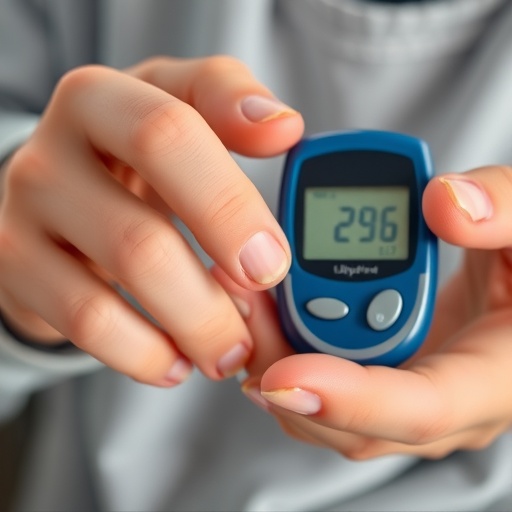
A disease once regarded as almost exclusively adult is advancing rapidly through adolescence in the United States. New data from Colorado indicate that the incidence of youth-onset type 2 diabetes increased nearly tenfold between 2002 and 2023, rising from 2.37 to 22.30 cases per 100,000 young people aged 10 to 19. The increase accelerated during the most recent decade, raising concern that a growing generation will face diabetes-related kidney, eye, nerve and cardiovascular complications far earlier in life than previous generations. The findings will be presented by Dr Tessa Crume of the Colorado School of Public Health at the Annual Meeting of the European Association for the Study of Diabetes in Milan, Italy, from September 28 to October 2.
The Colorado Diabetes Registry has tracked diabetes diagnoses among young people across the state continuously since 2002. Its surveillance system draws on multiple sources, including diagnostic codes, laboratory results and medication records, allowing researchers to identify new cases across healthcare systems rather than relying on a single clinic or hospital. The analysis included non-military, non-institutionalised residents of Colorado who were younger than 20 at diagnosis, with population estimates derived from census data. Incidence was calculated per 100,000 people under 20 for type 1 diabetes and per 100,000 people aged 10 to 19 for type 2 diabetes, because type 2 diabetes remains extremely uncommon in children younger than 10.
Across the 22-year study period, 8,094 children and adolescents were newly diagnosed with type 1 diabetes, while 1,560 young people aged 10 to 19 developed type 2 diabetes. Type 1 diabetes incidence rose modestly, from 25.07 cases per 100,000 in 2002 to 27.39 per 100,000 in 2023. Statistical modelling showed that the rate was relatively stable from 2002 through 2014, increasing by approximately 0.66 per cent annually, before accelerating to an annual increase of 2.62 per cent between 2015 and 2023. Although the later rise in type 1 diabetes is important, it was dwarfed by the change observed for type 2 diabetes.
Youth-onset type 2 diabetes increased by almost 10 times over the same period. The researchers calculated an average annual increase of 3.8 per cent across the entire study, but the trend was not uniform. Incidence grew by 2.92 per cent per year from 2002 to 2013 and by 4.72 per cent per year from 2014 to 2023. This pattern suggests that the change is not simply a historical shift that has now stabilised. Instead, the rate of new diagnoses has continued to climb, with the steepest growth occurring in recent years. The result is a rapidly expanding population of young people who may live with diabetes and its metabolic consequences for many decades.
Type 1 and type 2 diabetes arise through different biological mechanisms, although their clinical appearance can increasingly overlap in adolescents. Type 1 diabetes is an autoimmune disease in which the immune system attacks insulin-producing beta cells in the pancreas. The resulting insulin deficiency usually requires lifelong insulin replacement. Type 2 diabetes begins primarily with insulin resistance, a state in which muscle, liver and fat cells respond less effectively to insulin. The pancreas initially compensates by producing more insulin, but over time beta-cell function can deteriorate and blood glucose levels rise. Obesity, genetic susceptibility, puberty-related hormonal changes, inactivity and broader social and environmental conditions can all contribute to insulin resistance.
The growing prevalence of obesity among children and teenagers has made the distinction between the two forms of diabetes less obvious at diagnosis. A young person with a high body-mass index and elevated blood glucose may have type 2 diabetes, but body weight does not rule out type 1 diabetes, nor does age provide a reliable diagnosis. Some adolescents have features of both autoimmune diabetes and insulin resistance. Correct classification therefore requires laboratory testing, including diabetes-related autoantibodies that indicate an autoimmune attack and metabolic assessments that help identify insulin resistance and residual insulin production. The diagnosis has direct treatment implications: an adolescent with severe insulin deficiency may require immediate insulin, while treatment for type 2 diabetes may involve lifestyle support, glucose-lowering medication and, in some cases, insulin.
Dr Crume said that paediatric endocrinologists are now encountering type 2 diabetes in teenagers as a routine and growing part of clinical practice, but the condition may still be overlooked in primary care or within families because of its traditional association with middle age. Delayed recognition can allow high blood glucose to persist untreated, increasing the risk of acute metabolic problems and long-term tissue damage. The researchers argue that diagnostic pathways should ensure that every young person presenting with diabetes receives appropriate autoantibody and metabolic testing rather than being classified on appearance or assumptions. As the two conditions become harder to distinguish clinically, diagnostic precision becomes increasingly important for selecting effective therapy and counselling families.
The long-term outlook for youth-onset type 2 diabetes is particularly concerning because the disease can behave more aggressively in adolescents than in adults. Young people may experience a faster decline in pancreatic beta-cell function and greater difficulty maintaining glucose control. Complications affecting the kidneys, retina, peripheral nerves and cardiovascular system can emerge after only a few years, rather than after several decades of adult disease. A teenager diagnosed at 14 may therefore face a substantial burden of diabetes-related illness during early adulthood. Previous research has also linked youth-onset type 2 diabetes with reduced life expectancy, although individual outcomes vary according to treatment, access to care, socioeconomic conditions and the presence of other health problems.
The Colorado findings do not identify a single cause for the increase and cannot by themselves prove that rising obesity is responsible. They do, however, document a striking population-level shift and reinforce observations from the US-based SEARCH for Diabetes in Youth study, where type 2 diabetes has been increasing faster than type 1 diabetes. In some older adolescent groups, new type 2 diabetes cases have already surpassed new type 1 cases. The researchers say prevention must extend beyond asking an individual child to change behaviour. Family-wide access to nutritious food, water instead of sugar-sweetened drinks, regular physical activity, healthy school meals and safe neighbourhoods can influence risk, but these options are shaped by income, food availability and community infrastructure. The study is being presented as an oral conference presentation, and no full peer-reviewed paper has yet been published, so the findings should be interpreted as preliminary. Nevertheless, the accelerating trend highlights the need for continued surveillance, earlier recognition and stronger prevention efforts before diabetes becomes an even larger force shaping the health of the next generation.
Subject of Research: Youth-onset type 1 and type 2 diabetes incidence in Colorado, USA, from 2002 to 2023.
News Publication Date: 23-Aug-2026
Web References: https://www.thelancet.com/journals/landia/article/PIIS2213-8587(23)00025-6/abstract; https://drive.google.com/file/d/1CzxRavEluxmO3tmLe1r4Okktq4BcWhI-/view?usp=sharing
References: Oral Presentation 0049, Annual Meeting of the European Association for the Study of Diabetes, Milan, Italy, September 28–October 2.
Keywords: Type 2 diabetes, type 1 diabetes, youth-onset diabetes, adolescents, diabetes incidence, obesity, insulin resistance, autoimmune diabetes, Colorado, public health, diabetes prevention, paediatric endocrinology
Tags: adolescent diabetes health riskschildhood diabetes epidemiologyColorado diabetes registry datademographic analysis of youth diabetesdiabetes research and preventiondiabetes surveillance systemsearly-onset diabetes complicationsimpact of lifestyle on youth diabetespublic health implications of rising diabetesrising diabetes rates in youthtrends in pediatric metabolic disordersYouth-onset type 2 diabetes increase