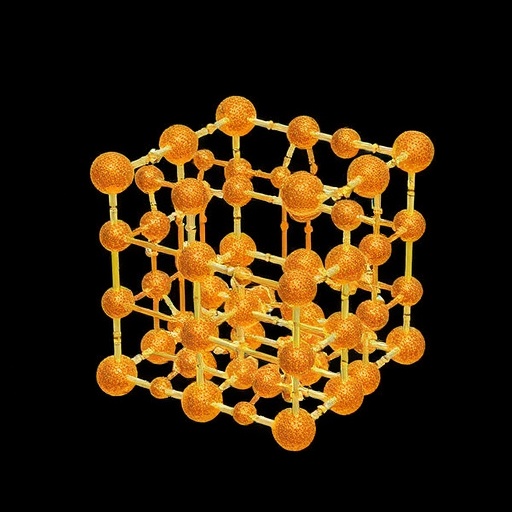
In the race to build better supercapacitors, one of the most decisive factors is not the chemical identity of an electrode material but its shape. A team of researchers at Lanzhou Petrochemical University of Vocational Technology in China has now demonstrated a remarkably simple and low-cost way to sculpt the morphology of manganese tungstate nanomaterials — and in doing so, to dramatically boost their ability to store electrical charge. The study, published in the journal Ionics, shows that nothing more exotic than a common cationic surfactant can steer the growth of manganese tungstate into granular, cubic or sponge-like architectures, with the sponge-like form delivering a specific capacitance of 812 farads per gram at a current density of 1 ampere per gram, equivalent to 112.78 milliampere-hours per gram.
Manganese tungstate, or MnWO₄, is a transition-metal tungstate that has attracted sustained attention as an electrode material for supercapacitors and hybrid battery-supercapacitor devices, sometimes called supercapatteries. Its appeal lies in the combination of manganese’s rich redox chemistry — manganese can shuttle between multiple oxidation states during charge and discharge — with the structural robustness of the tungstate framework. In pseudocapacitive and battery-type electrodes, charge is stored not by electrostatic adsorption of ions, as in carbon-based double-layer capacitors, but through fast, reversible faradaic reactions at or near the electrode surface. That makes the amount of electrochemically accessible surface area, the diffusion pathways for electrolyte ions and the mechanical integrity of the nanostructure during repeated cycling absolutely critical to performance.
The Chinese team, led by Gang Wang and Cheng Xu, approached this challenge through the chemistry of the synthesis itself. They prepared their MnWO₄ samples using a hydrothermal method, a technique in which the reaction between a manganese salt — manganese nitrate in this case — and a tungstate precursor is carried out in water inside a sealed vessel, or autoclave, at elevated temperature and pressure. Under these conditions, the dissolution and recrystallization of the product proceeds through nucleation and growth steps that are highly sensitive to what else is dissolved in the solution. This is where surfactants enter the picture.
Surfactants are molecules with a hydrophilic head and a hydrophobic tail that preferentially adsorb onto crystal surfaces, and by decorating different crystallographic faces to different extents they can slow the growth of some faces relative to others. The result is a change in the final habit of the crystal — the characteristic shape a mineral adopts — without changing the underlying crystal structure itself. The researchers tested different types of surfactant and found that cetyltrimethylammonium bromide, universally known in the materials chemistry community as CTAB, exerted the strongest regulatory effect. CTAB is a quaternary ammonium salt whose positively charged head group binds readily to anionic tungstate-rich surfaces, making it particularly effective at templating tungstate crystal growth.
The elegant part of the work is the dosage dependence. By systematically adjusting the molar ratio of manganese nitrate to CTAB — sweeping from 1:1 down to 1:1/6 — the team was able to obtain a gallery of distinct morphologies: densely packed granular particles, well-formed cubic structures, and, at the sweet spot of a 1:1/4 ratio, a porous, sponge-like architecture riddled with interconnected voids. Crucially, X-ray diffraction analysis confirmed that no matter the surfactant dose, the products retained the crystal structure of monoclinic MnWO₄. The surfactant was acting purely as a morphological director, not as a dopant or a structure-altering additive. This separation of shape control from phase control is precisely what makes the strategy so practical: it gives synthetic chemists an independent dial to turn, leaving the material’s intrinsic chemistry untouched.
The electrochemical consequences were significant. The sponge-like sample prepared at the 1:1/4 molar ratio outperformed its granular and cubic counterparts decisively. Its specific capacitance of 812 F g⁻¹ at 1 A g⁻¹ represents a very high value for a tungstate-based battery-type electrode in a neutral aqueous electrolyte, and reflects the advantages of the porous morphology: the open, interconnected sponge framework shortens the diffusion distance for electrolyte ions, exposes a much larger fraction of the redox-active material to the electrolyte, and accommodates the volume changes that accompany repeated charge-discharge cycling. Pores act as ion reservoirs, and the walls between them act as short electron highways, so the whole structure breathes without fracturing.
Durability is often the Achilles’ heel of high-capacitance nanostructures, which can degrade, agglomerate or dissolve over many cycles. Here, too, the sponge-like MnWO₄ held its own. After 1,000 charge-discharge cycles at a current density of 2 A g⁻¹ — a punishing test that stresses the material far harder than the capacitance measurement itself — the electrode retained more than 74 percent of its initial capacity. For an unannealed, binder-compatible transition-metal tungstate nanostructure, that degree of retention points to a morphology that is genuinely mechanically robust, not just nominally porous.
The findings sit within a growing body of work on tungstate morphology engineering. Previous studies have shown that CTAB-assisted sonochemical synthesis can yield one-dimensional MnWO₄ nanorods for supercapacitors, that surfactants influence the habit of ferroelectric crystals grown from MXenes, and that hierarchical MnWO₄ microflowers produced by sonochemistry perform well as asymmetric supercapacitor electrodes in neutral electrolytes. Related work has reported carbon nanofiber-supported elongated bipyramid-like MnWO₄ composite electrodes and amorphous carbon nanotube amalgamations of MnWO₄ nanorods with improved cycling stability. The Lanzhou study adds a key parameterization to this landscape: rather than reporting a single surfactant-templated morphology, it maps the entire morphological evolution as a function of surfactant dosage, giving other researchers a reproducible recipe for targeting a specific shape on demand.
What makes the result especially compelling from a practical standpoint is the accessibility of the method. Hydrothermal synthesis is already one of the workhorses of nanomaterials preparation — it requires no vacuum equipment, no dangerous reagents and no high-temperature furnaces beyond what a standard laboratory autoclave provides. CTAB is inexpensive, commercially available in bulk quantities and used in everything from hair conditioner to pharmaceutical formulations. The authors therefore present their work as a feasible and low-cost route for the design of high-performance electrochemical energy storage materials, a claim borne out by the fact that the entire morphology optimization involves nothing more than adjusting a ratio in a beaker before the autoclave is sealed.
The broader context is the global push for grid-scale and portable energy storage. Supercapacitors and their hybrid cousins occupy a niche between batteries, which store a lot of energy but deliver it slowly, and conventional electrostatic capacitors, which deliver power almost instantaneously but store very little of it. Hybrid devices that pair a battery-type faradaic electrode — such as manganese tungstate — with a capacitive counter-electrode promise both high energy density and high power density. Realizing that promise at scale will depend on identifying electrode materials that are cheap, abundant, non-toxic and long-lasting. Manganese and tungsten fit the abundance criterion reasonably well, and the cycling data reported here suggest that a carefully shaped MnWO₄ nanostructure can survive real-world electrochemical duty.
The work also carries a conceptual lesson that extends beyond manganese tungstate. Many studies of electrode materials fixate on composition — doping, substitution, anion engineering — while treating morphology as a secondary variable. This study makes the opposite point: given a fixed, unaltered crystal structure, morphology alone can be the difference between a mediocre electrode and a strong one. The granular and cubic samples from the same synthesis, with the same chemistry, were demonstrably inferior to the sponge-like variant. The surfactant dosage, in effect, encoded the entire performance profile of the final device.
The research team, all based at the College of Applied Chemical Engineering at Lanzhou Petrochemical University of Vocational Technology, acknowledges support from the Youth Talent (Team Project) program of Gansu Province and the Gansu Provincial Science and Technology Plan Project. Gang Wang and Cheng Xu served as corresponding authors, with Wang handling the original draft and conceptualization, Qi Xu supervising and curating data, Cheng Xu developing the methodology, Xia Hou contributing to review, Jingjing Qi carrying out the investigation and Xue Yan administering the project.
As energy storage researchers continue to mine the periodic table for electrode materials, studies like this one serve as a reminder that sometimes the biggest gains come not from new chemistry but from better control of the chemistry we already have. A pinch of soap, it turns out, may be worth as much as a new compound.
Subject of Research: Morphology-controlled synthesis of MnWO₄ nanomaterials via surfactant-mediated hydrothermal method for enhanced supercapacitor electrochemical performance
Subject of Research: Technology and Engineering
Article Title: Morphology and electrochemical performance enhancement of MnWO4 nanomaterials prepared by surfactant-mediated hydrothermal method
Article References: Wang, G., Xu, Q., Xu, C., Hou, X., Qi, J., & Yan, X. (2026). Morphology and electrochemical performance enhancement of MnWO4 nanomaterials prepared by surfactant-mediated hydrothermal method. Ionics. https://doi.org/10.1007/s11581-026-07460-9
Image Credits: AI Generated
DOI: 10.1007/s11581-026-07460-9
Keywords: manganese tungstate (MnWO4), surfactant regulation, morphological evolution, hydrothermal method, electrochemical performance, supercapacitors, CTAB, porous sponge-like structure, specific capacitance, pseudocapacitive energy storage
Cite Scienmag News
APA MLA Chicago
Neil Sanderson. (September 5, 2026). Surfactant-aided hydrothermal synthesis boosts MnWO4 nanomaterial electrochemical performance. Scienmag. https://scienmag.com/surfactant-aided-hydrothermal-synthesis-boosts-mnwo4-nanomaterial-electrochemical-performance/
Copy citation Download RIS
Tags: advanced electrode materials for hybrid supercapacitorsenhanced specific capacitance in supercapacitorsimpact of nanomaterial shape on supercapacitor performancelow-cost nanomaterial fabrication methodslow-cost synthesis methods for supercapacitor electrodesmanganese tungstate for hybrid battery-supercapacitorsMnWO4 nanomaterials for energy storagemorphology engineering for supercapacitor electrodesnanostructured electrode materials for high-capnanostructured manganese tungstate for energy storagerole of surfactants in directing nanomaterial morphologyshape-dependent electrochemical performancespecific capacitance improvements in manganese tungstate nanomaterialssponge-like manganese tungstate architecturessponge-like MnWO4 nanostructures for enhanced charge capacitysupercapacitor electrode morphology controlsurfactant influence on nanostructure growthsurfactant-assisted hydrothermal synthesissurfactant-assisted hydrothermal synthesis of MnWO4transitiontransition-metal tungstate electrode materials