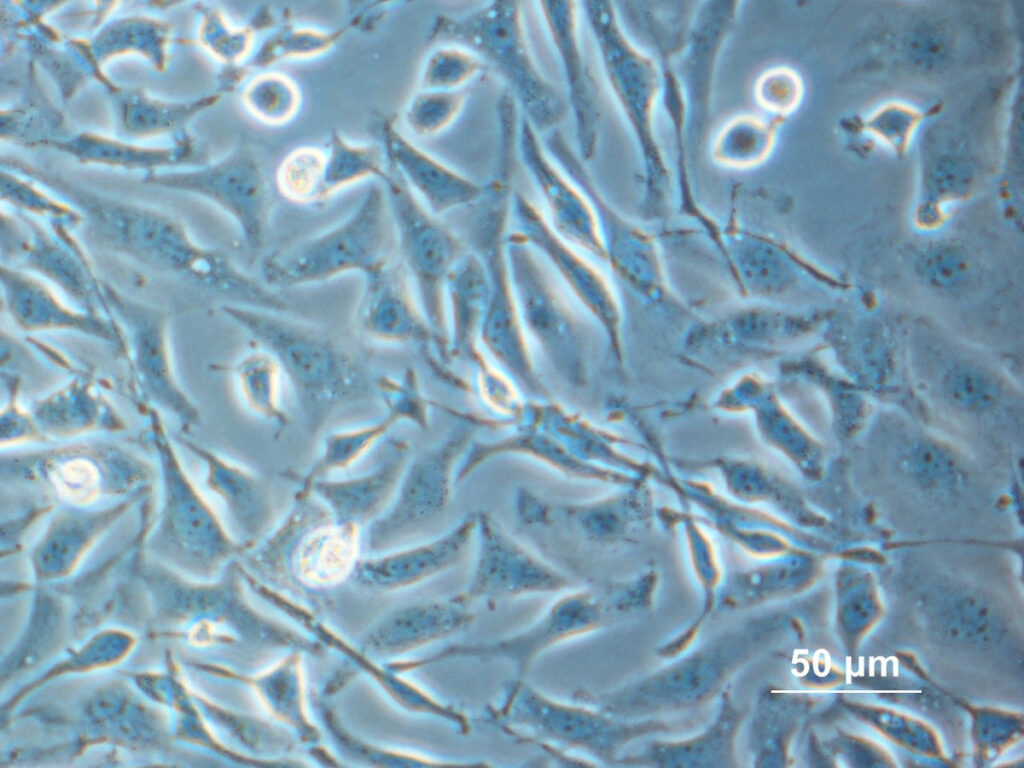
Researchers from Germany say they have successfully applied an ultra-precise method for monitoring the health of cell cultures. The team, from RWTH Aachen University, reports that they’ve shown, for the first time, the potential of the oxygen transfer rate (OTR) for accurately tracking mammalian cell activity and behavior.
“OTR has been used for microbial fermentation but is difficult to measure accurately with conventional methods for mammalian cell cultivation,” says Jørgen Magnus, Dr.-Ing., who is speaking this week at the Bioprocessing Summit Europe in Barcelona about the team’s research.
“With OTR, we don’t need to take samples and then do two weeks of offline analysis to understand what’s going on,” he told GEN.
OTR as a proxy
According to Magnus, OTR is a proxy for how fast cells or bacteria breathe, which is correlated to the consumption of glucose and other components of cell media. If cells run out of sugar, they can’t consume oxygen at the same rate and their OTR falls sharply, he explains.
This can be measured with a specialist instrument, which uses a circulation pump to move the air in a shake flask past carbon dioxide and oxygen sensors. The RAMOS (Respiratory Activity Monitoring System), which was developed by the institute, is more sensitive than other techniques, he explains, but has only recently been tried with mammalian cells.
“We’ve recently published three papers where we really show the potential of the technology,” he adds. “We think our application to cell culture is new, as it was previously used for microbial fermentations, but it allows for more accurate and sensitive measurement.”
RAMOS data, he continues, can be fed into a mathematical model of a shake flask or plate, called a digital twin, to allow for the monitoring of cell culture activity. According to Magnus, this allows scientists to monitor product quality for applications, including production of monoclonal antibodies and viral vectors and cells for advanced therapies.
He says the advantage of the OTR measurements is they’re provided in real time and can be used for both monitoring and process control. “RAMOS produces much better data than conventional methods based on off-gas analysis, so that’s coming in the next couple of years,” he predicts.