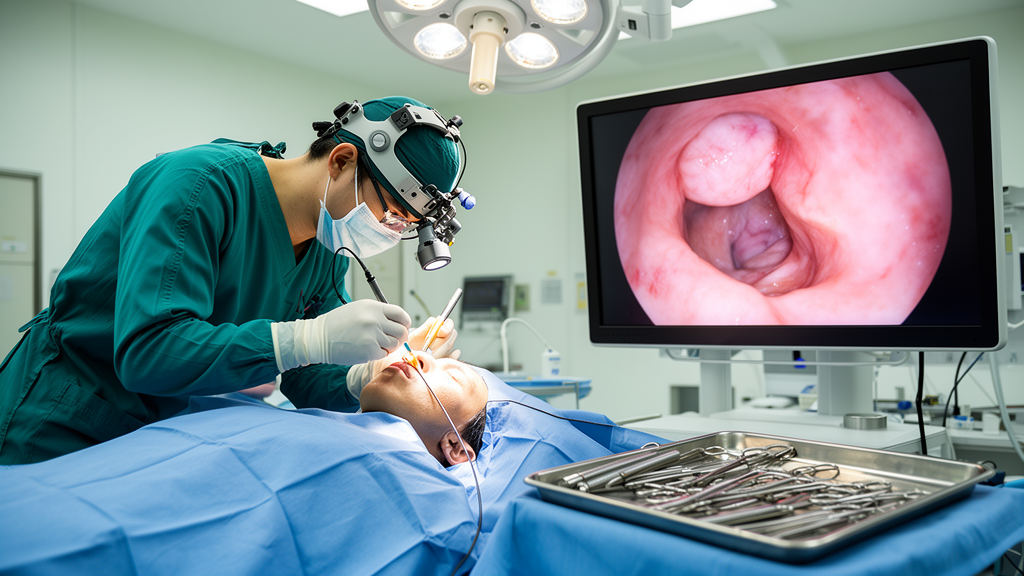
A prospective study of 30 adults with large pituitary adenomas reports that endoscopic endonasal transsphenoidal surgery, a minimally invasive technique that reaches the pituitary gland through the nasal cavity, achieved gross total or near-total resection in 80 percent of patients.
Pituitary adenomas are common intracranial tumors, and while many remain indolent, large tumors can compress the optic apparatus, invade the cavernous sinus, and displace or encase the internal carotid artery. The patients enrolled in this cohort reflected that pattern of delayed presentation: the mean maximum tumor diameter was 3.50 centimeters, and visual impairment was the presenting symptom in 29 of the 30 patients, or 96.7 percent. Twenty-two of the tumors, 73.3 percent, were non-functioning adenomas, meaning they caused harm through mass effect rather than hormone overproduction. The mean age of the cohort was 42.3 years, and 18 patients were male.
The primary outcome was volumetric extent of resection measured on postoperative contrast-enhanced MRI. Gross total resection, defined as no visible residual enhancing tumor, was achieved in 15 patients, 50 percent of the cohort. Near-total resection, corresponding to more than 95 percent removal, was achieved in another 9 patients, 30 percent. Subtotal resection of 80 to 95 percent occurred in 4 patients and partial resection below 80 percent in 2 patients. Combined, the effective resection rate of gross total plus near-total removal reached 80 percent, with a 95 percent confidence interval of 62.7 to 90.5 percent.
Visual outcomes were the strongest functional result of the study. Postoperative improvement in visual acuity, visual fields, or both occurred in 25 patients, 83.3 percent, with vision remaining stable in the remaining five. Not a single patient experienced postoperative visual deterioration, a result the authors attribute to early decompression of the optic apparatus. Improvement was defined rigorously, requiring either a decrease of at least 0.2 logMAR in best-corrected visual acuity or an increase of at least 2.0 decibels in automated perimetry mean deviation at the three-month assessment.
Endocrine results were also favorable, though the authors caution they should be interpreted carefully given the small subgroup sizes. Among the 8 patients with hormonally functioning adenomas, hormonal improvement was achieved in 7, or 87.5 percent, while one patient remained unchanged. Across the entire cohort, no patient developed a new permanent anterior pituitary deficiency or permanent diabetes insipidus by the three-month assessment, including the 22 patients with non-functioning tumors. Biochemical remission criteria were subtype-specific, using age-adjusted IGF-1 and oral glucose tolerance testing for growth hormone-secreting adenomas and prolactin normalization for prolactinomas, with adjustments for dopamine-agonist use and stalk effect.
Complications were clinically significant but, in the authors’ assessment, acceptable for tumors of this size and complexity. At least one perioperative complication occurred in 14 patients, 46.7 percent. The most frequent was postoperative cerebrospinal fluid rhinorrhea, diagnosed clinically in 7 patients, 23.3 percent; five of these leaks resolved with conservative management, while two persistent leaks required reoperation for repair. Transient diabetes insipidus occurred in 4 patients, transient abducens nerve palsy and paranasal sinus infection in 2 patients each, and pneumocephalus in 1 patient. One patient sustained an intraoperative injury to the internal carotid artery, which was controlled immediately with a muscle graft; postoperative catheter angiography showed preserved vessel patency without pseudoaneurysm, and the patient remained neurologically intact through follow-up.
No postoperative stroke, delayed hemorrhage, permanent diabetes insipidus, new hypopituitarism, meningitis, readmission, permanent neurological deficit, or death was documented during the follow-up period. However, residual tumor regrowth was detected on the three-month MRI in 4 patients, 13.3 percent, a figure that underscores the importance of longer surveillance, since the study’s follow-up window was too short to assess true recurrence rates or delayed endocrine decline.
An exploratory analysis of factors associated with resection extent found that tumor shape mattered considerably. Limited resection occurred in 5 of 8 dumbbell-shaped tumors, 62.5 percent, compared with only 1 of 13 round tumors, 7.7 percent, and none of the 9 multilobar tumors, a difference that was statistically significant. Sphenoid sinus extension was also significantly associated with limited resection, while third ventricle extension showed a non-significant trend. Cavernous sinus involvement was common in the cohort overall, with 11 patients, 36.7 percent, having Knosp grade 3 or 4 tumors. The authors conclude that surgical success in large adenomas is anatomy-driven: round tumors descend and decompress predictably, whereas dumbbell-shaped and laterally extending tumors often require angled instrumentation, extended exposures, or intentional residual preservation to avoid neurovascular injury.
The study carries important limitations that temper its conclusions. Follow-up was short, volumetric and quality-of-life data were limited, and rare complications and endocrine outcomes in functioning adenoma subgroups could not be analyzed robustly. Within those constraints, the study supports maximal safe resection tailored to each tumor’s anatomy rather than aggressive radicality in every case, and reinforces visual improvement as a primary endpoint worth measuring directly in future pituitary surgery research.
Subject of Research: Prospective evaluation of endoscopic endonasal transsphenoidal resection outcomes for large pituitary adenomas
Article Title: Assessment of clinical and surgical outcomes of endoscopic endonasal transsphenoidal resection of large pituitary adenomas: a prospective study
Article References: Elnokaly, M., Mousa, M., Mohamed, A. W., & Elkallaf, M. A. (2026). Assessment of clinical and surgical outcomes of endoscopic endonasal transsphenoidal resection of large pituitary adenomas: a prospective study. Egyptian Journal of Neurosurgery, 41(1), Article 165. https://doi.org/10.1186/s41984-026-00671-2
Image Credits: AI Generated
DOI: 10.1186/s41984-026-00671-2
Keywords: pituitary adenoma, endoscopic endonasal surgery, transsphenoidal resection, extent of resection, visual outcomes, cerebrospinal fluid leak, cavernous sinus invasion, skull base surgery, prospective cohort study, endocrine outcomes, tumor morphology, neurosurgery