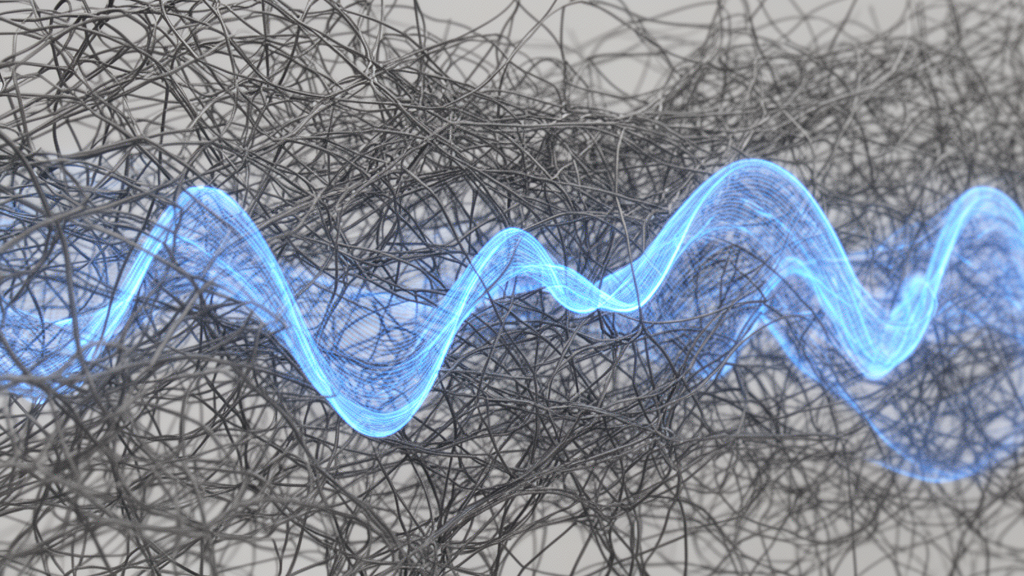
A scientific review published in the journal Functional Composite Materials examines advances in electrospun polymer-derived carbon fibers and composite architectures engineered for electromagnetic interference shielding. Authored by B. D. S. Deeraj, Rhiya Paul, and Kuruvilla Joseph, the study addresses rising electromagnetic wave radiation pollution generated by the rapid proliferation of electronic devices. Stray radiation threatens sensitive electronic equipment and poses potential hazards to living organisms. Defensive shielding materials operate by reflecting or absorbing high-frequency radiation. However, researchers increasingly focus on absorption-dominated shields because reflected waves create secondary electromagnetic interference in crowded electronic environments. Shielding performance across microwave and radio frequencies is evaluated through shielding effectiveness, measured quantitatively in decibels. Commercial applications generally require a total shielding effectiveness of at least twenty decibels, representing the sum of absorption, reflection, and multiple reflection mechanisms. Characterization relies on coaxial transmission line, open field, shielded room, or shielded box methods alongside vector network analyzers that measure signal phase, amplitude, permittivity, and magnetic permeability.
The core manufacturing process is electrospinning, which synthesizes submicron and nanoscale continuous fibers from polymer solutions, polymer melts, or ceramic suspensions under electric fields. A syringe pump introduces precursor solution into a spinneret at a predetermined flow rate, forming droplets at the needle tip. Applying high voltage causes electrical repulsion among charged molecules, overcoming fluid surface tension to deform the spherical droplet into a Taylor cone. A fine, electrically charged fluid jet erupts from the cone tip, initially pursuing a straight trajectory before transitioning into a looping spiral path toward a grounded collector plate. In the early stage, jet acceleration overcomes Rayleigh surface tension instabilities that would otherwise cause droplet fragmentation. As solvent evaporates, the jet diameter contracts, concentrating surface charge and inducing bending or whipping instabilities. These lateral electrical and aerodynamic forces stretch the chaotic jet into ultrathin solidified fibers. Variations include hollow spinnerets, multiple-spinneret systems, coaxial nozzles for core-shell fibers, and melt electrospinning for insoluble thermoplastics like polypropylene and polyethylene.
Precursor solution parameters profoundly affect electrospun fiber quality, as polymer nature, solvent choice, and molecular weight govern viscosity. Low molecular weight polymers yield dilute solutions that form beaded droplets rather than continuous fibers. Anandjiwala and colleagues demonstrated this behavior using polyethylene oxide: low molecular weight solutions formed beaded filaments, whereas higher molecular weights of 9 × 10^5 grams per mole produced fine fibers with regular spindles. Polymer solubility also determines morphology; excessive solubility triggers electrospraying, while partial solubility yields stable electrospun fibers. Georgiadou and coworkers investigated polylactic acid in acetone and dimethylformamide, finding that concentrations below ten percent produced beaded strings, whereas concentrations above ten percent generated defect-free fibers due to chain entanglements surpassing the critical entanglement concentration. Additionally, incorporating ionic salts like lithium chloride, sodium chloride, calcium chloride, or sodium nitrate into polyacrylonitrile solutions increases electrical conductance without altering solution viscosity. Lithium chloride produced the highest conductance and yielded fibers with an average diameter of 473 nanometers.
Operational and environmental conditions also control electrospun fiber structure. Applied voltage must exceed a threshold value to eject the jet, but its effect on fiber diameter varies. Can-Herrera and colleagues observed that raising voltage from 10 to 25 kilovolts increased polycaprolactone scaffold fiber thickness. Conversely, Mirzadeh and coworkers found that polyvinylidene fluoride produced narrow beaded fibers at lower voltages but thick, unstable fibers at 20 kilovolts. Other studies showed polyvinylidene fluoride fiber diameters decreasing between 9 and 15 kilovolts before broadening at 21 kilovolts because Taylor cones collapsed into multiple jets. Solution feed rates are equally critical; Shamim and collaborators showed that nylon-6 flow rates below 0.5 milliliters per hour produced fine fibers, while higher rates caused electrospraying and beaded defects. Tip-to-collector distance establishes required flight and drying time, with shorter distances yielding thick, beaded structures. Finally, elevated ambient temperatures reduce viscosity and accelerate evaporation, while excessive relative humidity causes premature charge dissipation, incomplete drying, and structural defects.
Electrospun nanofibers display high porosity, expansive surface areas, and structural adaptability that benefit diverse biomedical and energy systems. In tissue engineering, electrospun meshes replicate the native extracellular matrix. Semnani and colleagues prepared porous polycaprolactone and chitosan scaffolds for liver tissue engineering, optimizing collector speed to 90 revolutions per minute and wire angles to 40 degrees to achieve 79 percent porosity, 12-micrometer pores, and 89.9 percent cell viability. Other researchers developed semi-conductive polypyrrole, chitosan, collagen, and polyethylene oxide fibers reaching conductivities of 164.274 × 10^-3 S/m to assist tissue regeneration via electrical signaling. In drug delivery, Abidian and coworkers demonstrated that aligned poly(lactide-co-glycolide) fibers with greater than 99 percent orientation delivered sustained dexamethasone release with lower initial burst release than random fibers, driven by anisotropic hydrolytic degradation. In battery applications, electrospun lithium cobalt oxide nanofibers fabricated by Jiao and team yielded a first-cycle discharge capacity of 182 mAh/g, while coaxial core-shell lithium cobalt oxide and magnesium oxide fibers retained 90 percent capacity after 40 cycles.
Fabricating carbon nanofibers for shielding applications requires electrospinning carbon-rich polymer precursors followed by controlled thermal conversion. Explored precursors include polyacrylonitrile, pitch, polyimide, polyvinyl alcohol, cellulose, polyvinylpyrrolidone, lignin, and polyvinylidene fluoride. Polyacrylonitrile is the predominant precursor due to its thermal stability and high carbon yield, cyclizing into linear aromatic structures at lower temperatures. The production protocol entails stabilization in a hot air oven at 200 to 300 degrees Celsius followed by carbonization in an inert environment at temperatures up to 2800 degrees Celsius. Progressive, multi-stage heating routines are employed to mitigate dimensional shrinkage and mass loss. Carbonized electrospun fibers possess a turbostratic microstructure intermediate between graphitic and amorphous states, containing approximately 78 percent sp2 hybridized bonds. However, electrospun carbon fibers exhibit lower tensile strength than conventional carbon fibers because precursor electrospinning lacks the continuous mechanical drawing used in industrial post-stretching processes. Furthermore, residual solvent traces permit chain relaxation, retaining structural disorder that restricts neat fibers to functional rather than load-bearing roles.
Carbonization conditions govern the electrical conductivity, mechanical strength, and intrinsic shielding efficacy of neat electrospun carbon fibers. Bayat and colleagues demonstrated that carbonizing polyacrylonitrile at 700 degrees Celsius achieved an electrical conductivity of 0.05 S/cm, which increased to 2.6 S/cm at 900 degrees Celsius, raising shielding effectiveness from 0 to 15 decibels. Evaluating thermal treatments between 800 and 1700 degrees Celsius revealed that fiber tensile strength climbed from 1.86 GPa to a peak of 3.52 GPa at 1400 degrees Celsius before falling to 2.05 GPa at 1700 degrees Celsius due to amorphous-crystalline microstructural mismatch. Conversely, Young’s modulus peaked at 191 GPa at 1700 degrees Celsius. Carbon fibers heat-treated to 2100 degrees Celsius achieved a shielding effectiveness of 20 decibels, meeting commercial benchmarks. Polyacrylonitrile-derived carbon nanofibers typically demonstrate electrical conductivities between 1.95 and 7.69 S/cm and thermal conductivity around 0.012 W/(m·K). However, their mechanical brittleness requires filler incorporation to expand practical utility.
Introducing conductive carbonaceous fillers significantly improves shielding effectiveness. Electrospun carbon nanofibers combined with carbon black super P and compounded into polydimethylsiloxane matrices exhibited an electrical conductivity of 2.5 S/cm, achieving a mean shielding effectiveness of 50.7 decibels and a peak of 55.8 decibels across 8.2 to 26.5 gigahertz. Corresponding polydimethylsiloxane composites displayed average shielding values rising from 17.8 decibels for neat fibers to 33.1 and 45.2 decibels as carbon black content increased, driven by conductive networks, polarization losses, and layered reflection. Similarly, Sharma and coworkers prepared PEDOT:PSS and polyvinylpyrrolidone coated carbon fibers in polydimethylsiloxane, attaining 44 decibels across 8 to 26.5 gigahertz and an absolute shielding effectiveness of 5678 dB·cm^2/g dominated by absorption. Another team annealed alkali-treated polyacrylonitrile nanofibers with graphene oxide films, creating microgasbag composite films with a tensile strength of 10.4 megapascals, density of 0.678 g/cm^3, electrical conductivity of 1.72 × 10^5 S/m, and shielding effectiveness of 55 to 57 decibels.
Ceramic, magnetic, and metallic additives offer additional avenues to customize dielectric and magnetic loss mechanisms. Aligned barium titanate-doped carbon nanofibers achieved a shielding effectiveness of nearly 81 decibels at 0.24 millimeters thickness, whereas non-aligned fibers reached 59.2 decibels. Fabricating tantalum carbide and iron carbide composite fibers yielded an electrical conductivity of 15.4 S/cm, saturation magnetization of 13.3 emu/g, density of 0.34 g/cm^3, and reflection-dominated shielding of 46.4 decibels at 0.18 millimeters. TaC nanoparticle frameworks exhibited 10.4 S/cm conductivity and 37.7 decibels of shielding with a tensile strength of 9.5 megapascals, while CoFe2O4/C nanofibers achieved 30 to 35 decibels across 8.2 to 12.4 gigahertz. Im and colleagues showed that adding multi-walled carbon nanotubes to iron oxide and barium titanate-filled polyacrylonitrile fibers shifted reflection-dominated shielding (64 percent in twin-filler fibers) to absorption dominance, raising average shielding from 32 to 37 decibels. Additionally, fluorinated carbon black achieved 50 decibels and 38 S/cm, while BaTiO3 and Fe3O4 combinations achieved 20 to 23 decibels.
Advanced architectures further enhance composite resilience and functional performance. Li and collaborators demonstrated that alternating multilayer structures of electrospun carbon fibers and silicone maintained stable shielding effectiveness without degradation after 1000 cyclic bending tests. Overall, the electromagnetic shielding efficacy of electrospun carbon fibers relies on six interrelated factors: high electrical conductivity, porous architectures facilitating wave absorption and internal reflection, matrix-fiber interfacial bonding, conduction and polarization losses, functional additive contributions, and mat thickness. Nevertheless, practical implementation requires overcoming weak interfacial bonding between carbon fibers and host polymer matrices, which researchers address through physical surface roughening or chemical covalent functionalization. Establishing consistent quality control over fiber morphology and turbostratic microstructure during continuous manufacturing remains another critical hurdle. Future research will focus on clarifying relationships between precursor preparation parameters and resulting nanofiber architecture to advance electrospun carbon composites as lightweight, flexible, and absorption-dominated shields across broad frequency spectra.
Subject of Research: Electrospun polymer-derived carbon and composite nanofibers for electromagnetic interference shielding
Article Title: A brief review on electrospun polymer derived carbon fibers for EMI shielding applications
Article References: Deeraj, B. D. S., Paul, R., & Joseph, K. (2024). A brief review on electrospun polymer derived carbon fibers for EMI shielding applications. Functional Composite Materials, 5(1), Article 13. https://doi.org/10.1186/s42252-024-00060-8
Image Credits: AI Generated
DOI: 10.1186/s42252-024-00060-8
Keywords: electrospinning, carbon nanofibers, electromagnetic interference shielding, shielding effectiveness, polyacrylonitrile, carbonization, turbostratic carbon, dielectric loss, magnetic loss, barium titanate, carbon black, graphene oxide, tantalum carbide, polydimethylsiloxane, Taylor cone, whipping instability, vector network analyzer, multicomponent composites