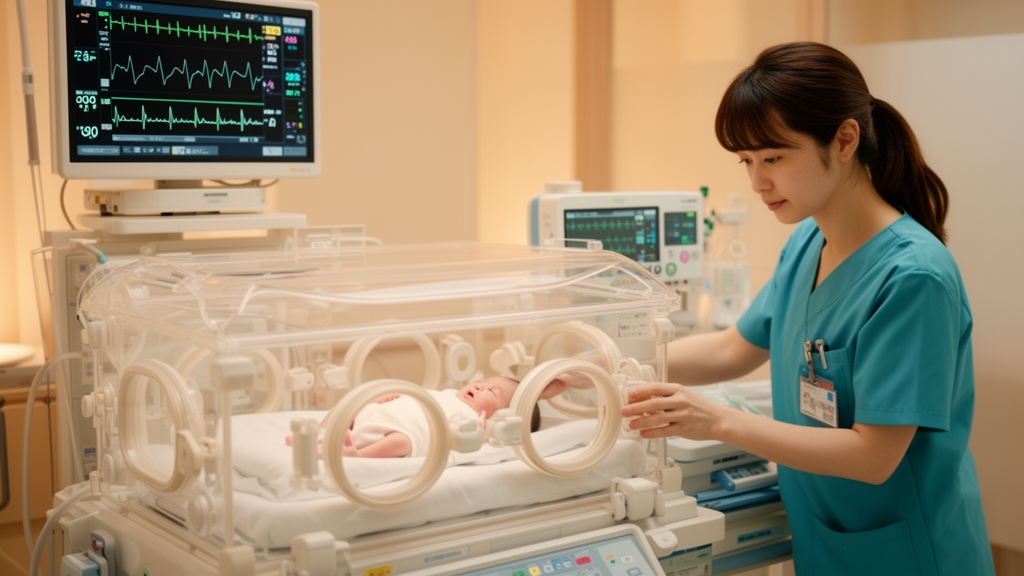
Infants born at less than 24 weeks of gestation have routinely received intensive care for decades in Japan, achieving greater survival and lower rates of several neonatal morbidities than units in other countries, according to an analysis in Pediatric Research by Matthew A. Rysavy evaluating a comprehensive clinical report by Isayama and colleagues.
The clinical management of infants born at this early gestational threshold has been a persistent source of controversy in neonatology for more than thirty years, shifting from historical debates over whether to initiate life support to modern investigations into how to deliver intensive care safely and effectively.
Neonatal intensive care represents the sum of numerous interrelated clinical processes rather than any single intervention, encompassing ventilation, perfusion, nutrition, thermal regulation, skin integrity maintenance, and infection prevention to support early physiologic programming and families.
In the published report, Isayama and colleagues provide an expansive description of Japanese neonatology practices, highlighting specific interventions while emphasizing that their clinical experience remains anecdotal and tentative until rigorous evaluations are performed.
A critical challenge identified in the analysis is that very few infants born at less than 24 weeks of gestation are enrolled in clinical trials, creating a shortage of high-quality evidence in modern neonatal-perinatal medicine.
Because of unique physiological characteristics, infants born before 24 weeks may respond differently to clinical therapies than older preterm infants, yet these developmental variations have not been adequately incorporated into international management guidelines.
Rather than searching for a single isolated therapy, the Japanese model emphasizes cohesive care systems, including dyadic care that organizes maternal and infant health services together, continuous monitoring of individual patient responses, and consistent clinical protocols.
The commentary notes that neonatal units globally have long exhibited divergent practices due to a Galapagos Island Problem, in which local intensive care cultures evolve idiosyncratic approaches without robust comparative evidence when facing life-or-death treatment decisions.
Specific interventions evolved within Japanese units include routine en caul delivery to reduce birth trauma, cut-cord milking, routine analgesia during invasive mechanical ventilation, multiple daily head ultrasounds to detect blood flow patterns and prevent intraventricular hemorrhage, routine enemas to prevent meconium obstruction, and targeted treatment for late-onset circulatory collapse.
While these clinical approaches demonstrate what is achievable in infant survival, past historical tragedies in neonatology highlight that untested practices require careful study and formal comparative trials before being adopted internationally.
The evolution of neonatal medicine over the past three decades reflects a significant reorientation in how clinicians approach the care of infants delivered before 24 weeks of gestation. During the initial decades of this debate, academic discussions focused primarily on the dilemma of whether intensive care should be initiated at all for infants born at such early thresholds. Over time, that debate has shifted substantially toward examining how to provide intensive care safely and effectively.
A central insight emphasized in the commentary is that neonatal intensive care cannot be reduced to a single clinical intervention. Intensive care is the collective sum of multiple supportive processes working simultaneously to sustain fragile life, including mechanical ventilation, hemodynamic perfusion, targeted nutrition, meticulous thermal regulation, preservation of skin integrity, and continuous infection prevention.
In neonatal medicine, intensive care extends beyond acute medical stabilization to encompass the developmental trajectory of a developing human being. Infants born at less than 24 weeks are undergoing vital physiological programming that establishes the biological foundation for the remainder of their lives. Furthermore, intensive care in this setting inherently involves supporting the family that will nurture and raise the infant.
The overall delivery of neonatal intensive care is further defined by structural, environmental, and cultural components that operate alongside medical therapies. Neonatal critical care incorporates medications, invasive procedures, and specialized bedside technology, but it is equally shaped by multidisciplinary team structures, workplace culture, communication strategies, physical nursery floorplans, and overarching health system policies. Consequently, safe and effective management for infants delivered before 24 weeks cannot be captured in a concise summary of medication dosages, administration timing, or specific ventilator settings, because institutional structure and clinical culture fundamentally dictate how therapies are applied.
The long-standing clinical experience of Japanese neonatal units highlights both the potential and the complexity of caring for the most extremely preterm infants. For decades, infants delivered at less than 24 weeks have routinely received active intensive care in Japan, where neonatal units have long achieved greater infant survival and lower rates of several neonatal morbidities compared to units in other nations. However, the specific practices and systems responsible for these superior clinical outcomes remain inadequately understood internationally. Researchers and clinicians outside Japan have not yet clarified the relative contributions of specific perinatal and postnatal practices, specialized hospital organization, or broader societal and health-system factors that might account for these observed survival advantages.
In their published report in Pediatric Research, Isayama and colleagues provide an expansive, detailed description of how intensive care is organized and delivered for infants born before 24 weeks in Japan. Their account documents technical interventions alongside institutional culture and health system organization. Importantly, the authors maintain notable scientific rigor by explicitly acknowledging the observational limitations of their work. They emphasize that their clinical experience is anecdotal, that many of their documented practices still require rigorous formal evaluation, and that their overall clinical strategy remains tentative until more definitive empirical evidence is generated.
A significant problem identified in the commentary is the profound lack of high-quality evidence from clinical trials regarding infants delivered before 24 weeks. Very few infants at this gestational age are ever enrolled in randomized controlled trials, despite possessing distinct physiological characteristics that can cause them to respond differently to clinical interventions than infants born at later gestations. Furthermore, existing international clinical management guidelines have not adequately considered these physiological differences and treatment responses. While this evidentiary deficit is a genuine challenge in modern neonatal-perinatal medicine, the commentary cautions that it must never become a shibboleth or an excuse for undisciplined medical practices. Affected infants and families have a right to participate in clinical research, and until that evidence arrives, certain core principles highlighted by Isayama and colleagues clearly warrant adoption.
Among the best practices identified by Isayama and colleagues is the implementation of dyadic care that organizes maternal and infant health services together within the healthcare system. Other essential practices include closely monitoring individual treatment responses, systematically collecting clinical data, benchmarking performance, and fostering an institutional culture committed to iterative improvement. Japanese neonatology also emphasizes maintaining consistency in daily clinical practice and prioritizing comprehensive packages of coherent care rather than isolated therapies. These systemic approaches are often overlooked by outside clinicians searching for a single, unique intervention to explain Japan’s exceptional clinical outcomes.
The commentary also contextualizes variations in international care through the concept of the Galapagos Island Problem. In neonatal intensive care units across the world, even those operating within the same city or region, local units have long developed localized clinical practices without a strong evidentiary foundation. These localized adaptations frequently diverge from practices maintained elsewhere, sometimes surprising the clinicians who introduced them. This divergence emerges naturally in neonatology because clinical decision-making carries life-or-death stakes. Withholding intensive care from infants delivered before 24 weeks results in certain mortality, meaning active intensive care is the only potential path to survival. As clinicians confront urgent clinical choices without definitive trial data, individual decisions accumulate over time into divergent, self-contained local care ecosystems.
Several unique interventions have evolved within the Japanese neonatology ecosystem, including routine en caul delivery to minimize birth trauma, cut-cord milking as a technique distinct from intact cord milking, routine use of analgesics during invasive ventilatory support, multiple daily neonatologist-performed head ultrasounds to monitor blood flow patterns and try to prevent intraventricular hemorrhage, routine enemas to prevent meconium obstruction, and specific protocols to identify and manage late-onset circulatory collapse. While some of these practices may hold promise to improve neonatal outcomes globally, the commentary emphasizes that the incautious and overly enthusiastic adoption of untested therapies has caused numerous tragedies in the history of neonatology. Therefore, Japanese interventions must undergo rigorous comparative evaluation against standard practices elsewhere, which also frequently remain untested, to formally demonstrate what care practices are truly optimal for improving patient and family health.
Subject of Research: Clinical management and outcomes of infants born before 24 weeks of gestation
Article Title: Lessons from Japanese neonatology about caring for infants <24 weeks
Article References: Rysavy, M. A. (2026). Lessons from Japanese neonatology about caring for infants <24 weeks. Pediatric Research. https://doi.org/10.1038/s41390-026-05684-z
Image Credits: AI Generated
DOI: 10.1038/s41390-026-05684-z
Keywords: neonatology, extremely preterm infants, gestational age, neonatal intensive care units, Japanese neonatology, en caul delivery, cut-cord milking, intraventricular hemorrhage, head ultrasound, late-onset circulatory collapse, meconium obstruction, dyadic care, invasive mechanical ventilation, clinical trials, benchmarking, neonatal morbidity, infant survival, Pediatric Research