
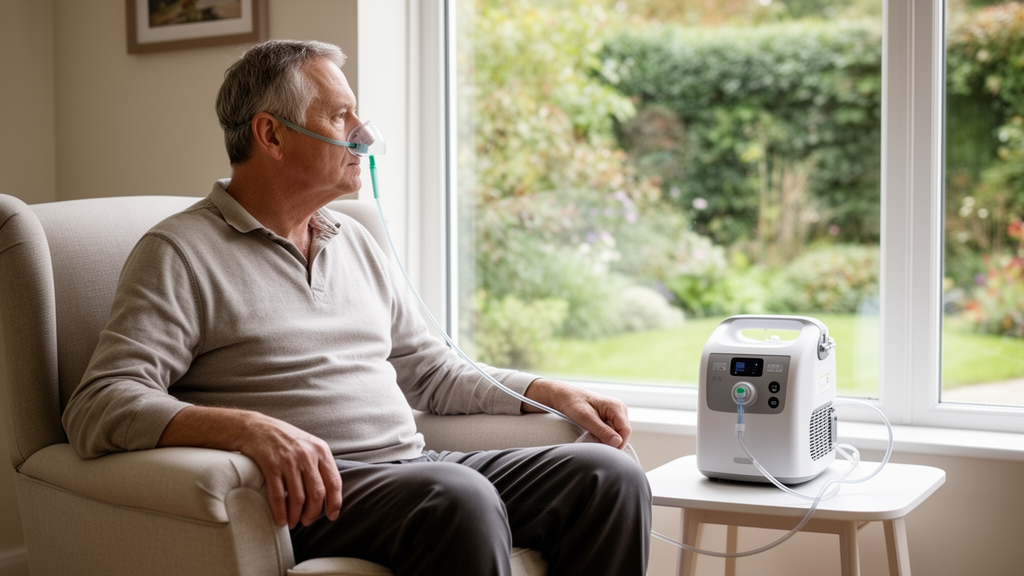
A nationwide cohort study from Belgium indicates that patients initiating long-term oxygen therapy experience an estimated four-year overall survival rate of only twenty-two percent, highlighting the advanced disease trajectory associated with the intervention. Led by researchers Michaël Staes, Arne Coussement, and Wim Janssens from University Hospitals Leuven alongside colleagues from Ghent University Hospital, the investigation evaluated national administrative healthcare records representing nearly five thousand patients who commenced oxygen therapy in 2017. The analysis demonstrated that while long-term oxygen therapy serves as a standard clinical management approach for severe chronic hypoxemia, long-term survival outcomes across the population remain notably low, influenced heavily by patient age, underlying respiratory diagnosis, and initial equipment modality.
Long-term oxygen therapy involves the administration of supplemental oxygen via a nasal cannula or mask for more than three months in patients suffering from chronic hypoxia induced by severe pulmonary, cardiac, or neuromuscular disease. The underlying physiological objective of this intervention is to elevate the oxygen fraction of inhaled air, thereby increasing alveolar oxygen concentrations and boosting arterial oxygenation. By improving systemic oxygen delivery, the therapy aims to mitigate downstream clinical sequelae linked to chronic hypoxemia, including the secondary development of pulmonary hypertension and cor pulmonale, both of which are clinically recognized as having poor prognostic profiles.
Despite widespread clinical adoption, the evidentiary framework supporting long-term oxygen therapy remains grounded primarily in landmark randomized trials conducted several decades ago. The nocturnal oxygen therapy trial and the British Medical Research Council trial from the 1980s demonstrated reduced mortality in patients with severe chronic obstructive pulmonary disease who received oxygen supplementation for more than fifteen hours per day. However, subsequent evaluations have failed to demonstrate survival advantages across broader patient groups. The authors noted that a Swedish multicenter trial identified no difference in one-year survival between patients using oxygen for fifteen versus twenty-four hours daily, a meta-analysis showed no survival benefit in patients with moderate hypoxemia, and randomized trials examining isolated nocturnal oxygen desaturation also produced negative results.
In Belgium, reimbursement guidelines established by the national social security organization, RIZIV/INAMI, restrict long-term oxygen therapy prescriptions to strictly defined physiologic thresholds derived from these historical trials. Reimbursement for a standard fixed oxygen concentrator requires a resting arterial blood oxygen pressure below 55 millimeters of mercury in a steady state, or between 55 and 60 millimeters of mercury if accompanied by documented pulmonary hypertension or an elevated blood hematocrit exceeding fifty-five percent. Portable oxygen concentrators are reimbursed for patients with severe parenchymal conditions, such as interstitial lung disease or emphysema, who demonstrate exercise-induced desaturation below eighty-eight percent during a six-minute walk test. Liquid oxygen is strictly reserved for patients with advanced disease who require flow rates exceeding four liters per minute at rest.
To investigate survival across indications, the research team analyzed two distinct patient datasets. The Belgian Cohort comprised national administrative registry data from RIZIV/INAMI covering 15,477 patients who received long-term oxygen therapy in 2017, focusing specifically on 4,973 individuals who initiated treatment that year to establish a four-year follow-up window. After excluding 1,020 patients due to missing follow-up data, 3,953 patients were included in the national survival analyses. To validate and refine these findings, the investigators assembled a complementary Tertiary Care Cohort of 533 patients treated at University Hospitals Leuven between 2013 and 2017, where medical charts were individually audited to assess treatment cessation causes and organ transplantation events.
Within the nationwide Belgian Cohort, chronic obstructive pulmonary disease accounted for seventy-five percent of all treatment initiations, followed by restrictive pulmonary disorders at thirteen percent. When calculating survival based strictly on confirmed deaths, four-year overall survival stood at thirty-five percent with a median survival of 2.46 years. However, because administrative records contained a substantial proportion of treatment cessations without documented medical reasons, researchers modeled overall survival under the assumption that undocumented cessations reflected patient mortality. Under this primary model, four-year overall survival dropped to twenty-two percent with a median survival of 1.34 years, with patients with chronic obstructive pulmonary disease surviving at higher rates than those with restrictive pulmonary disease or extrapulmonary conditions.
Prescription modalities also correlated strongly with survival disparities in the national registry. Patients who initiated treatment exclusively with portable oxygen concentrators demonstrated the highest four-year overall survival at thirty-five percent, whereas those on fixed oxygen concentrators reached twenty-one percent. Patients started on liquid oxygen experienced a particularly poor four-year overall survival rate of only seven percent. In a multivariable Cox proportional hazards model adjusting for age, diagnosis, and starting modality, restrictive pulmonary disease was associated with a higher risk of death compared to chronic obstructive pulmonary disease, while liquid oxygen therapy carried an adjusted hazard ratio of 1.84 and portable oxygen concentrators were associated with a lower adjusted hazard ratio of 0.79.
The Tertiary Care Cohort from University Hospitals Leuven provided detailed insights into transplant-free survival, recording a four-year overall survival of twenty-nine percent and a transplant-free survival of twenty-six percent, with fifty-six patients undergoing lung transplantation during the follow-up window. Patients with interstitial lung disease experienced the poorest outcomes, recording a four-year transplant-free survival of only thirteen percent, compared to thirty-three percent among patients with chronic obstructive pulmonary disease. After adjusting for baseline age, indication, and modality, the hazards model revealed that interstitial lung disease carried an adjusted hazard ratio of 1.98 for death or transplantation compared to chronic obstructive pulmonary disease, while other obstructive lung conditions yielded a hazard ratio of 1.56.
The study authors highlighted that differences between national registries and single-center tertiary cohorts illustrate the effect of referral patterns, as expert lung transplant centers manage disproportionate shares of complex conditions like interstitial lung disease and pulmonary hypertension. Nevertheless, the low overall survival documented across both cohorts aligns closely with international findings, including Swedish registry data from the DISCOVERY cohort reporting a seventeen percent four-year overall survival among patients with chronic obstructive pulmonary disease and interstitial lung disease, as well as Finnish university hospital data showing twenty-five percent survival. These consistent observations indicate that the initiation of long-term oxygen therapy universally signals an advanced, late stage in chronic respiratory illness.
The investigators emphasized several methodological limitations inherent to administrative data, including incomplete registration of mortality causes, lack of linkage to external death registries, and the absence of monitoring data regarding prescribed oxygen flow rates and patient adherence. Furthermore, analyses evaluated baseline starting modalities, though supplementary sensitivity checks excluding patients who switched equipment showed consistent survival trends. Concluding their findings, the research team stressed that given the poor long-term survival observed across all diagnostic indications, the prescription of long-term oxygen therapy should serve as an immediate catalyst for timely advance care planning and proactive discussions regarding palliative care for patients who are not candidates for lung transplantation.
The national administrative registry originally classified therapy indications across six distinct diagnostic categories: chronic obstructive pulmonary disease, asthma, cystic fibrosis, other obstructive lung disease, restrictive lung disease, encompassing interstitial and neuromuscular disorders, and extrapulmonary disease, including heart failure and pulmonary hypertension. Due to the small number of patients starting therapy for asthma (34 individuals) and cystic fibrosis (21 individuals) in 2017, researchers merged them into the other obstructive pulmonary disease category. Across the tertiary care cohort spanning 2013 through 2017, annual recruitment included 129 patients in 2013, 103 in 2014, 96 in 2015, 118 in 2016, and 114 in 2017, with 27 cases excluded due to missing cessation or death dates. That tertiary cohort contained no patients labeled with asthma, while 33 patients diagnosed with cystic fibrosis were likewise consolidated into the other obstructive disease group.
Tracking equipment usage within the tertiary cohort revealed notable transitions in oxygen delivery methods as chronic illness progressed. Among 116 tertiary care patients who initially commenced therapy with a portable oxygen concentrator, 30 patients shifted to a fixed oxygen concentrator during four-year follow-up. In the tertiary hospital setting, four-year transplant-free survival was lowest for individuals initiating care on liquid oxygen at 18 percent, with survival disparities most pronounced during the first two treatment years. Conversely, equivalent four-year transplant-free survival rates occurred between patients initiating therapy on fixed concentrators and those starting on portable devices. Statistical comparisons also revealed a significant divergence between pulmonary hypertension and interstitial lung disease, whereas smaller subcohorts of neuromuscular disease (29 patients) and other extrapulmonary disorders (20 patients) had insufficient numbers to construct survival curves.
The authors also contextualized their results against substantial variations reported across international literature on interstitial lung disease. Published four-year survival rates for patients receiving long-term oxygen for interstitial lung disease range widely from 5 percent to 31 percent. According to the investigators, this wide variation reflects regional differences in prevalence, varying timeliness of clinical diagnosis, disparities in lung transplantation referral, and differing national reimbursement criteria for oxygen equipment. Given the persistently poor overall prognosis identified across all diagnostic indications, the authors concluded that future research must prioritize patient-centered outcomes. Specifically, subsequent prospective evaluations should examine patient symptoms, individual care perspectives, and quality of life to better inform clinical decision-making when oxygen therapy is initiated.
Subject of Research: Long-term oxygen therapy survival outcomes in chronic respiratory disease
Article Title: Outcome of Patients with Long-Term Oxygen Therapy: A Nationwide Belgian Cohort Study
Article References: Staes, M., Coussement, A., Celis, G., Everaerts, S., Derom, E., & Janssens, W. (2026). Outcome of Patients with Long-Term Oxygen Therapy: A Nationwide Belgian Cohort Study. COPD: Journal of Chronic Obstructive Pulmonary Disease, 23(1), Article 2720037. https://doi.org/10.1080/15412555.2026.2720037
Image Credits: AI Generated
DOI: 10.1080/15412555.2026.2720037
Keywords: long-term oxygen therapy, chronic obstructive pulmonary disease, interstitial lung disease, chronic hypoxemia, transplant-free survival, overall survival, portable oxygen concentrator, liquid oxygen, fixed oxygen concentrator, restrictive lung disease, pulmonary hypertension, University Hospitals Leuven, RIZIV/INAMI, palliative care, arterial oxygenation, lung transplantation
