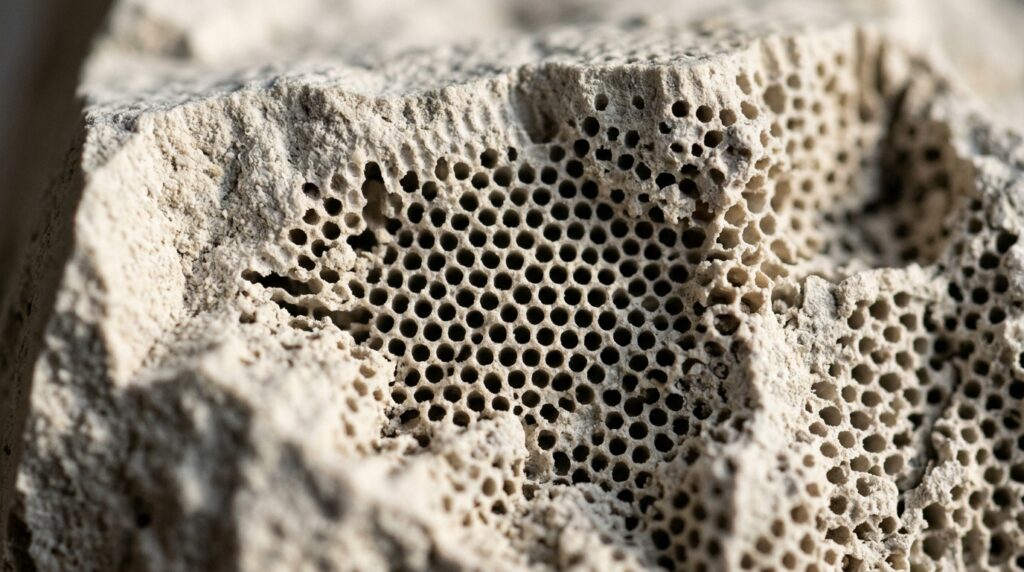
Mesoporous metal oxides are redefining heterogeneous catalysis and modern surface chemistry through precisely engineered nanoscale architectures characterized by tunable pore diameters between 2 and 50 nanometers and expansive surface areas spanning 100 to 1000 square meters per gram. Writing in the Brazilian Journal of Chemical Engineering, a research team led by Paul Fadojutimi, Oluwatayo Onisuru, Oluwafunmilola Akinpelu, Charles Oseghale, Zinyemba Orpah, and Reinout Meijboom has published a comprehensive review examining the design, structural properties, and catalytic performance of these inorganic frameworks. While early mesostructured discovery emerged from aluminosilicates and zeolites in the 1960s, the development of the M41S silica family by Mobil Oil Corporation in 1992 proved that highly ordered porosity could be deliberately manufactured. Transitioning from silicates to transition metal oxides presented profound synthetic hurdles because transition metal precursors display heightened sensitivity to ambient moisture and water. For example, titanium alkoxides hydrolyze five times faster than silicon alkoxides, frequently triggering uncontrolled precipitation before organic surfactant templates can direct pore assembly. Understanding and governing these rapid kinetics now underpins advances across chemical transformations, environmental remediation, and electrochemical energy conversion.
The structural efficacy of mesoporous metal oxides rests fundamentally on pore volume, pore connectivity, and wall crystallinity, which govern the transport of molecular reactants to active catalytic sites. Typical pore volumes range between 0.30 and 2.0 cubic centimeters per gram, though specialized architectures with interconnected cavities surpass this upper threshold, while lower-surface-area variants fall below 0.30 cubic centimeters per gram. In practical catalysis, these materials exhibit type IV adsorption isotherms, low-angle diffraction lines, and uniform pore size distributions that optimize mass transfer and spatial confinement during complex chemical operations. The review outlines the broad chemical scope of these systems, which encompasses silica, alumina, titanium dioxide, zirconia, ceria, iron oxides, cobalt oxides, manganese oxides, nickel oxide, copper oxide, tungsten oxide, and mixed ternary compositions such as barium titanate and strontium titanate.
Fabrication strategies bifurcate into template-assisted and template-free pathways, each dictating distinct morphological and physical characteristics. Template-assisted routes utilize either soft organic supramolecular assemblies or rigid hard matrices to imprint ordered porosity. In soft templating, amphiphilic surfactant molecules, including cationic, anionic, neutral, and non-ionic block copolymers, assemble into organized micellar structures that guide the condensation of metal precursors. Non-ionic triblock copolymers such as Pluronic P123 and Pluronic F127, alongside cetyltrimethylammonium bromide, serve as the primary structure-directing agents. P123 features shorter polyethylene oxide segments that yield smaller mesopores, elevated micelle packing density, easier thermal removal, and cost efficiency, whereas higher-molecular-weight F127 facilitates larger pore cavities. Generally, cetyltrimethylammonium bromide produces tight pores measuring 2 to 3 nanometers, whereas P123 yields pores between 5 and 8 nanometers and F127 generates wider apertures spanning 6 to 12 nanometers.
In contrast, hard templating, frequently termed nanocasting or exotemplating, utilizes preformed rigid porous scaffolds such as mesoporous silica, carbon, alumina, or metal-organic frameworks to cast metal oxide replicas. The typical protocol involves dissolving the metal precursor in an anhydrous solvent like absolute ethanol, impregnating the solid scaffold under continuous agitation, and evaporating the liquid at temperatures below 50 degrees Celsius. Subsequent sintering in a furnace at approximately 300 degrees Celsius converts the precursor into a rigid crystalline oxide inside the template channels. Dissolving the silica scaffold with concentrated alkaline solutions or hazardous hydrofluoric acid, followed by centrifugal washing and thermal drying, produces an inverse replica possessing exceptional structural fidelity and crystalline pore walls. Although hard templating delivers high structural precision, narrow pore size distributions, and high crystallinity, its industrial deployment remains severely hampered by multi-step complexity, expensive template matrices, prolonged processing times, and toxic chemical etching reagents required for sacrificial template removal.
To overcome the economic and environmental penalties of sacrificial templates, researchers are accelerating template-free synthetic routes that exploit self-organization and decomposition kinetics. Self-templating and spontaneous assembly enable the creation of complex hierarchies directly from reacting solutions, as demonstrated by the formation of hierarchical manganese dioxide nanoflowers measuring 300 nanometers via citric acid reduction of potassium permanganate in dilute hydrochloric acid. Similarly, mesoporous copper oxide nanourchins can be synthesized in water and ethanol without external additives through progressive dissolution-precipitation transformations passing through basic chloride intermediates. Furthermore, industrial waste valorization has been successfully demonstrated by producing high-purity mesoporous silica from coal fly ash through thermal activation and acid refluxing, generating a surface area of 793.51 square meters per gram with uniform 3.9-nanometer pores. Alternative non-templated strategies include spray pyrolysis, where liquid precursor aerosols thermally decompose inside heated zones to form hollow or porous spheres driven by volatile gas expulsion, and the pyrolytic conversion of crystalline metal-organic frameworks.
Solid-state mechanochemical milling has emerged as a particularly sustainable, solvent-free alternative capable of driving reaction kinetics via frictional impact between milling media and solid reactants. Room-temperature grinding of metal alkoxides with minor polymer additions like polyethylenimine induces immediate self-assembly into mesoporous frameworks within minutes, circumventing massive volumes of organic solvents and wastewater. Milling generates high local mechanical stresses, creating defect networks, localized amorphous zones, and phase segregations that serve as spontaneous nucleation sites for porous networks. While liquid-assisted grinding allows researchers to fine-tune reaction pathways through trace solvent additions, mechanochemical synthesis faces inherent challenges regarding broad pore size distributions, non-equilibrium variability, and partial structural disorder. Consequently, researchers often deploy transient non-carbonizable additives such as sodium chloride or polyoxometalate clusters during milling, which can be cleanly rinsed away to enhance structural ordering without the environmental burdens of standard surfactants.
Among classic liquid-phase techniques, sol-gel processing and hydrothermal synthesis remain the workhorses of metal oxide manufacturing, complemented by advanced variants like evaporation-induced self-assembly, microwave heating, and chemical vapor deposition. Sol-gel routes proceed through low-temperature hydrolysis and polycondensation of metal alkoxides, but they frequently require days or weeks to mature. Evaporation-induced self-assembly refines this process by depositing dilute solutions of metal salts and block copolymers onto substrates, driving micellar organization as volatile alcohol solvents evaporate under controlled ambient humidity and temperature. Hydrothermal synthesis operates within sealed Teflon-lined autoclaves under elevated pressures and temperatures, providing exceptional control over nanoparticle morphology, phase composition, and powder homogeneity. For instance, soft-templated hydrothermal processing generates highly organized silica sieves like SBA-15 and MCM-41 following aging below 100 degrees Celsius and calcination near 550 degrees Celsius. Concurrently, microwave irradiation drastically shortens reaction times from days to mere minutes by delivering rapid, uniform volumetric heating, suppressing undesirable side reactions and delivering highly reproducible nanomaterials.
Detailed exploration of individual metal oxide systems illustrates how synthetic parameters dictate surface areas, phase transitions, and ultimate catalytic performance. Zirconium oxide, prized for its mechanical durability and refractory resilience, transitions from room-temperature monoclinic symmetry to tetragonal and cubic phases at 1100 and 2370 degrees Celsius, respectively. Nanoscale confinement and oxygen vacancies stabilize the active tetragonal phase at lower temperatures. When synthesized via inverse surfactant micelle methods, zirconia calcined at 250 degrees Celsius achieves a surface area of 198 square meters per gram, increasing to 225 square meters per gram at 350 degrees Celsius before collapsing to 56 square meters per gram at 600 degrees Celsius. In contrast, precipitation yields mesoporous zirconia boasting a surface area of 301 square meters per gram, vastly outperforming inverse micelle and conventional sol-gel preparations in catalytic hydrodeoxygenation. For cobalt oxide, which adopts a spinel structure containing both divalent and trivalent cations, hard-templating with KIT-6 and SBA-15 templates yields exceptional surface areas of 126.2 and 110.4 square meters per gram, compared to soft-templated samples that fail to exceed 70 square meters per gram.
Similar dependencies govern the functionality of titania, ceria, tungsten oxide, and alumina across specialized catalytic and environmental applications. Mesoporous titania requires careful coordination chemistry, such as adding acetylacetone or alkyl phosphate surfactants, to moderate rapid alkoxide hydrolysis and prevent disordered, wormhole-like morphologies. In cerium oxide systems, which exhibit mixed trivalent and tetravalent surface valencies coupled with dynamic oxygen vacancies, hard-templated nanocasting yields surface areas up to 190 square meters per gram for naphthalene oxidation, while template-free hydrothermal assembly achieves 270 square meters per gram for aqueous heavy metal remediation. Mesoporous tungsten oxide synthesized through KIT-6 hard templating provides high activity for nitrogen dioxide detection, while sol-gel routes using block copolymer templates produce surface areas up to 215 square meters per gram for photocatalytic hydrogen generation.
The review concludes that translating laboratory mesoporous metal oxide catalysts into viable industrial technologies requires rigorous balancing of scalability, processing costs, and environmental impacts. While sacrificial hard templating provides unmatched pore ordering, single-crystal-like wall crystallinity, and structural fidelity, its dependence on corrosive chemical etching renders it unviable for large-scale manufacturing. Soft templating offers superior processing simplicity and scalability, though calcination must be tuned to prevent framework collapse in thermally sensitive oxides like titania and cobalt oxide. Emerging mechanochemical grinding and microwave-assisted synthesis represent the most promising industrial avenues, combining high throughput, low energy consumption, and minimal hazardous waste generation. Future progress will center on hybrid systems that integrate mesoporous metal oxides with conductive supports and two-dimensional nanomaterials, including graphene derivatives, MXenes, and transition metal dichalcogenides, unlocking next-generation architectures for high-performance chemical synthesis, energy storage, and environmental protection.
Subject of Research: Design, synthesis pathways, and catalytic performance of mesoporous metal oxides across chemical and energy applications
Article Title: Mesoporous Metal Oxides as Catalysts: Design, Properties, and Performance
Article References: Fadojutimi, P., Onisuru, O., Akinpelu, O., Oseghale, C., Orpah, Z., & Meijboom, R. (2026). Mesoporous Metal Oxides as Catalysts: Design, Properties, and Performance. Brazilian Journal of Chemical Engineering. https://doi.org/10.1007/s43153-026-00672-6
Image Credits: AI Generated
DOI: 10.1007/s43153-026-00672-6
Keywords: Mesoporous Metal Oxides, Heterogeneous Catalysis, Sol-Gel Synthesis, Hydrothermal Synthesis, Soft Templating, Hard Templating, Template-Free Synthesis, Zirconium Oxide, Cobalt Oxide, Titanium Dioxide, Chemical Vapor Deposition, Microwave Synthesis, Surface Area, Pore Architecture, Green Chemistry, Nanomaterials