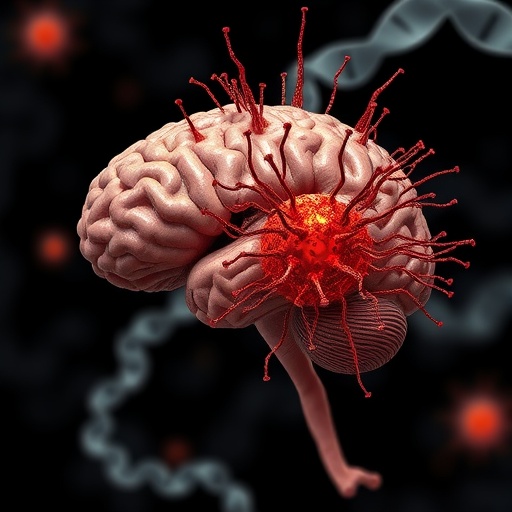
In a groundbreaking study published in Nature, researchers have illuminated the intricate role of the transcriptional regulator ZBTB18 in shaping the development and specialization of excitatory neurons in the mammalian neocortex. This work not only deepens our understanding of neurogenesis but also reveals how specific gene regulatory networks adapt to influence neuronal identity, with significant implications for cognitive disorders such as intellectual disability and autism.
ZBTB18, previously recognized for its involvement in neuronal migration and survival, emerges from this study as a pivotal determinant in the specification of intracortical projection neurons, particularly the intratelencephalic (IT) and extratelencephalic (ET) subtypes. Through sophisticated gene knockout models targeting Zbtb18 in mice, the researchers employed RNA sequencing to analyze transcriptional changes occurring at critical developmental periods of cortical neuron generation, remarkably at post-conception day (PCD) 14.5 and postnatal day (PD) 0.
The study reveals a striking dichotomy in gene regulation upon Zbtb18 deletion. Genes typically enriched in IT neurons were predominantly downregulated in Zbtb18 knockout (KO) mice, whereas genes linked to ET neuron identity were overwhelmingly upregulated. These expression shifts strongly suggest that ZBTB18 acts as a molecular gatekeeper, promoting the IT neuron genetic program while repressing ET neuron traits, thereby ensuring proper neuronal subtype specification crucial for cortical circuit formation.
To dissect whether ZBTB18’s role in neuronal identity manifests postmitotically—after neurons have completed cell division—the team engineered a conditional knockout (cKO) using Neurod6-Cre mice to specifically remove Zbtb18 from postmitotic excitatory neurons. This refined approach confirmed that ZBTB18’s function extends beyond progenitor cell activity, maintaining its influence on IT versus ET neuronal fate during later stages of cortical development. Remarkably, postmitotic Zbtb18 cKO mice displayed similar transcriptional patterns to constitutive KOs, solidifying the concept of cell-autonomous control by ZBTB18 in pyramidal neuron subtype establishment.
Critical markers of IT neurons, including Cux1, Cux2, Rorb, and Satb2, were found to be significantly diminished at both the mRNA and protein levels in the neocortex of Zbtb18 KO and cKO animals. Conversely, ET-associated markers such as BCL11B were markedly increased, indicating a shift in neuronal identity. These findings were supported by immunohistochemical analyses demonstrating altered laminar distribution and increased numbers of BCL11B- and TBR1-positive neurons, suggesting an expansion of ET neuron populations at the expense of IT neurons in the absence of ZBTB18.
Notably, neocortical size was only modestly reduced at birth in Neurod6-Cre;Zbtb18 cKO mice, a contrast to more profound size reductions observed in constitutive or Emx1-Cre mediated KOs. However, by postnatal day 8, the neocortex was substantially smaller in cKO mice, highlighting cumulative developmental consequences linked to disrupted neuronal specification. Importantly, ZBTB18 protein persisted in progenitor populations but was absent in postmitotic neurons from PCD 15.5 onward, emphasizing that the phenotypic shifts resulted from postmitotic processes rather than progenitor dysfunction.
In vivo birthdating experiments using halogenated nucleoside analogues IdU and CldU further clarified the temporal and spatial impact of Zbtb18 deletion. Labeling early-born deep-layer neurons at PCD 12.5 showed no significant alteration in laminar placement or fate specification of Layer 5 ET neurons, suggesting that early neurogenesis remains largely intact without ZBTB18. However, labeling during later stages (PCD 14.5 and 15.5), corresponding to upper-layer neuron development, revealed increased BCL11B and decreased SATB2 co-labeled cells in cKO mice, signifying a delay or misdirection in IT neuron specification in postmitotic neurons lacking ZBTB18.
Collectively, these data underscore a sophisticated mechanism by which ZBTB18 modulates excitatory neuron subtype balance, acting cell-autonomously within postmitotic neurons to preserve IT identity while repressing ET gene programs. The loss of ZBTB18 disrupts this balance, causing misspecification that likely alters cortical circuitry and function.
This research holds relevance to human neurological diseases, given that mutations in the ZBTB18 gene have been linked to intellectual disability and autism spectrum disorders. By delineating the molecular pathways controlled by ZBTB18, this study opens avenues for understanding the genetic underpinnings of these complex conditions and points towards potential targets for therapeutic intervention.
Furthermore, the findings provide new insight into how gene regulatory networks adapt during mammalian brain evolution to generate the diversity of neocortical projection neurons. As the neocortex expanded and specialized, transcription factors like ZBTB18 may have been co-opted or refined to pattern increasingly complex neural circuits essential to higher cognitive functions.
The application of conditional and constitutive genetic models combined with transcriptomic profiling and detailed histological characterization illustrates how integrative approaches can unravel the roles of individual transcription factors in brain development. This study sets a precedent for exploring other regulators that coordinate excitatory neuron diversity and connectivity.
Looking ahead, future research aimed at elucidating the downstream targets of ZBTB18 and how its interaction with other transcription factors shapes the excitatory neuron landscape will be crucial. Additionally, exploring ZBTB18’s role in synaptic development and plasticity could provide further links to the pathophysiology of neurodevelopmental disorders.
In summary, the adaptive evolution of gene regulatory networks orchestrated by factors like ZBTB18 underscores the dynamic interplay between genetic programs and neurodevelopmental trajectories. This work not only advances fundamental neuroscience but also enhances our grasp of disease mechanisms rooted in cortical maldevelopment.
Subject of Research: The role of the transcription factor ZBTB18 in excitatory neuron specification and its impact on neocortical development.
Article Title: Adaptive evolution of gene regulatory networks in mammalian neocortex.
Article References:
Li, Z., Kaur, N., Santpere, G. et al. Adaptive evolution of gene regulatory networks in mammalian neocortex. Nature (2026). https://doi.org/10.1038/s41586-026-10226-y
Image Credits: AI Generated
DOI: https://doi.org/10.1038/s41586-026-10226-y
Tags: adaptive evolution in mammalian neocortexexcitatory neuron specializationextratelencephalic neuron identitygene knockout models in neurogenesisgene regulatory networks in brain developmentintracortical projection neuron specificationintratelencephalic neuron gene regulationmolecular mechanisms of cognitive disordersneuronal subtype genetic programmingRNA sequencing in cortical developmenttranscription factors in neuronal differentiationZBTB18 transcriptional regulator function