
Drug developers and their contract development and manufacturing organizations (CDMOs) moving away from animal testing—whether for financial, regulatory, or moral reasons—are increasingly finding an alternative in organoid models designed to uncover biological insights previously unattainable through traditional cell culture experiments or animal models.
Merck KGaA, Darmstadt, Germany, and its U.S. and Canada Life Science business, MilliporeSigma, set out to establish a leading presence in organoid development last year when it completed its €104 million ($120 million) acquisition of HUB Organoids. In the 14 months that followed, MilliporeSigma and its parent company have expanded their footprint in organoids, through internal efforts and external partnerships.
Those began with the purchase of HUB Organoids. Headquartered in Utrecht, the Netherlands, HUB holds a foundational patent portfolio focused on organoids, and offers services that include generating new models, developing assays, and high-throughput screening.
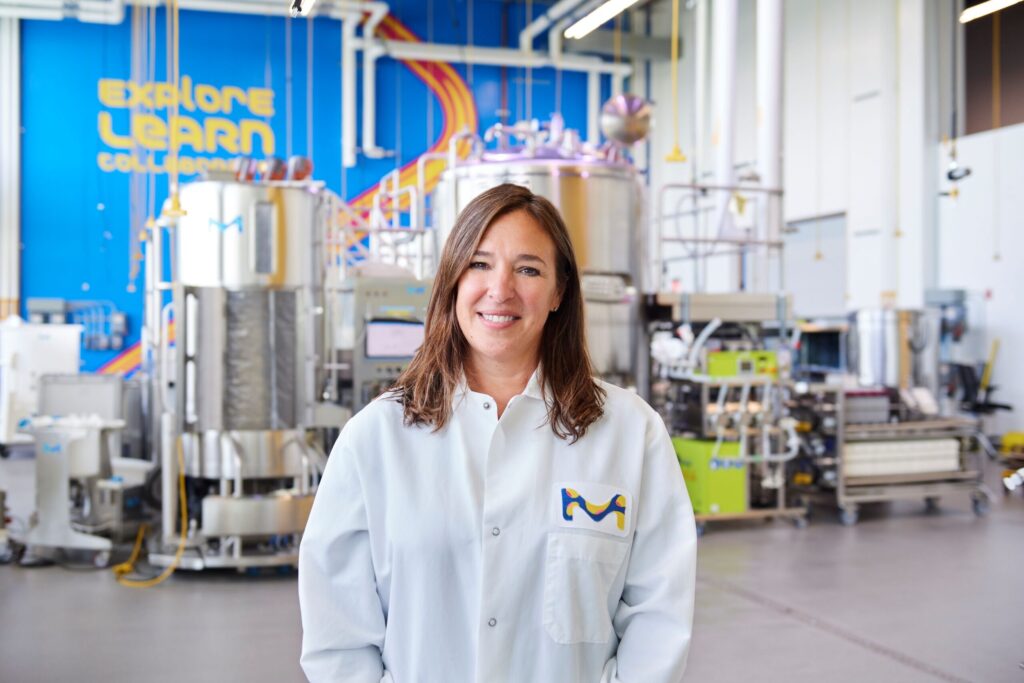
“What we see, driven by our customers and the need in biology, is that the 2D cell culture is not enough to predict what actually happens in humans,” Karen Madden, PhD, senior vice president and chief technology officer with MilliporeSigma, told GEN. “People have been wanting to move to more sophisticated models like 3D cell culture, and now ultimately organoids of different types, and ideally organoids that are derived from human tissue, because that’s even more predictive.”
Madden said Merck KGaA’s acquisition of HUB Organoids “gave us access to the world’s leading and proprietary position around these human-derived, or patient-derived organoids. So, we’re commercializing those, scaling them up, we’re adding automation to them.”
‘Growing from scratch’
HUB is short for “Hubrecht Organoid Technology,” reflecting the company’s spinout after being founded in 2013 by the Hubrecht Institute, UMC Utrecht, and the Royal Netherlands Academy of Arts and Sciences (KNAW). “We set out to develop the technology and we always said, we want to be the market leader in this organoid field,” HUB CEO Robert Vries, PhD, said on a video posted last year to mark the company’s 10th anniversary. “As a company coming from scratch, it’s really fantastic to see its [the technology’s] adoption, and that you can play a major role in a field like this.”
Adoption of organoid technology comes as biopharma drug developers, universities, and research institutions have been shifting away from animal testing toward new approach methodologies (NAMs) such as organoids as well as other 3D models such as spheroids and organs on chips. Other examples of NAMs include complex and two-dimensional in vitro studies, chemical reactivity studies, computer simulations or in silico modeling, and studies based on phylogenetically lower animals such as zebrafish or C. elegans.
The FDA has sought to advance NAMs through the FDA Modernization Act 2.0 enacted in 2022, which removed the animal testing requirement for new FDA-regulated products that was imposed through the Federal Food, Drug, and Cosmetics Act of 1938. As part of the agency’s Roadmap to Reducing Animal Testing in Preclinical Safety Studies, released in April 2025, the FDA just on Wednesday issued a draft guidance designed to help drug developers validate new NAMs.
“As FDA gains confidence in these tools, they could be formally adopted to reduce or replace specific animal tests,” according to the 11-page draft guidance.
In October, the FDA approved the first-ever investigational new drug (IND) submission supported solely through human vascularized organoid–based combination studies, without relying on traditional animal efficacy (POC) testing.
The IND application by SillaJen enabled the South Korea-based developer of oncolytic virus immunotherapeutics to begin clinical trials for a combination therapy consisting of tislelizumab or paclitaxel and BAL0891, a dual inhibitor of Threonine Tyrosine Kinase (TTK) and polo-like kinase 1 (PLK). SillaJen’s combo therapy incorporating BAL0891 is being evaluated in a Phase I trial (NCT05768932) whose primary completion date is estimated at December 24. SillaJen’s IND included preclinical efficacy data generated through the vascularized tumor immune microenvironment model (vTIME) developed by Qureator.
Business integration
Soon after acquiring HUB Organoids, Merck KGaA initially integrated the business into the former Science and Lab Solutions (SLS) unit of its Life Sciences business segment, which includes tools, services, and laboratory equipment for pharmaceutical R&D and manufacturing. That unit is also poised for growth once Merck KGaA completes its acquisition of the chromatography business of JSR Life Sciences, a closing expected by the end of the second quarter.
Last year, the Life Sciences segment finished with €8.98 billion ($10.36 billion) in revenue. Merck KGaA does not break down its businesses further than its three segments, which also include healthcare (drug development, focused on oncology, neurology and immunology, and “global health” treatments such as for malaria) and electronics (high-tech materials).
But in a restructuring that took effect at the start of this year, Merck KGaA broke up SLS into two units, Advanced Solutions and Discovery Solutions—with HUB Organoids and organoid activity included within Discovery Solutions.
Last year, the businesses that comprise Discovery Solutions generated €2.829 billion ($3.26 billion) in sales, with quarter-over-quarter “organic” or non-acquisition growth ranging from -4% to +3%. Fourth quarter 2025 sales were negatively impacted by the U.S. federal government shutdown and funding uncertainties, Merck KGaA told analysts March 5 in its Q4 2025 earnings presentation.
In October, MilliporeSigma and Promega launched a partnership to co-develop new technologies designed to advance drug screening and discovery—specifically, by developing assays capable of tracking cellular activity in real time using a reporter system within organoids that mimic human biology, allowing testing in models that are physiologically more relevant than traditional two-dimensional (2D) models.
The collaboration intended to marry MilliporeSigma’s strengths in organoids and synthetic chemistry with Promega’s leading assay and reporter technologies.
Reading out organoids
“One important question with these organoids is, how do you read them out after you grow them?” Madden observed. “One way you can read them out is by using really sophisticated cell-based assays that go along with the organoids. Promega is world-renowned for these very novel cell-based assay types that they have. We’re partnering with them to provide a very intricate, very specific, very informative readout to these organoid models that we have, so that we can bring those joint solutions to our customers.”
The organoids are being designed to address several challenges in drug screening. One is the need to track cellular activity. Other challenges relate to speed and efficiency.
“Some of the challenges that we see with our customers and specifically related to organoids is that they want to go very quickly at a very low price with high reproducibility and super high quality from sample, whatever sample that is, to answer or data or readouts,” Madden said. “We’re trying to help solve that by providing these very high quality, reproducible, unique, complex materials, but at a very high quality and very reproducible, trying to add automation and automated solutions to that. And you’ll see that across our entire portfolio.”
MilliporeSigma and Promega are working on both organoids that HUB already has developed, as well as new ones.
“We’re constantly kind of building out the different types of organoids that are tied to specific, anonymized patients, but with the whole clinical record showing other clinical factors and then ultimately the outcomes of these patients, which makes these models very valuable and more predictive of what’s actually going to happen in a human being when you test your model,” Madden said.
The HUB Organoids acquisition and Promega partnership are efforts that are part of what MilliporeSigma and parent Merck KGaA describe as their commitment to providing next-generation biology solutions.
Automation collaboration
To that end, MilliporeSigma early last year signed a multi-year agreement of undisclosed value with lab automation and accessible robotics provider Opentrons Labworks to automate assay kits on a custom Opentrons Flex® workstation. The custom workstation and automation-enabled assays are intended to reduce manual processing and repetitive tasks with a user-friendly robotic system, thus delivering increased consistency and higher throughput.
“We’re putting a lot of our portfolio into these automated systems again, so our customers can do more with less, and it’s a lot more reproducible, and it’s a much higher throughput,” Madden said.
In May, Merck KGaA announced a strategic partnership of undisclosed value with imec, a Belgian-based research and innovation hub in nanoelectronics and digital technologies, aimed at developing an advanced microphysiological systems (MPS) platform that will reduce drug developers’ reliance on animal testing by increasing the predictive validity of next-generation preclinical models.
“By integrating industry leading induced pluripotent stem cells and patient derived organoids portfolio offered by our company with the disruptive joint hardware platform that features an unprecedented number of biosensors, we’re creating a connected in vitro and in silico pipeline capable of generating the high-quality biological training data that is critically needed,” Steven Johnston, vice president and head of technology enablement at Merck KGaA, Darmstadt, Germany, said in a statement.