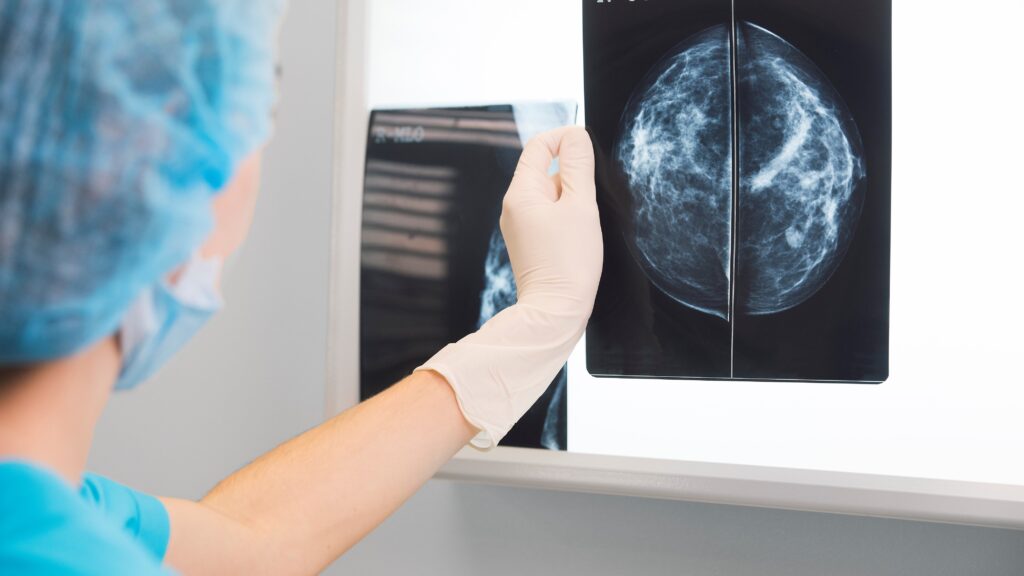
Researchers have shown that a standard mammogram can be capable of uncovering not just breast cancer, but a woman’s risk of heart disease as well, by using artificial intelligence to help spot dangerous calcium buildups within the blood vessels.
A team from Emory University analyzed regular screening scans from more than 123,000 women who had no prior history of cardiovascular disease. By using an AI program to quantify the calcification and hardening of their arteries, they found that people with severe cases carried two to three times the risk of developing potentially fatal heart attacks, stroke and heart failure.
“This was true even in younger women under 50—a group often considered low-risk—and held up after accounting for other risk factors like diabetes and smoking,” said Hari Trivedi, M.D., Emory associate professor and co-director of the university’s Health Innovation and Translational Informatics lab, who described the research as the largest study of its kind.
“We wanted to test whether AI could use this to identify women at risk of cardiovascular disease at no extra cost or inconvenience,” Trivedi said in a statement. “For women, this means a mammogram you’re already having could also provide important information about your heart health—prompting a conversation with your doctor about preventive steps such as cholesterol testing or medication.”
Related
The researchers’ work was published today in the European Heart Journal, from the European Society of Cardiology, which noted that women are largely underdiagnosed and undertreated for cardiovascular disease.
They wrote that the high resolution of routine mammograms could allow for essentially automatic, direct visualization of the arterial beds within the breasts of nearly all adult women, with calcifications easy to detect and correlated with deposits found in other parts of the body.
The researchers said that, compared with imaging of the heart’s coronary arteries—where blockages narrow and impede the flow of oxygenated blood to the cardiac muscle—calcifications in breast tissue affect a separate layer of the vessel, resulting in increased artery stiffness, a measure typically linked to long-term hypertension. They described the finding as an independent predictor of cardiovascular disease and a potentially useful addition to traditional cardiovascular risk factors.
Related
In an accompanying editorial, Lori Daniels, M.D., a cardiologist and professor of medicine at the UC San Diego School of Medicine, said that while fewer than 40% of women may know their cholesterol levels, many more are up-to-date with their breast cancer screening.
“Two-thirds of women aged 50-69 in the European Union reported a mammogram within the prior 2 years, and in the USA, nearly 70% of women aged 45 years and older were up to date with mammography according to American Cancer Society screening guidelines,” Daniels wrote.
“Breast arterial calcification has the potential to reframe this mismatch, leveraging a widely adopted cancer-screening platform to identify cardiovascular risk in women who may not otherwise engage with prevention.”