
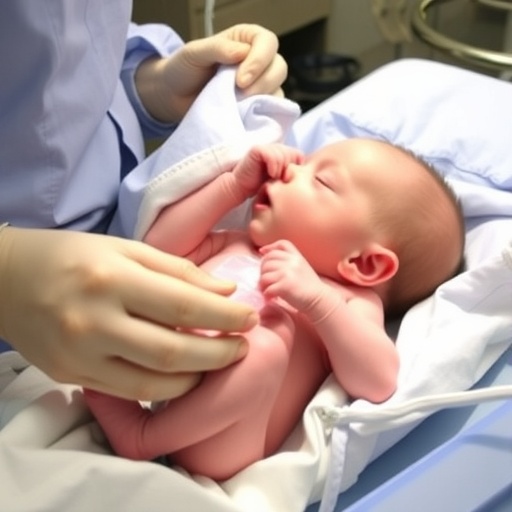
In a groundbreaking study releasing fresh insights into neonatal care, researchers have unearthed pivotal connections between the timing of gastrostomy tube (GT) placement and subsequent operative encounters in neonates requiring tracheostomy. This comprehensive investigation, recently published in the Journal of Perinatology, seeks to illuminate the pathophysiological and procedural nuances that influence the postoperative trajectory of these vulnerable infants. With neonatal intensive care units around the globe constantly evolving, these findings promise to redefine surgical timelines and intervention strategies, potentially mitigating complications and fostering improved recovery outcomes.
Tracheostomy remains an indispensable intervention for neonates facing upper airway obstructions, respiratory insufficiency, or prolonged ventilatory support. However, this procedure often precipitates additional challenges—particularly in relation to feeding and nutrition management. Enter gastrostomy tube placement, a critical modality that ensures sustained enteral nutrition in neonates who are unable to feed orally. Balancing the optimal timing for GT insertion following tracheostomy is, however, fraught with clinical dilemmas, largely because premature or delayed interventions bear distinct risks and can trigger a cascade of secondary operative procedures.
The crux of the study by Krinock et al. revolves around identifying the operative characteristics that predicate additional surgical encounters post-tracheostomy in neonates. By dissecting an extensive cohort of infants who underwent tracheostomy, the researchers devised a stratification matrix that accounted for demographic variables, clinical comorbidities, and operative timing. This methodological framework allowed them to distill patterns and correlations with unprecedented clarity. A striking revelation from their analysis indicated that early gastrostomy placement within a narrow post-tracheostomy window might reduce the incidence of subsequent procedures.
Digging deeper into the multi-layered data, the study underscores that neonatal physiology and the fragile reparative milieu post-tracheostomy substantially dictate operative susceptibility. The researchers hypothesized that early GT placement likely curtails mechanical and infectious complications by minimizing the dependency period on alternative feeding routes such as nasogastric tubes. These alternate methods, notoriously associated with dislodgement and aspiration risks, can exacerbate respiratory vulnerabilities and provoke inflammatory responses, mandating further surgical interventions.
Moreover, the intricate choreography between tracheostomy healing phases and gastrostomy site integration emerges as a critical determinant of success. Typically, tracheostomy sites undergo a dynamic healing process entailing epithelialization, scar formation, and stabilization of airway patency. Any perturbation—especially from concurrent invasive procedures—can incite local tissue reactions or infections, complicating the clinical course. The timing of GT insertion must, therefore, harmonize with these tissue repair timelines to minimize operative redundancies.
From a surgical technique perspective, the study advocates for individualized procedural planning integrating multidisciplinary expertise. Neonatologists, otolaryngologists, and pediatric surgeons must converge their insights to tailor GT placement, taking into account the infant’s respiratory status, nutritional demands, and overall resilience. The findings reinforce the notion that a rigid, one-size-fits-all timeline is suboptimal, calling instead for dynamic frameworks grounded in continuous patient monitoring and adaptive risk assessment.
An intriguing aspect of the research lies in its potential to recalibrate perioperative care protocols. The authors urge NICUs to incorporate predictive analytics drawn from their operative encounter models, enabling proactive identification of neonates at high risk for additional surgeries. By leveraging advanced imaging modalities, biochemical markers, and electronic health record algorithms, clinicians could foresee complications related to tracheostomy and GT interplay, instituting preventive measures and tailoring surgical interventions accordingly.
In parallel, this study heralds important implications for parental counseling and shared decision-making. Families grappling with the complexities of neonatal tracheostomy often face uncertainty about feeding options and surgical sequences. Armed with the nuanced data from Krinock et al., healthcare teams can offer transparent, evidence-based guidance that aligns surgical timing with individualized risk-benefit profiles. This holistic approach enhances parental engagement and may improve adherence to postoperative care regimens.
Beyond clinical practice, the study sparks compelling questions about the underpinnings of neonatal tissue repair and immunological responses post-surgery. The interplay between systemic inflammation, wound healing, and infection susceptibility in the context of dual airway and gastrointestinal interventions warrants further investigation. Future research avenues include exploring biomolecular mediators and genetic predispositions that could modulate recovery trajectories. Such knowledge could open the door to targeted therapies aimed at optimizing surgical outcomes.
The epidemiological aspects unveiled by the research also spotlight disparities in neonatal surgical care. Variations in operative timing and complication rates across different institutions and patient populations hint at systemic inequities. Addressing these gaps through standardized protocols and equitable resource allocation could enhance overall neonatal survival and quality of life. Public health initiatives targeting early intervention frameworks for tracheostomized infants could further amplify these benefits.
Complementary to the clinical and biological insights, the study leverages state-of-the-art statistical methodologies to ensure robustness. Kaplan-Meier curves, Cox proportional hazards models, and multivariate regression analyses framed the quantitative backbone of their conclusions. This rigorous analytical architecture strengthens confidence in the temporal associations uncovered between tracheostomy, gastrostomy placement, and secondary operative events.
From an ethical standpoint, the investigation prompts reflection on surgical thresholds in neonatal care. The delicate balance between prolonging intervention and minimizing procedural burdens calls for nuanced ethical deliberations. Ensuring that surgical timing not only maximizes survival but also prioritizes quality of life aligns with overarching pediatric care principles. Incorporating ethical frameworks into operative decision trees could refine multidisciplinary discussions.
Importantly, this research integrates seamlessly with evolving trends in precision medicine. Tailoring gastrostomy timing based on individual neonatal biology and clinical course exemplifies personalized surgical care. As genetic and phenotypic data become increasingly accessible, integration of such information into surgical planning may further reduce operative redundancies and optimize outcomes.
The study also underscores the need for enhanced training and educational initiatives within neonatal surgical teams. Comprehensive understanding of the interconnected healing processes and risk factors associated with tracheostomy and gastrostomy placement is essential. Trainees and clinicians alike stand to benefit from exposure to these evidence-based insights, fostering a culture of continuous improvement in neonatal operative care.
Reflecting on the broader healthcare ecosystem, optimizing gastrostomy timing post-tracheostomy has ramifications for hospital resource utilization. Minimizing additional operative encounters reduces hospitalization length, lowers healthcare costs, and decreases caregiver strain. Policy-makers and hospital administrators can leverage these findings to streamline protocols and enhance care delivery efficiency.
In conclusion, the landmark study conducted by Krinock and colleagues elevates our understanding of neonatal tracheostomy and gastrostomy dynamics to new heights. By elucidating the operative factors influencing secondary surgical procedures, it equips clinicians with vital knowledge to refine timing strategies, advance patient outcomes, and navigate the complexities of neonatal care more adeptly. As neonatal surgical science marches forward, such evidence-backed refinements promise to translate into tangible improvements in the fragile lives entrusted to medical stewardship.
Subject of Research: Optimal timing of gastrostomy tube placement in neonates requiring tracheostomy to understand characteristics associated with additional operative encounters.
Article Title: Optimal timing of gastrostomy tube placement in neonates requiring tracheostomy.
Article References:
Krinock, D.J., Akmyradov, C., Walker, S.C. et al. Optimal timing of gastrostomy tube placement in neonates requiring tracheostomy. J Perinatol (2026). https://doi.org/10.1038/s41372-026-02573-5
Image Credits: AI Generated
DOI: 04 February 2026
Tags: enteral nutrition in infantsfeeding challenges in tracheostomy infantsJournal of Perinatology findingsmultidisciplinary approach in neonatal surgeryneonatal gastrostomy timingneonatal intensive care strategiesneonatal surgical interventionsoptimal timing for gastrostomypostoperative complications in neonatesresearch in neonatal caresurgical outcomes in vulnerable infantstracheostomy in neonates

