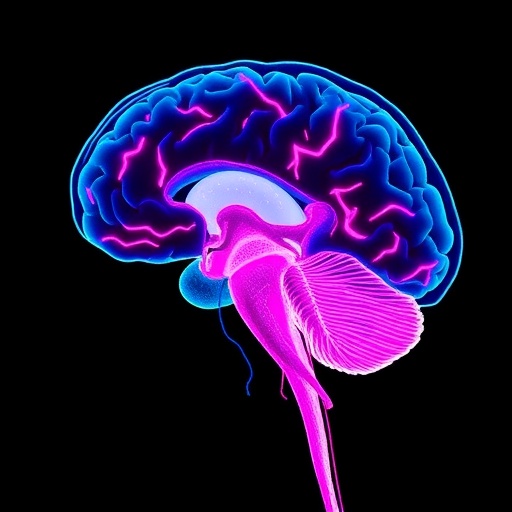
A newly identified neural circuit bridging the dentate gyrus and retrosplenial granular cortex has been found to play a crucial role in regulating bone fracture healing in male mice, according to groundbreaking research published in Nature Communications. This discovery uncovers a previously unknown link between the brain and skeletal repair processes, opening new avenues for therapeutic strategies that target neural pathways to enhance bone regeneration.
Fracture healing is traditionally viewed as a localized biological process involving bone cells, immune cells, and signaling molecules acting in the injury microenvironment. However, Zhang and colleagues have revealed that the brain’s involvement is far more direct and specific than previously appreciated. The researchers employed a combination of in vivo electrophysiological recordings, optogenetics, and molecular techniques to map and manipulate a discrete circuit between the dentate gyrus—a component of the hippocampal formation—and the retrosplenial granular cortex, regions known for roles in memory and spatial navigation.
Their experiments demonstrated that activation of this neural pathway accelerated the healing of femoral fractures in male mice, whereas inhibition delayed the process. Further molecular analyses showed that this circuit modulates systemic release of neuropeptides and growth factors that influence osteoblast proliferation and differentiation at fracture sites. Notably, the effect was sex-specific, predominantly observed in males, hinting at complex neuroendocrine interactions that warrant deeper investigation.
This neural circuit’s influence on fracture repair introduces a paradigm shift in our understanding of musculoskeletal biology. It suggests that the central nervous system exerts top-down regulation on bone regeneration, integrating environmental cues and physiological states with skeletal maintenance. The discovery also raises intriguing questions about how neurological conditions or brain injuries might impact recovery from bone trauma.
Clinically, the ability to target this circuit for therapeutic gain holds great promise. Existing treatments for bone fractures, particularly those that are slow to heal or non-unions, remain limited. The modulation of brain circuits using advanced neuromodulation techniques, such as focused ultrasound or transcranial magnetic stimulation, could emerge as innovative interventions to complement orthopedic care.
Moreover, the findings highlight the importance of sex as a biological variable in bone healing research and the need for tailored therapies. The sex-specific nature of the neural circuit’s regulatory role suggests hormonal or genetic factors interact with neural signals to influence tissue regeneration. Future studies dissecting these interactions could yield precision medicine approaches for fracture patients.
Ultimately, Zhang et al.’s work bridges neuroscience and orthopedics, illustrating a sophisticated neuro-skeletal axis that integrates brain activity with peripheral tissue repair. This insight enriches the field of regenerative medicine and neural biology alike, promising a new frontier where neural circuits are harnessed to promote healing and recovery beyond the brain.
As research progresses, the broader implications of neural control over other types of tissue repair and regeneration will be eagerly explored. This discovery stands as a testament to the intricate interconnectedness of body systems and the surprising roles brain circuits play in maintaining overall health.
Subject of Research: Neural circuits regulating fracture healing in mice.
Article Title: A circuit linking dentate gyrus and retrosplenial granular cortex regulates fracture healing in male mice.
Article References:
Zhang, W., Zhang, W., Guo, Y. et al. A circuit linking dentate gyrus and retrosplenial granular cortex regulates fracture healing in male mice.
Nat Commun (2026). https://doi.org/10.1038/s41467-026-75340-x
Image Credits: AI Generated
Tags: brain-microenvironment interactions in fracture healingbrain-skeletal repair connectiondentate gyrus cortex pathwayhippocampal influence on fracture repairin vivo electrophysiological studiesneural circuitryneural circuits controlling osteoblast activityneural regulation of bone healingneuropeptides and growth factors in bone healingoptogenetics in bone regenerationsex-specific neural effects on osteogenesissystemic neural modulation of skeletal repair