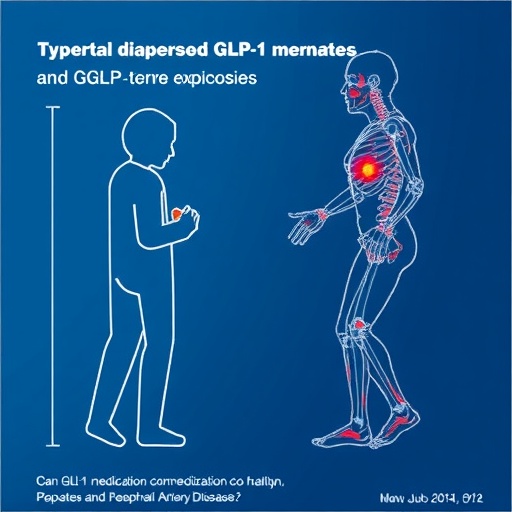
In a groundbreaking advancement for the intersection of endocrinology and vascular medicine, recent research has illuminated the multifaceted benefits of glucagon-like peptide-1 receptor agonists (GLP-1 RAs) in improving long-term outcomes for patients grappling with both Type 2 diabetes and peripheral artery disease (PAD). Published in the Journal of the American Heart Association, this new evidence underscores the significant potential of GLP-1 RAs not only to regulate glycemic levels and promote weight loss but also to markedly reduce mortality, hospitalizations, and limb amputations—a trio of clinical outcomes that have historically posed immense challenges in managing this high-risk patient population.
Peripheral artery disease, characterized by the narrowing of peripheral arteries primarily in the legs, imposes a severe burden on affected individuals due to compromised blood flow, leading to tissue ischemia, pain, and increased risk of limb loss. Simultaneously, Type 2 diabetes exacerbates vascular dysfunction through mechanisms such as insulin resistance, chronic inflammation, and endothelial damage. The novel focus on GLP-1 receptor agonists—initially conceived as antihyperglycemic agents—has now expanded to reveal their capacity to modify these pathogenic vascular processes, thereby addressing critical unmet needs in patients with coexisting PAD and diabetes.
This comprehensive study analyzed data culled from over 2,000 adults diagnosed with both Type 2 diabetes and PAD, leveraging the robust TriNetX global federated database to harness real-world clinical insights. By comparing outcomes between patients treated with GLP-1 RAs and those managed with metformin alone, researchers identified a striking 26% reduction in all-cause mortality associated with GLP-1 RA therapy. Additionally, hospital admissions decreased by 13%, while amputations plummeted by nearly half, at an astonishing 48% reduction compared with metformin recipients. Notably, the necessity for interventional procedures to restore arterial patency also diminished by roughly 36%, indicating a broader vascular protective effect beyond glycemic control.
The mechanistic underpinnings of these clinical benefits appear to pivot on the intricate interplay of anti-inflammatory and vasoprotective actions attributed to GLP-1 RAs. These agents enhance endothelial function by promoting nitric oxide bioavailability and curbing oxidative stress, mechanisms integral to thwarting atherosclerosis progression in the peripheral arteries. Importantly, the greatest therapeutic effect was observed in patients with severe manifestations of PAD—particularly those suffering from chronic limb-threatening ischemia where tissue perfusion is critically compromised—and in patients categorized as obese, with a body mass index exceeding 30.
These findings echo the established link between obesity, systemic inflammation, insulin resistance, and accelerated arterial calcification, suggesting that GLP-1 RAs may attenuate these interdependent pathological processes. By mitigating inflammatory cytokine production and improving metabolic homeostasis, GLP-1 RAs could fundamentally alter the disease trajectory for this vulnerable cohort. The observed reductions in amputation rates and hospital care highlight the dual role of GLP-1 RAs in both preserving limb viability and enhancing overall patient survival—a combination seldom achieved with existing pharmacotherapies targeting peripheral vascular disease.
Despite these promising results, it is crucial to acknowledge the limitations inherent in observational studies utilizing electronic health records. Diagnostic coding errors and absence of randomization limit the ability to establish causality unequivocally. Further randomized controlled trials are needed to validate the protective benefits of GLP-1 RAs in PAD and to decipher whether these effects extend to non-diabetic individuals afflicted by peripheral arterial insufficiency.
Additionally, the study reported that the incidence rates of myocardial infarction, stroke, and severe kidney injury were similar among patients treated with GLP-1 RAs versus those on metformin, suggesting that while GLP-1 RAs confer significant peripheral vascular advantages, their impact on other cardiovascular and renal endpoints remains to be fully elucidated within this patient demographic.
These insights arrive amid an escalating prevalence of Type 2 diabetes and PAD across the United States, where nearly 30 million adults contend with metabolic dysregulation and an estimated 12.5 million over age 40 suffer from peripheral arterial compromise. The observed benefits of GLP-1 RAs raise profound implications for clinical guidelines and patient management frameworks, emphasizing the necessity for clinicians to consider these agents in therapeutic regimens, especially for those exhibiting advanced vascular pathology or obesity.
Moreover, GLP-1 RAs’ potential to reduce reliance on surgical or endovascular interventions to revascularize limbs aligns with contemporary strategies aimed at lowering procedural morbidity, healthcare resource utilization, and medical costs. This pharmacologic approach could herald a paradigm shift—repositioning GLP-1 RAs as cornerstone therapies not only in glycemic control and metabolic health but also in vascular protection and limb preservation.
In conclusion, the integration of GLP-1 receptor agonists into the therapeutic arsenal for patients with concurrent Type 2 diabetes and peripheral artery disease signifies a remarkable evolution in the management of these convergent conditions. By transcending their traditional role as antidiabetic agents, GLP-1 RAs offer a holistic strategy addressing both metabolic and vascular dysfunctions, mitigating mortality risk, and substantially improving patient quality of life through reduced amputations and diminished hospitalization. As the scientific and medical community continues to explore the multifaceted effects of these agents, future research will be pivotal in defining optimal patient selection criteria, clarifying mechanistic pathways, and expanding indications to potentially include PAD without diabetes, thereby broadening the horizon of cardiovascular and metabolic therapeutics.
Subject of Research: Long-term outcomes of GLP-1 receptor agonists in patients with peripheral artery disease and Type 2 diabetes.
Article Title: Long-Term Outcomes of Glucagon-Like Peptide-1 Receptor Agonists in Patients With Peripheral Artery Disease and Type 2 Diabetes.
News Publication Date: July 1, 2026.
Web References:
Journal of the American Heart Association Manuscript: https://www.ahajournals.org/doi/10.1161/JAHA.125.045664
American Heart Association’s 2026 Heart Disease and Stroke Statistics: https://www.heart.org/-/media/PHD-Files-2/Science-News/2/2026-Heart-and-Stroke-Stat-Update/At-A-Glance/2026-Stats-Update-Fact-Sheet-At-A-Glance-Statistics_final.pdf?sc_lang=en
Keywords: GLP-1 receptor agonists, peripheral artery disease, Type 2 diabetes, limb amputation, cardiovascular risk, metabolic syndrome, chronic limb-threatening ischemia, obesity, inflammation, endothelial function, mortality reduction, vascular interventions.
Tags: anti-inflammatory effects of GLPcardiovascular benefits of GLP-1 medicationsendothelial function modulation by GLP-1GLP-1 receptor agonists for type 2 diabeteshospitalizations reduction in type 2 diabetesimproving glycemic control with GLP-1 RAslowering mortality in diabetic PAD patientsmanaging diabetes-related vascular complicationsperipheral artery disease treatment optionsreducing limb amputations in PADvascular health improvement in diabetesweight loss effects of GLP-1 therapies