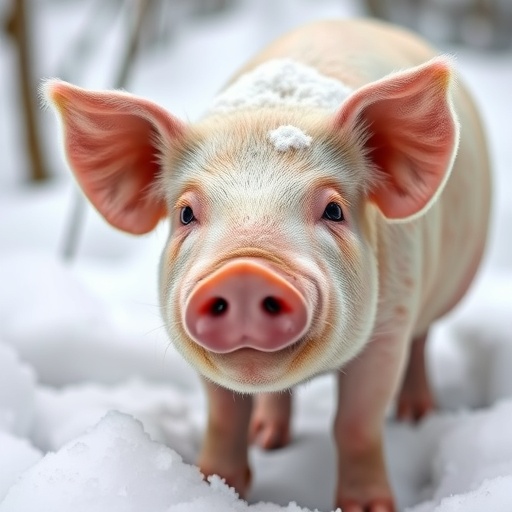
In a groundbreaking study poised to reshape our understanding of gene expression under stress conditions, the research team led by Zhang, D., alongside collaborators Wu, X. and Song, M., presents an integrated analysis focusing on the effects of cold stress on porcine liver. This innovative work delves into how RNA expression profiles are altered when pigs are subjected to low temperature environments, an issue increasingly significant in modern agricultural practices. The findings hold the potential to inform breeding strategies aimed at enhancing livestock resilience in the face of climate variability, ultimately impacting food security and animal welfare.
The cornerstone of this research lies in the intricate interplay between genes and their regulatory networks. The porcine liver serves as an exemplary model because it plays a central role in metabolism, detoxification, and nutrient storage. When pigs experience cold stress, their physiological responses trigger a cascade of molecular changes aimed at maintaining homeostasis. This study meticulously dissects those alterations at the RNA level, providing crucial insights into the adaptive mechanisms that occur in these animals. Understanding these changes opens new avenues for genetic interventions that could bolster livestock health.
Key to this integrated analysis is the utilization of high-throughput RNA sequencing technology. This method allows scientists to capture a comprehensive snapshot of gene expression across the entire porcine genome simultaneously. By contrasting RNA profiles from pigs subjected to cold stress against those maintained at optimal temperatures, the researchers identified specific genes that exhibit notable upregulation or downregulation in response to thermal challenges. Such data is invaluable, offering a window into which genetic pathways are essential for stress mitigation.
The study does not stop at simply cataloging gene expression changes. Instead, it goes deeper, exploring the regulatory networks that govern these processes. It highlights the roles of transcription factors and signaling molecules that mediate the response to cold stress. By mapping out these interactions, the research team was able to identify key hubs within the regulatory network that are integral for the liver’s adaptability. This systems biology approach underscores the complexity of biological responses and demands a comprehensive view that transcends traditional reductionist perspectives.
A significant outcome of the research is the identification of candidate genes that could serve as markers for genetic selection. The ability to select for traits related to cold resilience could fundamentally alter breeding programs in the swine industry. By leveraging these insights, farmers could not only improve animal welfare but also enhance productivity in the face of environmental challenges. This is especially pertinent as climate change continues to introduce new stressors that impact livestock health and performance.
Moreover, the implications of the findings extend beyond just cold stress. The mechanisms elucidated in this study may also offer insights into how pigs respond to other environmental stressors, such as heat or nutritional deficiencies. The interconnectedness of stress responses suggests that advancements in this area could pave the way for a holistic strategy to improve animal husbandry practices across multiple dimensions. Such an approach reflects a growing recognition of the need for sustainable agriculture practices in an era marked by unpredictability.
Another notable aspect of the study is the emphasis on adaptability. As the global climate continues to shift, understanding how animals can adapt to extreme temperatures is imperative. The research highlights the resilience embedded within swine genetics, suggesting that these animals possess the innate capability to adjust to their circumstances. This resilience could potentially be amplified through selective breeding practices, leading to a new generation of pigs that thrive even under the most severe conditions.
The methodology employed in this research also merits attention. The rigorous experimental design, combined with advanced computational analyses, ensures that the insights derived from the data are both robust and reproducible. By employing a multidisciplinary approach that merges molecular biology, bioinformatics, and genetic modeling, the researchers have set a new standard for how studies of animal physiology should be conducted.
As this study garners attention within the scientific community and agricultural sectors alike, it invites further inquiry into the underlying genetic mechanisms that govern resilience in livestock. Future research endeavors could focus on extending these findings to other breeds, thereby enhancing the generalizability of the results. There is also potential for cross-species comparisons that might yield even broader insights into stress responses across the animal kingdom.
Peer-reviewed publications such as this one are vital for disseminating knowledge and encouraging collaboration among scientists, breeders, and farmers. As the findings circulate within academic discussions and practical applications, they could inspire new partnerships aimed at tackling the pressing challenges facing modern agriculture. The quest for sustainable livestock production is more urgent now than ever, and studies like this contribute significantly to that dialogue.
In summary, the integrated analysis of RNA expression profiles and regulatory networks presented by Zhang and colleagues is more than a simple investigation into porcine physiology. It is a clarion call for innovation in livestock breeding and management strategies that could safeguard animal welfare and optimize agricultural productivity for generations to come. The research epitomizes the intersection of science, agriculture, and environmental stewardship, painting a hopeful picture for the future of food security in a rapidly changing world.
With its profound implications and the promise of transformative applications, this study is likely to be a catalyst for ongoing research and development within the field. As stakeholders in the agricultural community begin to grasp the significance of the findings, it may pave the way for new directions in swine genetics and management practices that prioritize resilience and adaptability.
The exciting narrative surrounding these research findings serves as a reminder of the vital role that scientific inquiry plays in addressing real-world challenges. As the global population continues to grow, and climate variability increases, innovative methodologies and genetic insights will be essential in equipping the agricultural sector to meet new demands. The resilience observed in the porcine liver under cold stress stands as a testament to the remarkable capabilities of animal genetics, urging us to explore and harness that potential for sustainable development.
Eventually, as more studies build upon this foundation, the implications for not just pigs but all livestock species will become increasingly clear. The age of genomics in agriculture is upon us, and with it comes the promise of efficiencies that could revolutionize the way we think about food production. This pioneering research from Zhang and colleagues is a critical step in that exciting journey, destined to leave a lasting impact on both science and industry.
Subject of Research: Cold stress effects on porcine liver gene expression.
Article Title: Integrated analysis of RNA expression profiles and regulatory networks in porcine liver in response to cold stress.
Article References:
Zhang, D., Wu, X., Song, M. et al. Integrated analysis of RNA expression profiles and regulatory networks in porcine liver in response to cold stress.
BMC Genomics (2026). https://doi.org/10.1186/s12864-026-12528-x
Image Credits: AI Generated
DOI: 10.1186/s12864-026-12528-x
Keywords: RNA expression, porcine liver, cold stress, genetic selection, regulatory networks, animal resilience.
Tags: animal health and stress adaptationclimate change effects on animal welfarecold stress in pigsenvironmental stressors in animal agriculturefood security and livestock managementgene regulation under low temperaturesgenetic interventions for pig healthhigh-throughput RNA sequencing in agriculturelivestock resilience breeding strategiesmolecular changes during cold exposureporcine liver metabolic responsesRNA expression profiling in livestock