
Researchers at Johns Hopkins University and the University of Maryland School of Pharmacy have developed a set of novel, first-in-class small molecule drugs that inhibit hypoxia-inducible factors 1 and 2 (HIF-1/2), a pair of transcription factors considered to be “master regulators” of cancer progression. Their study showed that these drugs can overcome resistance to immune checkpoint blockade therapy, and when combined with immunotherapy, can completely eliminate breast, colorectal, melanoma, and prostate tumors in mice, suggesting that they could eventually be used to treat a broad range of cancers in humans.
Research lead Gregg L. Semenza, MD, PhD, a professor at Johns Hopkins University School of Medicine, is co-senior author of the team’s published paper in Journal of Experimental Medicine, titled “Targeting conserved domains of hypoxia-inducible factors for cancer therapy.”
Hypoxia-inducible factors 1 and 2 are known as master regulators of cancer progression because they control the activity of hundreds of genes crucial for the survival, growth, and spread (metastasis) of cancer cells. HIF-1/2 levels rise in response to low oxygen levels (hypoxia), a condition commonly found in the center of rapidly growing tumors, the authors explained. “In response to hypoxia, cells in most metazoans activate a transcriptional pathway mediated by HIFs, which play a crucial role in adaptation to low O2 levels,” they wrote. “Many oncogene gain-of-function and tumor suppressor loss-of-function mutations increase HIF activity in an O2-independent manner.”
![Computer-aided drug design using the SILCS technology identified three sites on HIF-2 that are highly similar in HIF-1 and HIF-2 and are suitable for targeting with small molecule inhibitors. [© 2026 Salman et al. Originally published in Journal of Experimental Medicine. https://doi.org/10.1084/jem.20251009]](https://www.genengnews.com/wp-content/uploads/2026/04/Low-Res_Salman_et_al_1-280x300.jpg)
Among other functions, HIF-1/2 promote the formation of new blood vessels to supply tumors with nutrients and enhance the ability of tumor cells to invade surrounding tissues. They also suppress the ability of immune cells to attack tumors, which limits the effectiveness of immunotherapies such as immune checkpoint inhibitors. “The limited therapeutic efficacy of ICB reflects multiple mechanisms by which cancer cells evade detection and killing by immune cells, and many of these are mediated by HIF-1/2 target gene products,” the scientists noted.
The presence of hypoxia, and elevated HIF-1/2 levels, is a key predictor of treatment failure and poor patient survival in a broad range of cancers. “The expression of HIF target genes and the expression of HIF-1α or HIF-2α protein in tumor biopsies are associated with patient mortality in many cancers, reflecting the role of HIFs in directing tumor vascularization, metabolic reprogramming, epithelial–mesenchymal transition, cell motility, extracellular matrix remodeling, cancer stem cell specification, immune evasion, invasion, metastasis, and treatment failure.”
Belzutifan, a specific inhibitor of HIF-2, has been approved for therapeutic use in several cancers, including advanced renal cell carcinoma. But, since HIF-1 and HIF-2 have distinct roles in promoting cancer progression, drugs that target both transcription factors simultaneously could be more effective. “Given the distinct roles of HIF-1 and HIF-2 in cancer progression, dual HIF-1/2 inhibition presents a promising therapeutic strategy, particularly for cancer types with a known propensity for intratumoral hypoxia and/or resistance to conventional therapy,” the team further noted.
“Dual HIF-1/2 inhibition presents a promising therapeutic strategy, particularly for cancer types with a known propensity for intratumoral hypoxia and/or resistance to conventional therapy,” Semenza added. For their newly reported study Semenza and colleagues worked with the group of Alexander D. MacKerell, PhD, at the Computer-Aided Drug Design Center at the University of Maryland School of Pharmacy, to identify drug molecules capable of binding to both HIF-1 and HIF-2. They used the computer-aided drug design technology site identification by ligand competitive saturation (SILCS) to predict small molecules that might bind based on the known crystal structure of HIF-2.
“The SILCS approach enabled the selection of compounds with a high probability of binding to HIF-2, allowing experimental efforts to focus on testing hundreds, rather than millions, of chemical compounds, thereby accelerating the drug discovery process,” MacKerell said.
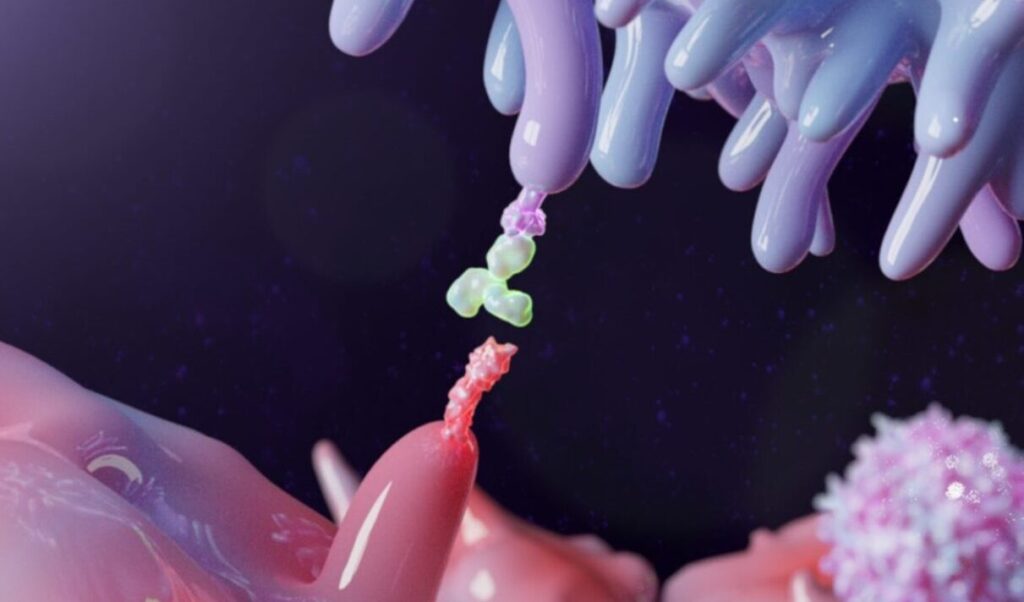
Semenza’s team, including first author Shaima Salman, PhD, tested these candidate molecules and identified several compounds that bound to both HIF-1 and HIF-2, triggering their degradation and preventing them from activating their target genes. “Here, we describe small-molecule dual HIF-1/2 inhibitors (HIFi) that bind directly to the most highly conserved domains of HIF-1/2α, block dimerization with HIF-1β, and cause HIF-1/2α degradation,” they stated. “These compounds showed broad and potent HIF inhibitor activity in a variety of cancer cell lines,” Salman said.
![Treatment with a dual HIF-1/2 inhibitor (bottom) greatly reduces the size of blood vessels in a tumor compared to tumor tissue from a vehicle-treated mouse (top). [© 2026 Salman et al. Originally published in Journal of Experimental Medicine. https://doi.org/10.1084/jem.20251009]](https://www.genengnews.com/wp-content/uploads/2026/04/Low-Res_Salman_et_al_2-215x300.jpg)
Individually, the drugs were able to inhibit the growth of breast, colorectal, head and neck, melanoma, and prostate tumors in mice, reducing tumor vascularization and limiting tumor invasiveness. The drugs were even more effective in combination with the immune checkpoint inhibitors anti-CTLA-4 or anti-PD1. Combination therapy caused complete remission in over 50% of mice with either breast, colorectal, melanoma, or prostate tumors, many of which were resistant to treatment with immune checkpoint inhibitors alone. These animals remained tumor free, even when rechallenged with an injection of fresh tumor cells. “… dual HIF-1/2 inhibition has major effects on multiple critical aspects of cancer progression,” the team wrote in their discussion. “The powerful effects of HIFi on angiogenesis, immune evasion, and tissue invasion reflect the inhibition of hundreds of HIF-1/2 target genes in both cancer and stromal cells within the tumor.”
Semenza and colleagues found that dual HIF-1/2 inhibitors alter the type of immune cells found within tumors, decreasing immunosuppressive cell types while increasing the frequency of T cells and NK cells that are capable of killing tumor cells (especially when treated with immune checkpoint inhibitors).
“We saw an increased response to immune checkpoint inhibitors with HIF inhibitor treatment across a broad sampling of cancer types, suggesting that this combination will have widespread clinical utility,” Semenza commented.
Adding to the drugs’ therapeutic potential, the researchers note that their dual HIF-1/2 inhibitors can be administered orally and showed no safety concerns in mice, even when given for extended periods in amounts well above the effective dose. “The drugs are orally bioavailable, and no safety concerns were identified even after extended or supratherapeutic dosing,” they noted.