In a groundbreaking development poised to revolutionize forensic toxicology, researchers have unveiled a novel digital twin framework designed to precisely reconstruct an individual’s alcohol consumption history through the intricate kinetics of fast and slow metabolites. This innovative approach, detailed in a recent publication from the prestigious journal Scientific Reports, leverages cutting-edge computational models to map the temporal dynamics of ethanol metabolism, promising unprecedented accuracy in legal and medical investigations involving alcohol intake.
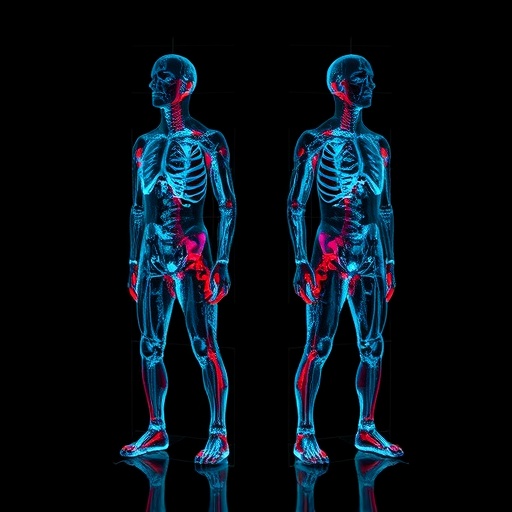
The team, led by Podéus, Simonsson, Jakobsson, and colleagues, tackles one of the longstanding challenges within forensic science: determining the timing and quantity of alcohol consumed by a subject based on biochemical evidence post-ingestion. Traditional methods, often limited by reliance on blood alcohol concentration (BAC) measurements alone, fall short due to the complex interplay of metabolic processes and individual variability. By integrating a digital twin—a virtual replica of the metabolizing biological system—this framework simulates the nuanced kinetics of alcohol metabolites, capturing both rapid and prolonged metabolic phases.
At the core of this approach lies a sophisticated mathematical model that accounts for the dual pathways of alcohol metabolism. Alcohol is converted into acetaldehyde and then into acetate via enzymes exhibiting distinct kinetic rates. Fast metabolite pathways reflect immediate enzymatic activity shortly after ingestion, while slow pathways represent secondary or prolonged metabolite processing. By analyzing biomarker concentrations associated with these pathways, the digital twin model reconstructs the alcohol intake timeline with remarkable precision.
The implementation of this system involves collecting biological samples, such as blood or breath, at various time intervals from the subject. The concentration data of primary and secondary metabolites are inputted into the computational framework, which adjusts parameters to mirror the individual’s metabolic profile. This adaptive modeling accounts for physiological factors like enzyme polymorphisms, liver function, body mass index, and drinking patterns, all of which traditionally confound forensic interpretations.
Unlike previous forensic tools that provided static snapshots of alcohol presence, the digital twin framework offers dynamic reconstructions, painting a detailed chronological picture of consumption events. Such capability is invaluable in legal contexts, where establishing exact timelines can influence judgments in DUI cases, workplace incidents, and criminal investigations involving alcohol impairment. Moreover, it could refine post-mortem toxicological analyses by distinguishing between pre-mortem drinking and post-mortem changes.
One of the most striking advantages of this method is its resilience to inter-individual variability. Human metabolism exhibits significant heterogeneity influenced by genetics, age, diet, and concurrent medication use. By tailoring the digital twin to each individual’s metabolic signature, the framework transcends the “one-size-fits-all” paradigm, enhancing the reliability of forensic conclusions. This adaptability ushers in a new era where personalized forensic modeling complements traditional biochemical assays.
The technical sophistication underpinning the framework involves integrating differential equations representing enzyme kinetics with machine learning algorithms that optimize model parameters through iterative feedback. This hybrid computational architecture ensures that models remain robust against noise in experimental data and can generalize effectively across diverse populations. The researchers employed extensive validation datasets, including controlled alcohol administration experiments, to benchmark model accuracy and reliability.
From a forensic workflow perspective, this technology promises operational efficiency. Automated analysis pipelines embedded within the digital twin system can rapidly process metabolite data, generate temporal intake profiles, and provide interpretive reports that forensic experts can incorporate into case files. Such streamlined methods not only reduce subjective errors but also empower legal professionals with scientifically rigorous evidence.
Beyond its immediate forensic applications, the framework harbors potential impact in public health and behavioral science arenas. Understanding individuals’ alcohol consumption patterns with high temporal resolution can inform interventions tailored to mitigate harmful drinking behaviors. Additionally, the digital twin’s predictive capabilities could support clinical toxicology by forecasting intoxication trajectories and aiding emergency responses in overdose scenarios.
Yet, the innovation is not without challenges. Implementing the digital twin framework in routine forensic practice requires standardization of biomarker collection protocols, widespread availability of computational resources, and training for forensic personnel. Ethical considerations around privacy and data security also emerge, given the sensitive nature of metabolic and personal health data processed during modeling.
Furthermore, the framework’s efficacy remains contingent upon comprehensive metabolic profiling, which may be constrained in certain forensic contexts where sample availability or integrity is compromised. Recognizing these limitations, the researchers advocate for continued refinement of biomarker panels and integration with complementary forensic tools to enhance overall reliability.
Notably, this research exemplifies the transformative potential of digital twin technology beyond traditional engineering domains, extending its reach into biological and forensic sciences. By embodying the living metabolic system in silico, investigators are equipped with a lens to peer into the biochemical history etched by alcohol consumption—past events reconstructed with unprecedented clarity and scientific rigor.
As the forensic community anticipates broader validation and adoption of this framework, the study by Podéus and collaborators establishes a definitive milestone in alcohol pharmacokinetics research. It bridges the gap between biochemical data and actionable forensic insights, advancing the frontier of digital medicine and forensic science convergence.
Looking ahead, the researchers are poised to explore expansions of the model to incorporate additional substances metabolized via complex pathways, potentially creating a unified digital twin platform for multi-substance forensic reconstructions. Such developments may enable comprehensive assessments in cases involving poly-substance use, a growing concern globally.
In sum, this digital twin framework heralds a paradigm shift, offering a scientifically robust, personalized, and dynamic methodology to forensic alcohol analysis. It exemplifies how the fusion of computational modeling and biochemistry can resolve practical challenges in justice and healthcare, ultimately fostering more accurate and equitable outcomes in society’s management of alcohol-related issues.
Subject of Research: Forensic reconstruction of alcohol intake kinetics using digital twin modeling.
Article Title: A digital twin framework for forensic reconstruction of alcohol intake via fast and slow metabolite kinetics.
Article References:
Podéus, H., Simonsson, C., Jakobsson, G. et al. A digital twin framework for forensic reconstruction of alcohol intake via fast and slow metabolite kinetics. Sci Rep (2026). https://doi.org/10.1038/s41598-026-44093-4
Image Credits: AI Generated
Tags: acetaldehyde acetate metabolismbiochemical evidence alcohol analysiscomputational modeling forensic sciencedigital twin alcohol metabolismethanol metabolism kinetics modelfast and slow alcohol metabolitesforensic alcohol consumption timelineforensic blood alcohol concentration limitationsforensic toxicology alcohol reconstructionindividual variability alcohol metabolismlegal alcohol intake investigationmetabolic pathways alcohol breakdown