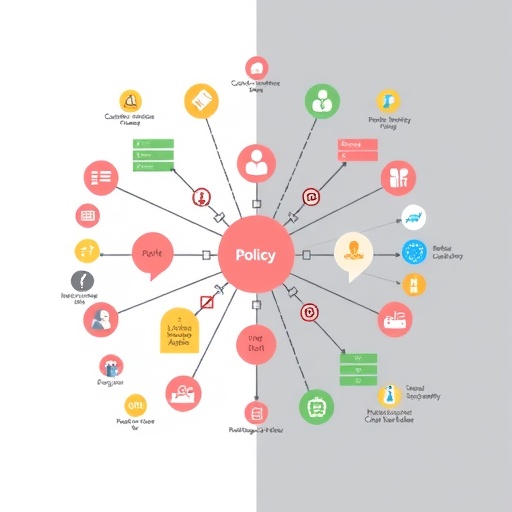
Recommendation algorithms shape nearly every hour of our digital lives, quietly deciding which films appear on our screens, which products surface in our shopping carts, and which songs fill our playlists. Yet for all their commercial ubiquity, these systems remain stubbornly opaque, and critics have long argued that they learn only half of the story about human preference: what people like, but never what they dislike. A new study published in the journal Data Mining and Knowledge Discovery challenges that one-sided approach with a reinforcement learning framework that explicitly teaches two artificial agents to reason in opposite directions through a knowledge graph, one chasing the items a user will love, the other hunting for the counterfactual items a user would reject. The result, the authors report, is a recommender that is both more accurate and dramatically more transparent than its predecessors.
The framework, called DualPMPR, short for Dual Policy-guided Multi-hop Path Reasoning, was developed by Thanh Le, Hoang Anh Nguyen, and Bac Le of the Faculty of Information Technology at the University of Science, Ho Chi Minh City, working under the auspices of Vietnam National University. Their work, published on 20 May 2026 as volume 40, article 53 of the journal, addresses a long-standing blind spot in knowledge-graph-enhanced recommendation. Existing methods that weave knowledge graphs into recommender pipelines have largely concentrated their representational and reasoning capacity on items aligned with positive user feedback. Negative associations, when they are modeled at all, tend to be treated as a coarse signal rather than as a first-class object of reasoning. The Vietnamese team’s central insight is that the paths a user’s tastes take away from, the products, genres, actors, brands, or topics they demonstrably avoid, carry as much diagnostic information as the paths toward what they embrace.
To understand why that matters, it helps to unpack what a knowledge graph brings to recommendation in the first place. A knowledge graph is a structured network of entities, users, products, actors, categories, attributes, connected by labeled relations. Instead of treating a film as an anonymous identifier with a learned vector, a knowledge-graph recommender can trace that a user watched a particular movie because it stars an actor they favor, or belongs to a genre they repeatedly select, or was directed by someone whose work they have consistently rated highly. These relational traces allow the system to generalize from sparse interaction data: even a user with only a handful of purchases can be profiled richly if their few choices connect to a vast semantic web of attributes. But a knowledge graph also opens the door to something rarer and more valuable, namely explanations. Because the recommendation can be traced as a concrete path through the graph, the system can in principle tell the user, in human-readable terms, why a particular suggestion was made.
DualPMPR operationalizes this idea through a dual-agent reinforcement learning paradigm. In the standard formulation of multi-hop path reasoning, a single agent learns a policy, a mapping from states to actions, for walking across the knowledge graph. The agent starts at a user node and, at each step, selects an outgoing relation and an entity, effectively extending a path of two, three, or four hops. When the path terminates on an item, that item accrues evidence for recommendation, and the reinforcement signal, positive when the item matches the user’s actual preferences, trains the policy to navigate toward promising regions of the graph. DualPMPR runs two such agents in parallel under a unified learning scheme. The positive agent behaves like the classical path reasoner, learning trajectories that terminate at user-favored items. The negative agent inverts the objective: it is rewarded for reaching counterfactual items, entities that reflect user dislikes, thereby learning which regions of the semantic space predict rejection.
This dual structure produces two complementary signals that the framework fuses when scoring candidate items. The positive agent’s terminal distribution over items supplies the conventional preference evidence, while the negative agent’s trajectories supply discriminative evidence, allowing the system to down-rank items that share the attributes of things the user has avoided. In effect, the negative agent functions as an implicit curiosity-and-aversion module: rather than learning only that a user likes science fiction, it also learns, for instance, that the same user avoids horror films regardless of their science-fiction trappings, or steers clear of a particular brand despite otherwise favorable attributes. Because both agents operate within a single reinforcement learning paradigm, their policies can be trained jointly, and their combined evidence yields a ranking score that is richer than what either agent alone could produce.
The counterfactual dimension of the framework is what gives DualPMPR its explanatory teeth. Counterfactual explanations, statements of the form “this item would have been recommended had it not shared property X with items you disliked”, have gained traction in the explainability literature as a way of communicating model behavior to end users and system operators alike. Because the negative agent produces explicit paths to disliked entities, DualPMPR can generate interpretable recommendation paths and counterfactual explanations as a by-product of the reasoning process rather than as a post-hoc rationalization. When the system surfaces a product, it can articulate the chain of relations that justified the suggestion, and when it suppresses one, it can identify the disqualifying attributes. This is a meaningful advance beyond traditional KG-enhanced models, in which explanations, if provided at all, often amount to little more than pointing to similar users or loosely related entities.
The empirical evaluation is notable for its breadth. The authors tested DualPMPR on five real-world datasets spanning domains such as e-commerce and digital content services, pitting it against strong baseline methods drawn from the recent literature, including embedding-based knowledge-graph recommenders, graph convolutional approaches, and prior reinforcement learning path reasoners. Across all five benchmarks, DualPMPR consistently outperformed the baselines on three standard top-k ranking metrics: precision, which measures the fraction of recommended items that are relevant; recall, which measures the fraction of relevant items that are successfully retrieved; and NDCG, the Normalized Discounted Cumulative Gain, which rewards placing the most relevant items at the very top of the ranked list. The consistency of the gains across heterogeneous domains, retail catalogs, media libraries, and content platforms, suggests that the dual positive-negative reasoning mechanism captures a general property of preference structure rather than an idiosyncrasy of any single dataset.
From an engineering standpoint, the framework’s design choices reflect practical constraints of deployed systems. Reinforcement learning agents that walk knowledge graphs face enormous action spaces: at every hop, the number of candidate relations and entities can run into the thousands or millions. DualPMPR’s policy networks therefore condition on the current entity’s embeddings, learned representations that encode relational semantics, and prune the action space to manageable size while preserving the expressiveness of the search. The unified training objective balances the rewards of the two agents so that the negative signal sharpens discrimination without overwhelming the positive preference signal, a balance the authors found crucial for stable convergence. The framework’s interpretability also carries operational value for service providers: because recommendation decisions decompose into readable paths, engineers can audit why the system behaves as it does, diagnose failure modes, and verify that recommendations are grounded in sensible relational evidence rather than spurious correlations.
The broader context makes the contribution timely. Regulators in several jurisdictions have moved toward requiring that automated decision systems provide meaningful explanations to affected users, and recommender systems, arguably the most widely deployed class of automated decision engines, have come under particular scrutiny. At the same time, a growing body of research on trust has shown that users evaluate systems differently depending on whether explanations are offered, who is credited with agency, and what kinds of products are involved. Frameworks like DualPMPR, which bake explanation generation into the core reasoning process rather than bolting it on afterward, are well positioned to meet both the regulatory and the psychological dimensions of that challenge. The inclusion of counterfactual reasoning is especially significant, since counterfactual accounts are widely regarded in the human-computer interaction literature as among the most intuitive explanation formats for non-expert users.
The study also connects to a fast-moving research conversation. Prior work had established that reinforcement learning could drive multi-hop reasoning for explainable recommendation, and separate strands of research had explored counterfactual explanations and dual-agent or multi-agent architectures for recommendation tasks. DualPMPR’s contribution is to unify these threads: it is, to the authors’ knowledge, among the first frameworks to couple dual policy-guided reasoning with counterfactual explanation generation inside a single knowledge-graph recommendation pipeline. The authors acknowledge that their approach, like all path-reasoning methods, depends on the coverage and quality of the underlying knowledge graph, and that the computational cost of running two agents is nontrivial. They have released their implementation publicly on GitHub, an openness that should accelerate follow-up work on more efficient training schemes, richer negative-preference signals derived from explicit user feedback, and extensions to sequential and cross-domain recommendation.
Looking forward, the dual-agent paradigm raises intriguing questions that extend beyond recommendation. If two opposing policies trained in parallel produce richer, more faithful models of human choice, the same principle might apply to other domains where machine learning systems must distinguish genuine preference from superficial similarity, including content moderation, information retrieval, and adaptive tutoring. For now, the immediate lesson is narrower but consequential: the items users reject are not noise to be discarded but evidence to be reasoned over. By teaching one agent to walk the graph toward delight and another toward aversion, Le, Nguyen, and Le have shown that a recommender can be simultaneously smarter about what to show and clearer about why. In an industry whose profitability rests on the accuracy of its suggestions and whose credibility increasingly rests on its ability to explain them, that combination, precision and transparency delivered together, may prove to be the framework’s most lasting contribution.
Subject of Research: Explainable personalized recommendation using dual-agent reinforcement learning for multi-hop path reasoning over knowledge graphs, integrating positive and negative (counterfactual) preference signals.
Subject of Research: Technology and Engineering
Article Title: Dual policy-guided multi-hop path reasoning for explainable knowledge graph recommendation
Article References: Le, T., Nguyen, H. A., & Le, B. (2026). Dual policy-guided multi-hop path reasoning for explainable knowledge graph recommendation. Data Mining and Knowledge Discovery, 40(4), Article 53. https://doi.org/10.1007/s10618-026-01225-8
Image Credits: AI Generated
DOI: 10.1007/s10618-026-01225-8
Keywords: recommender systems, knowledge graph reasoning, counterfactual explanation, reinforcement learning, multi-hop path reasoning, personalized services, explainable recommendation, dual-agent framework, precision, recall, NDCG, e-commerce
Cite Scienmag News
APA MLA Chicago
Denise Maddox. (September 7, 2026). Dual policy guides multi-hop reasoning to make knowledge graph recommendations explainable. Scienmag. https://scienmag.com/dual-policy-guides-multi-hop-reasoning-to-make-knowledge-graph-recommendations-explainable/
Copy citation Download RIS
Tags: artificial agents in recommendation taskscounterfactual reasoning in knowledge graphsdevelopment of DualPMPR algorithmdual policy reinforcement learningdual policy-guided path reasoningexplainability in machine learning modelsexplainable AI in recommendation algorithmsexplainable AI in recommendationsimproving accuracy of recommender systemsimproving recommendation accuracy and explainabilityknowledge graph path reasoning techniquesknowledge graph recommendation systemsmulti-agent reasoning frameworksmulti-agent reasoning in knowledge graphsmulti-hop reasoning in recommender systemsreinforcement learning for recommendationtransparency in AI recommendation algorithmstransparency in machine learning modelsuser preference modeling