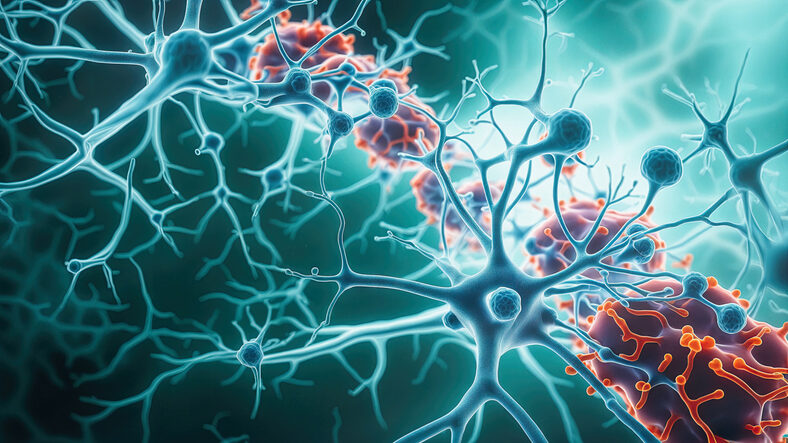

Crossing the blood-brain barrier and avoiding off-target effects are two important challenges for gene therapies designed to target diseases of the brain. Now, developers of a gene therapy delivery platform that pairs specially engineered adeno-associated viruses (AAVs) with a delivery strategy that harnesses the brain’s fluid transport pathways claim that their approach addresses both issues and could help pave the way to new treatments for neurological disorders like multiple sclerosis, Huntington’s disease, and rare pediatric white matter disorders.
Details of the work were published recently in a Nature Biotechnology paper titled “Efficient targeting of human glial progenitor cells in vivo with engineered AAV vectors and glymphatic delivery.” The research was done by scientists at University of Rochester Medicine and the University of Copenhagen.
While the platform can deliver therapeutic genes broadly throughout the brain, it preferentially targets human glial cells. Steve Goldman, MD, PhD, lead author of the study and co-director of the Center for Translational Neuromedicine at URochester, has spent his career studying glial cells and elucidating their role in disease progression and recovery. Previously, his lab developed human glial progenitor cell models and investigated the link between glial dysfunction and neurological disease. For example, in Huntington’s disease, his lab has shown that healthy human glial progenitor cells could outcompete and replace diseased cells in the brain.
“Over the last decade, we’ve learned that many neurological disorders involve glial dysfunction as a major driver of disease,” Goldman said. “That realization has created an urgent need for tools that can safely and efficiently deliver therapies to these cells throughout the brain.”
The current study gets scientists one step closer to that goal. Digging into the details, Goldman and his colleagues engineered a library of modified AAV5 viral vectors by making small changes to the vectors’ capsids. They then screened the vectors in mice whose brains were transplanted with human glial progenitor cells and tracked their movements to identify which ones most effectively infected the human glial progenitor cells and their descendants including astrocytes and oligodendrocytes.
“Human cells display different molecular signatures than mouse cells, and cells behave differently in the brain than they do in a dish,” Goldman explained. “By selecting vectors under biologically relevant conditions, we were able to identify candidates with a strong preference for human glia.”
Next, the team turned their efforts to studying how best to distribute the AAVs throughout the brain. For that, they turned to the glymphatic system, the brain’s network of fluid-filled pathways used to clear metabolic waste by circulating cerebrospinal fluid through the brain. They delivered the engineered AAVs into the cisterna magna, a fluid-filled compartment at the base of the brain, while using hypertonic treatment to enhance fluid uptake into the network. This approach spread the vectors broadly throughout the brain tissue while largely avoiding the blood-brain barrier, and reducing exposure to peripheral organs like the liver.
“The glymphatic system is changing the way we think about brain drug delivery,” Goldman said. “Rather than trying to force therapies across the blood-brain barrier from the bloodstream, we can use the brain’s own transport pathways to distribute them more effectively where they are needed.”
Immediate targets for this approach are pediatric lysosomal storage diseases and other inherited disorders in which glial cells lack critical enzymes. Essentially, diseases of the brain’s white matter with well-defined biological targets. Further down the road, the approach could support novel therapies for multiple sclerosis, age-related white matter loss, and Huntington’s, among other neurodegenerative disorders where glial dysfunction is involved.
“We envision a future in which vectors can be designed for specific diseases and specific cell populations,” Goldman said. His lab is already exploring whether they can use artificial intelligence to design viral capsids that have specific targeting characteristics. “This study shows that by combining targeted vector engineering with glymphatic delivery, we can begin to build that future.”