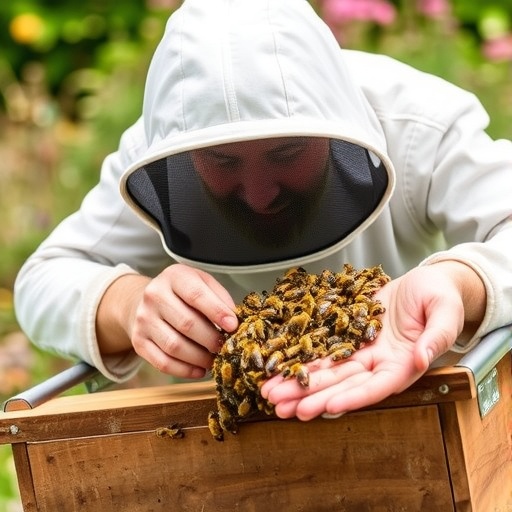
In the ongoing battle to safeguard honeybee colonies from one of their most formidable adversaries, varroa mites, groundbreaking research conducted by scientists from the USDA Agricultural Research Service (ARS) and the University of California, Davis (UC Davis) reveals a promising new strategy to enhance pesticide efficacy. This innovative study focuses on overcoming the increasing resistance of varroa mites to amitraz, a pesticide widely used and trusted by beekeepers for mite control. The research reveals a method to significantly increase amitraz’s lethality by combining it with a synergistic compound, potentially heralding a new era in sustainable apiculture management.
Honeybees are indispensable to agriculture, with their pollination services supporting the production of crops valued at over $20 billion annually in the United States alone. However, varroa mites (Varroa destructor) have posed a severe threat by parasitizing bees, causing physical damage, and transmitting viruses that precipitate colony collapses nationwide. Amitraz has been the cornerstone pesticide for controlling these mites due to its high toxicity towards them and comparatively safe profile for bees when applied correctly. Nonetheless, mounting evidence from previous studies, including important findings by ARS, indicates a troubling rise in amitraz-resistant mite populations, driven by specific genetic mutations.
Addressing this resistance is critical. The new study, published in the Journal of Apicultural Research, unveils how the toxic impact of amitraz on varroa mites can be potentiated by co-application with a chemical inhibitor that undermines the mites’ cellular defense mechanisms. This synergist targets cellular processes linked to chemical expulsion, specifically inhibiting ATP-binding cassette (ABC) efflux transporters that normally protect the mite by pumping out pesticides before they can accumulate to toxic concentrations within cells.
Researchers Julia Fine, a USDA entomologist, and Sascha Nicklisch of UC Davis led the study by first confirming that varroa mites utilize ABC efflux transporters to enhance their tolerance to amitraz. These transporters actively remove toxicants from their cells, thereby lowering the intracellular dose and reducing pesticide effectiveness. By impeding this system, the synergist allowed amitraz to reach higher intracellular concentrations, increasing its toxicity by up to 50 percent—even among mites that had previously exhibited resistance.
This discovery is not merely academic; it has profound practical implications. Enhanced efficacy of amitraz treatments can translate into fewer applications required by beekeepers, reducing costs and labor demands. Moreover, stronger initial control of mite populations diminishes the likelihood of further resistance developments. As Fine explains, “Better amitraz formulations can decrease both the treatment frequency and the selection pressure on varroa mites, lightening the economic burden on beekeepers while improving bee health.”
Yet the study also acknowledges an important challenge. The inhibitor compound used is not exclusively selective to varroa mites; it can potentially impair bees’ own cellular defenses against pesticides. This underscores the importance of developing synergists that specifically target mite physiology without compromising bee resilience. Future research efforts will focus on tailoring such compounds to achieve species-specific effects, enhancing the safety and utility of combination therapies.
Collaboration across multiple ARS laboratories—spanning Beltsville, Maryland, to Baton Rouge, Louisiana—and UC Davis’s Pollinator Health Research Laboratory facilitated this comprehensive investigation. Supported by a Honey Bee Health Grant and the North American Pollinator Protection Campaign, the project reflects a concerted effort to address an urgent apicultural health crisis through integrated scientific approaches.
The potential emergence of varroa mite populations resistant to all major miticides has sounded alarms among researchers and beekeepers alike. This study’s breakthrough in identifying a molecular method to amplify amitraz’s potency provides a critical weapon in the ongoing struggle. It also highlights the necessity of understanding the molecular biology underlying pesticide resistance mechanisms to devise novel interventions that extend the useful lifespan of existing treatments.
As the beekeeping community faces pressures from environmental stressors and pathogen challenges, innovative chemical approaches that maintain bee safety while enhancing pest control are paramount. The strategy of combining miticides with targeted efflux transporter inhibitors points toward a more nuanced, molecularly informed paradigm of integrated pest management tailored to the unique challenges posed by varroa mites.
In conclusion, this research marks a significant advance in apicultural science and pest management. By deciphering how varroa mites use ABC transporters to resist amitraz and demonstrating how to disable this mechanism, scientists have opened the door to powerful new treatments that could safeguard millions of honeybee colonies and by extension, the crops they pollinate. While the path ahead requires development of mite-specific synergists and additional field validation, the implications of this work promise transformative impacts on both bee health and agricultural sustainability.
Subject of Research: Enhancing the toxicity of amitraz against resistant Varroa destructor mites by inhibiting ABC efflux transporter mechanisms.
Article Title: Amitraz toxicity in resistant Varroa mites can be increased by inhibiting ABC efflux transporters
News Publication Date: 16-Feb-2026
Web References:
DOI Link to Journal Article
Image Credits: Tina Truong/UC Davis
Keywords
Varroa mite, amitraz resistance, honeybee health, ABC efflux transporters, pesticide synergist, pesticide resistance, integrated pest management, pollinator protection, mite control, bee-safe pesticides, molecular entomology, apicultural research
Tags: amitraz resistance in varroa mitescombating varroa mite infestationsenhancing pesticide efficacy in apiculturegenetic mutations causing pesticide resistancehoneybee colony health preservationimproving apiculture pest controlprotecting honeybee colonies from parasitessustainable mite management strategiessynergistic compounds for mite treatmentUC Davis beekeeping studiesUSDA ARS mite researchvarroa mite control in beekeeping