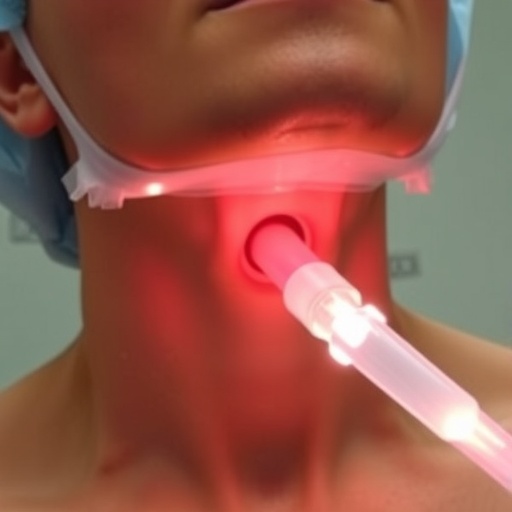
In a groundbreaking new study published in BMC Geriatrics, researchers have delved deeply into the postoperative challenges faced by older adults undergoing head and neck cancer surgery, with a sharp focus on feeding tube dependence and complications that arise afterward. This comprehensive retrospective cohort study has unveiled critical insights, shedding light on the interplay between aging, surgical intervention, and recovery trajectories in this vulnerable population, which could significantly influence clinical decision-making and postoperative management strategies in oncogeriatrics.
Head and neck cancers, which encompass malignancies affecting the oral cavity, pharynx, and larynx, often necessitate extensive surgical procedures that can disrupt essential functions such as swallowing and chewing. For elderly patients—who frequently face a complex interplay of comorbidities, decreased physiological resilience, and diminished tissue healing capacities—these impacts are amplified. The current research spearheaded by Galazka and colleagues provides a nuanced view of how surgical interventions translate into prolonged feeding tube dependency, a marker frequently used to measure postoperative morbidity and patient quality of life.
The investigation analyses medical records of older adult patients who underwent head and neck cancer surgeries, capturing data points that range from tumor staging and surgical approach to postoperative complication rates and long-term feeding tube outcomes. According to the study, feeding tube dependence after surgery is alarmingly prevalent in this demographic, sparking urgent questions about how to optimize surgical techniques and postoperative care plans to mitigate this dependence.
One of the most compelling aspects of the study is its rigorous quantification of risk factors contributing to feeding tube reliance. The research identifies advanced age itself, along with specific comorbid conditions such as diabetes, cardiovascular disease, and pre-existing dysphagia, as significant predictors. The pathophysiological underpinnings of these findings reflect the compounded stress that age-related physiological decline places on the intricate swallowing mechanisms, especially after the disruption caused by oncological resections.
Beyond feeding tube dependence, the study intricately documents postoperative complications, including infections, wound dehiscence, and aspiration pneumonia — all of which disproportionately affect older patients. These complications not only prolong hospitalization and increase healthcare resource utilization but also exacerbate nutritional challenges, creating a vicious cycle that hampers recovery and undermines functional rehabilitation.
The surgical techniques employed in treating head and neck cancers are undeniably complex, often requiring extensive resection of tumor masses and subsequent reconstruction using flaps or grafts. This study emphasizes how the invasiveness of these surgeries, alongside the patient’s physiological reserve, impacts postoperative outcomes. It underscores the necessity for tailored perioperative approaches that consider not just oncological clearance but also postoperative functional preservation—especially in elderly cohorts.
The research further calls attention to the critical role of multidisciplinary care teams in managing these patients. Speech and language therapists, dietitians, geriatricians, and surgical oncologists must collaborate closely to devise individualized rehabilitation plans that address swallowing and nutritional needs while minimizing risks. Early intervention strategies, such as swallowing therapy and nutritional supplementation, could be decisive factors in reducing feeding tube dependence duration and improving quality of life.
Mechanistically, the study suggests that inflammatory responses triggered by surgery may be heightened in the aged, potentially impairing wound healing and neurologic functions related to swallowing. This inflammation-driven pathophysiology compounds the direct anatomical disruptions caused by surgery, necessitating further research into pharmacologic and non-pharmacologic interventions that could alleviate postoperative morbidity.
The robustness of the retrospective cohort design provides a legitimate foundation to identify patterns and correlations, but the authors are candid about the inherent limitations, such as the absence of prospective data and control groups. Nonetheless, the findings set a compelling agenda for further prospective, interventional studies that could validate risk prediction models and test innovative perioperative care protocols.
In clinical terms, these findings advocate for more stringent preoperative assessments that include comprehensive geriatric evaluations, aiming to stratify surgical risk and inform patients and families more accurately about expected outcomes. Personalized risk assessments could also guide surgeons in refining operative plans to balance oncological success with functional preservation.
From a health policy perspective, the prevalence of feeding tube dependence and postoperative complications in elderly head and neck cancer patients revealed by this study spotlights an urgent need for resource allocation that supports specialized postoperative rehabilitation services. Given the aging global population and rising cancer incidence, optimizing care pathways for this subgroup is both a clinical and societal imperative.
Moreover, the emotional and psychosocial ramifications of feeding tube dependence are profound, often leading to feelings of isolation, reduced self-esteem, and diminished social engagement. The study’s data thus extend beyond physical health to emphasize holistic recovery encompassing mental health and social wellbeing, domains that should be integrated into postoperative care.
The meticulous stratification of feeding tube dependency durations conducted by the researchers also offers valuable prognostic insights, signaling which patients are likely to benefit from more aggressive rehabilitative efforts versus those for whom long-term dependency may be unavoidable. Such prognostication could help prioritize healthcare interventions and tailor support services.
Another pivotal contribution of this study is its encouragement of innovation in surgical techniques, possibly advocating for less invasive or function-preserving procedures when oncologically feasible. The paradigm shift toward balancing survival rates with postoperative quality of life is gaining traction, and this research bolsters that momentum by providing hard evidence from a high-risk population.
The research team’s efforts, therefore, help chart a course toward more patient-centered care models in the oncological management of older adults. It propels the field toward integrating geriatrics principles into surgical oncology, prompting a cultural shift that calls for agility in treatment protocols to accommodate the unique needs of elderly patients.
As the medical community digests these findings, it is anticipated that collaborative research will expand on these insights, integrating molecular, nutritional, and rehabilitation sciences to create comprehensive frameworks. These frameworks will aim to minimize the negative sequelae of surgery while maximizing patient autonomy and functional outcomes.
In sum, this landmark retrospective cohort study stands as a pivotal contribution to understanding and ultimately overcoming the challenges of feeding tube dependence and postoperative complications in elderly head and neck cancer patients. Its implications reverberate across clinical practice, research, policy, and patient advocacy, positioning it as a cornerstone for future innovations in geriatric oncological surgery and recovery paradigms.
Subject of Research: Feeding tube dependence and postoperative complications in older adults after head and neck cancer surgery.
Article Title: Feeding tube dependence and postoperative complications in older adults after head and neck cancer surgery: a retrospective cohort study.
Article References:
Galazka, A., Bienkowska-Pluta, K., Paszkowska, M. et al. Feeding tube dependence and postoperative complications in older adults after head and neck cancer surgery: a retrospective cohort study. BMC Geriatr (2026). https://doi.org/10.1186/s12877-026-06991-0
Image Credits: AI Generated
Tags: comorbidities affecting cancer surgery recoveryfeeding tube dependence after head and neck cancer surgeryfeeding tube risks in geriatric oncologyhead and neck cancer surgery outcomesimpact of aging on surgical recoverylong-term feeding tube use in older adultspostoperative complications in elderly cancer patientspostoperative management in oncogeriatricsquality of life after head and neck cancer treatmentretrospective cohort studies in cancer surgeryswallowing difficulties after cancer surgerytumor staging and feeding tube outcomes